

Office in the city center
Our office is in the center of Saint Petersburg, and bus pickup points are nearby. You do not need to search for the departure point or walk several blocks.

Our address:Saint Petersburg, Vosstaniya St. 1
Discount: -100 rub. per ticket

 14 h.
14 h.
 Ligovsky Prospekt 10
In one day, you will get to know the main gem of Karelia – the Ruskeala mountain park, the Ahvenkoski waterfalls, and see the historical sights of the town of Sortavala
10 h.
Discover the rugged beauty of Karelian nature in just one day. This journey offers more than just sights.
From 3500 ₽ per person
Our office is in the center of Saint Petersburg, and bus pickup points are nearby. You do not need to search for the departure point or walk several blocks.
You can book a trip for a large group, family, school class, corporate event or celebration. We will match the format and the number of seats you need.
Seniors, students, schoolchildren and preschoolers get discounted rates on a number of tours.
Besides Saint Petersburg and its suburbs, we offer multi-day tours to cities and regions across Russia.
Sightseeing, bus, boat, evening, walking and school tours, plus suburban trips — we will find a program for any kind of visit.
We operate clean, comfortable tourist coaches. A spacious cabin matters most on longer routes.
Karelia is a northern land of lakes, forests, granite shores and roads that quickly lead away from Petersburg to a different rhythm. A single route brings together Ruskeala, the Ladoga skerries, waterfalls, Sortavala, old Karelian villages, forest trails and landscapes that people later revisit in photos for a long time.
The history of Karelia begins in very ancient times. The first settlements in the northwest of modern Russia appeared after the glacier, around the 7th–6th millennia BC. People lived by the water, engaged in hunting and fishing, and later mastered agriculture, cattle breeding and iron production.
The name of the region is linked to the indigenous people – the Karelians. There are several versions of its origin: from the word "karja", connected with cattle and shepherd life, from the Finnish kari – "reef" or "underwater stone", and also from the Baltic garia – "forest" or "mountain". All the versions sound very Karelian: stone, water, forest and people who lived alongside nature for centuries.
In different eras, Karelian lands were linked by trade routes, fortresses, monastery islands, crafts, forest industries, mining, and roads to the White Sea, Ladoga, and Onega. That is why Karelia is perceived not only as nature, but as a large northern region with ancient history, a strong character, and very diverse routes.
It is best to put together your first route through Karelia as an introduction to the different sides of the region. A few rocks, a bit of water, an old town, waterfalls, a road through the forest, and at least one stop where you can simply stand and look around.
Even a short trip through Karelia feels like a big journey. The road itself becomes part of the route, and then simply a way to reach a destination.
In Karelia, it is the details that stay with you: the scent of pine needles after rain, the dark water by the shore, granite cliffs, old wooden houses, bridges over fast rivers. Plus the feeling that the north begins very close to St. Petersburg, even though in mood the trip seems much farther.
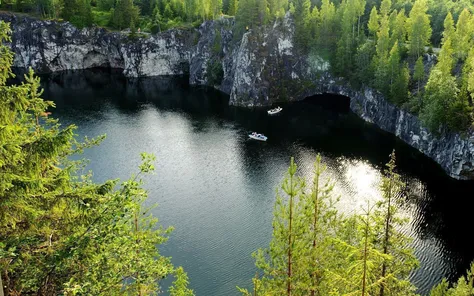
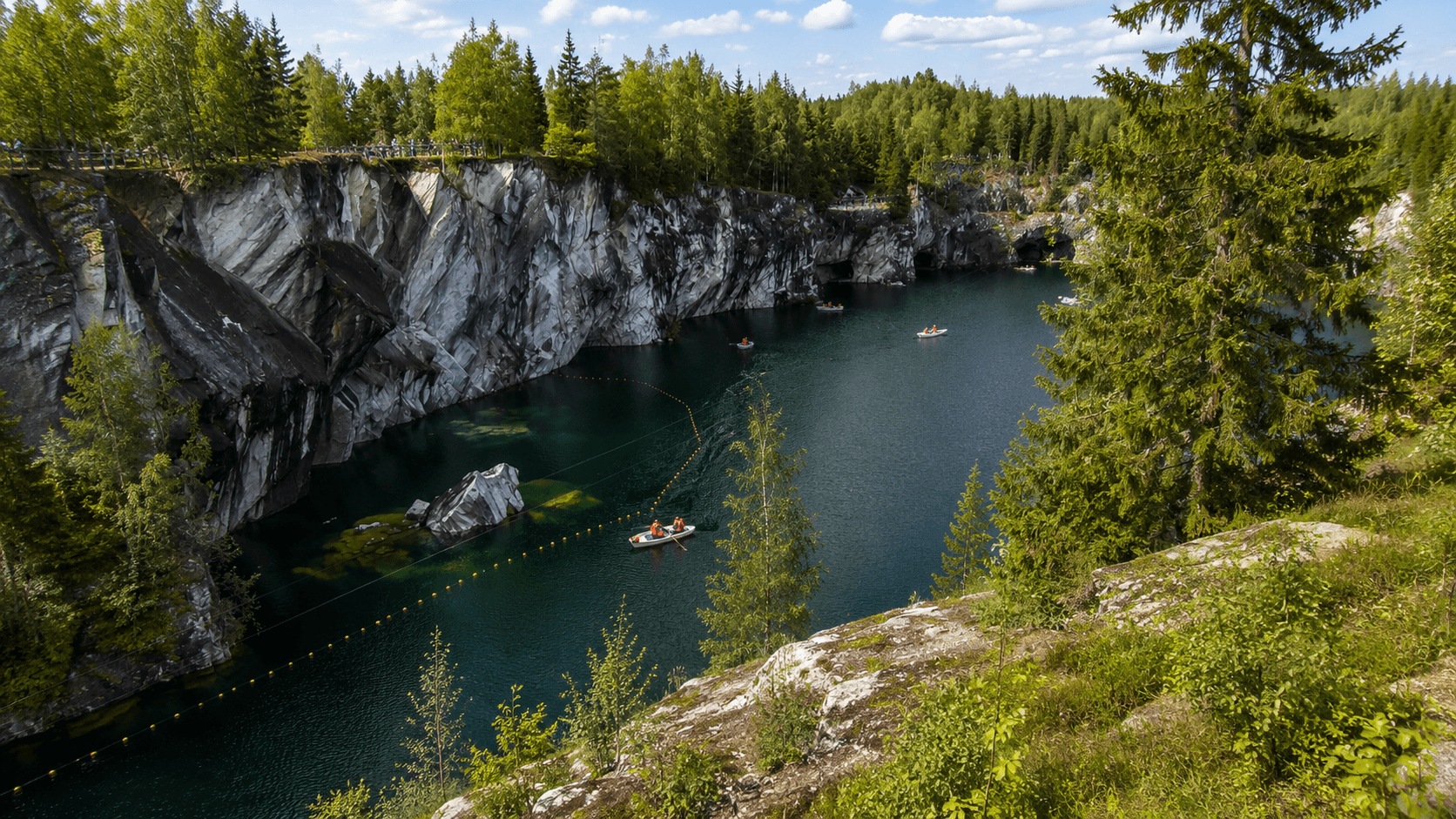
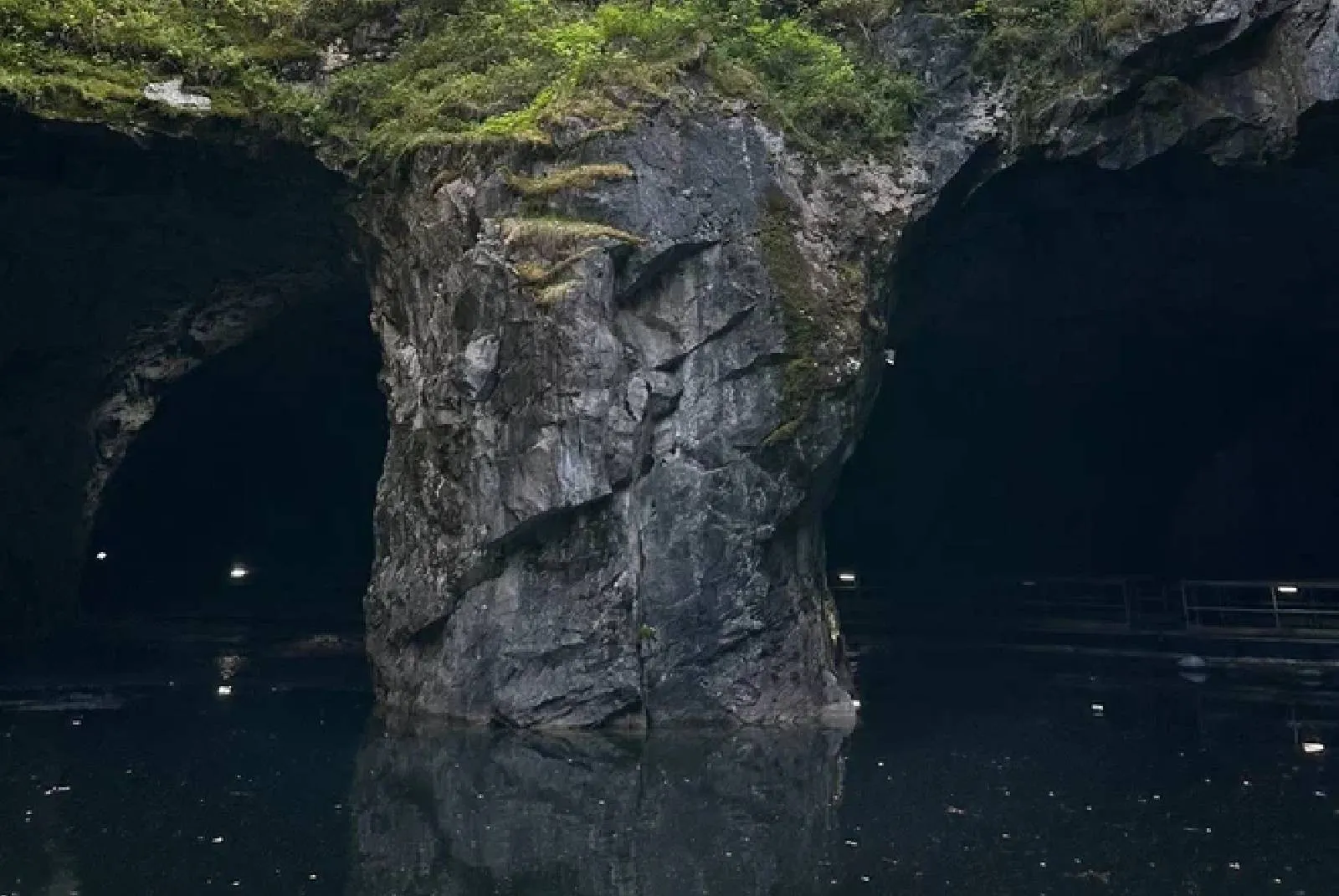
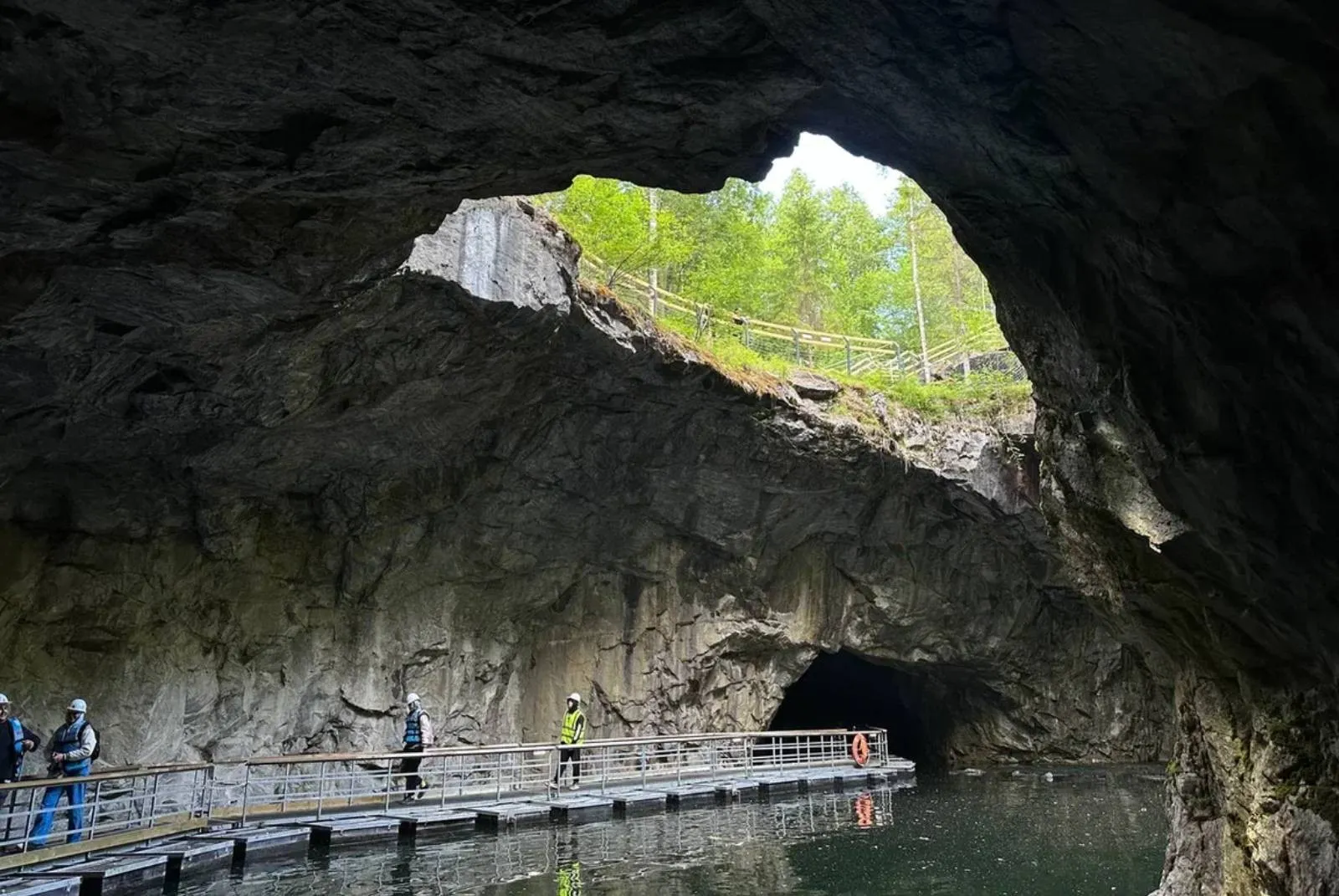
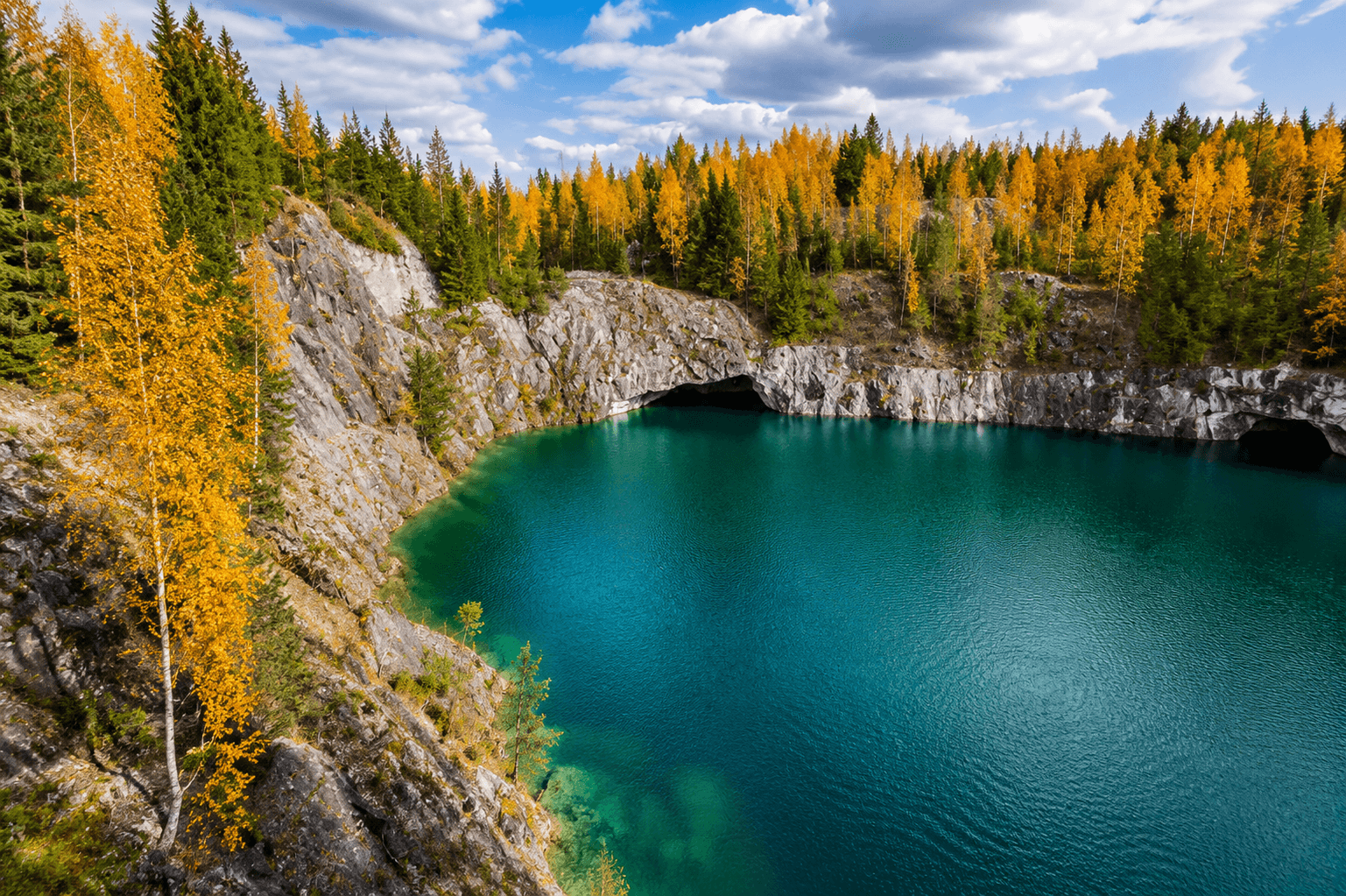
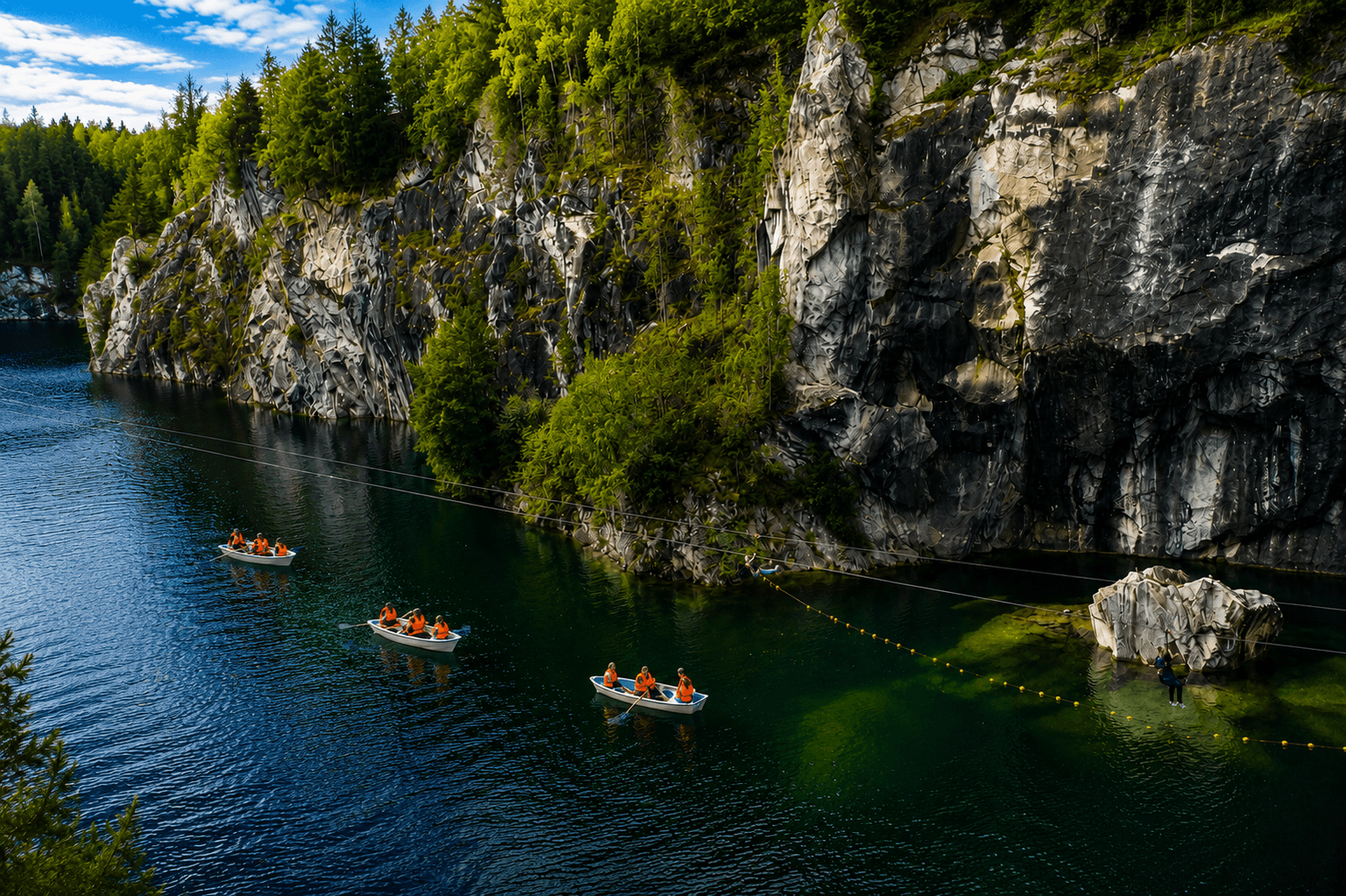
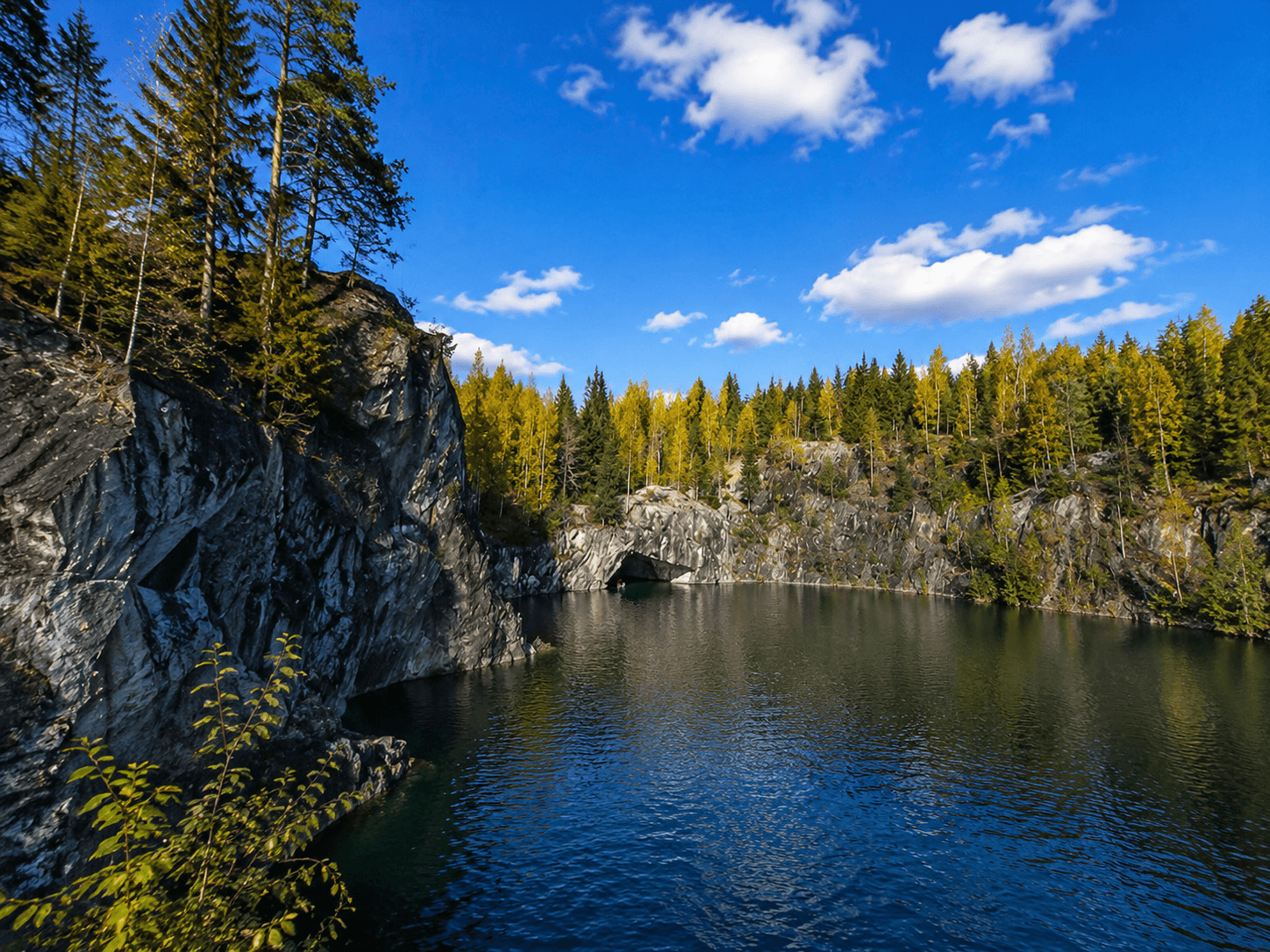
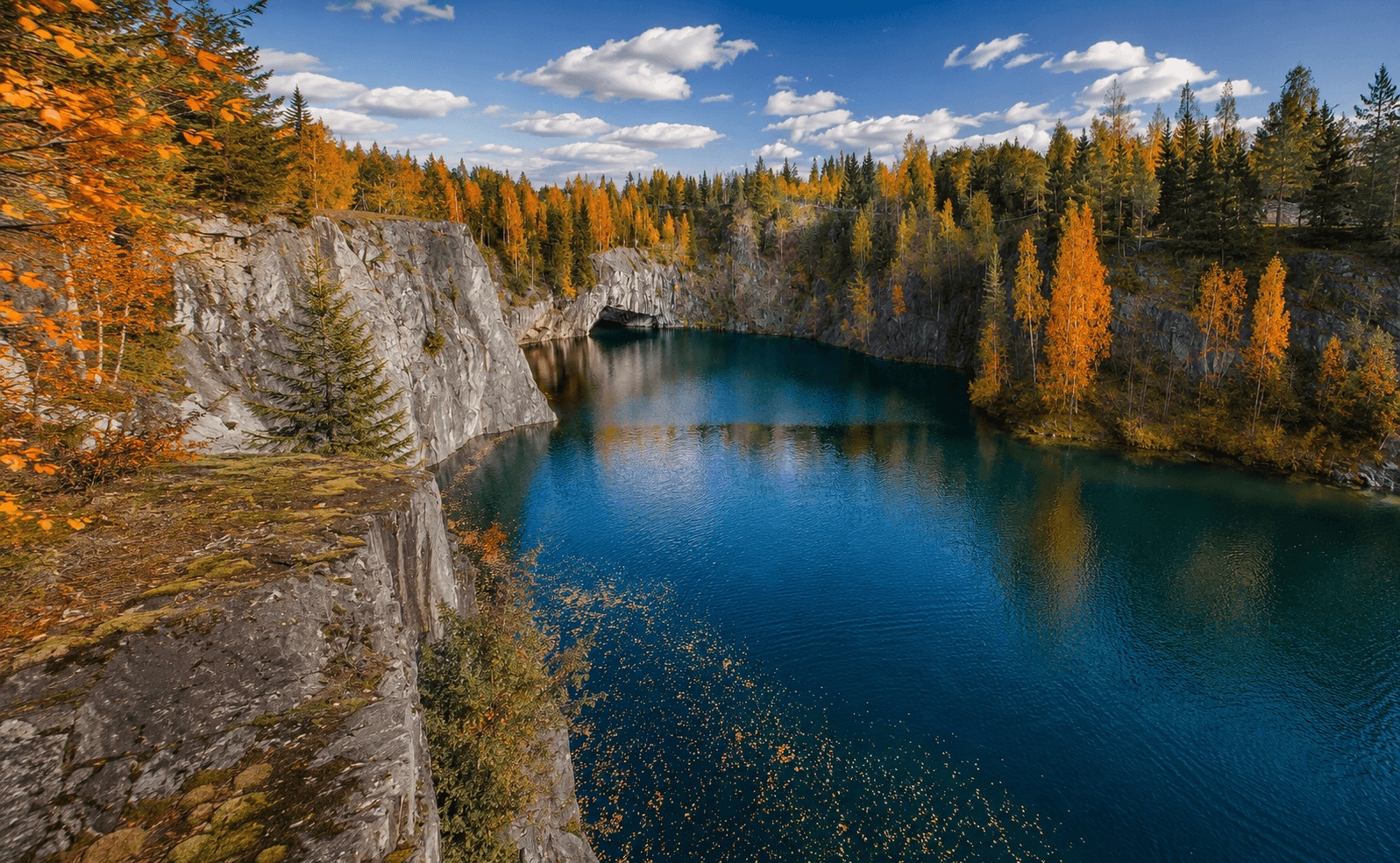
Ruskeala often becomes the first powerful encounter with Karelia. The marble canyon is memorable right away: light-colored walls, green water, paths along the edge, viewing platforms, and adits where you can feel the region's mining history.
Marble used to be quarried in these places for St. Petersburg palaces and cathedrals. Now the quarry has become a mountain park: you can walk along the canyon, go down to the water, enter the adits, look at the cliffs from different sides, and understand why Ruskeala is so often included in the first route through Karelia.
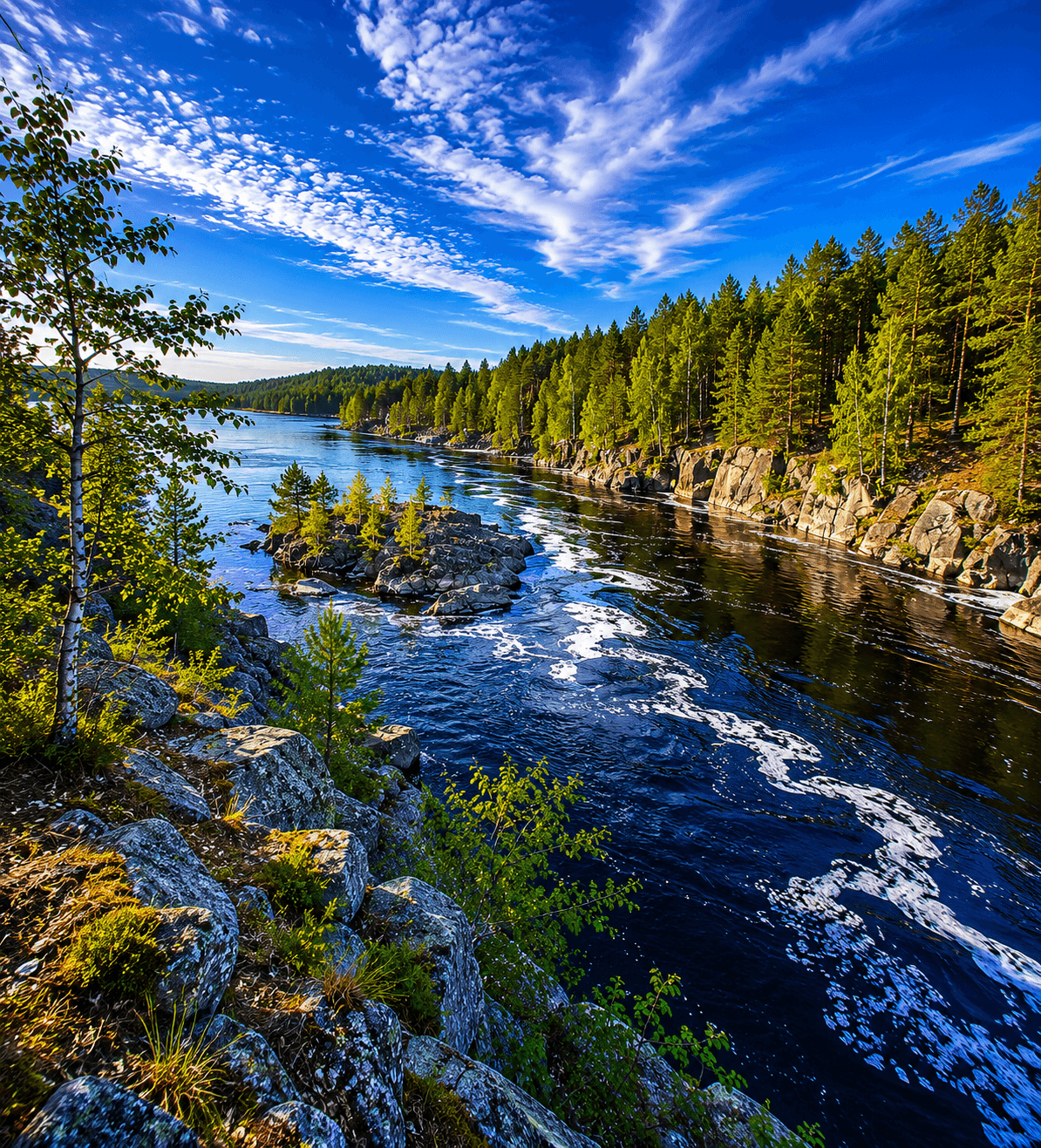
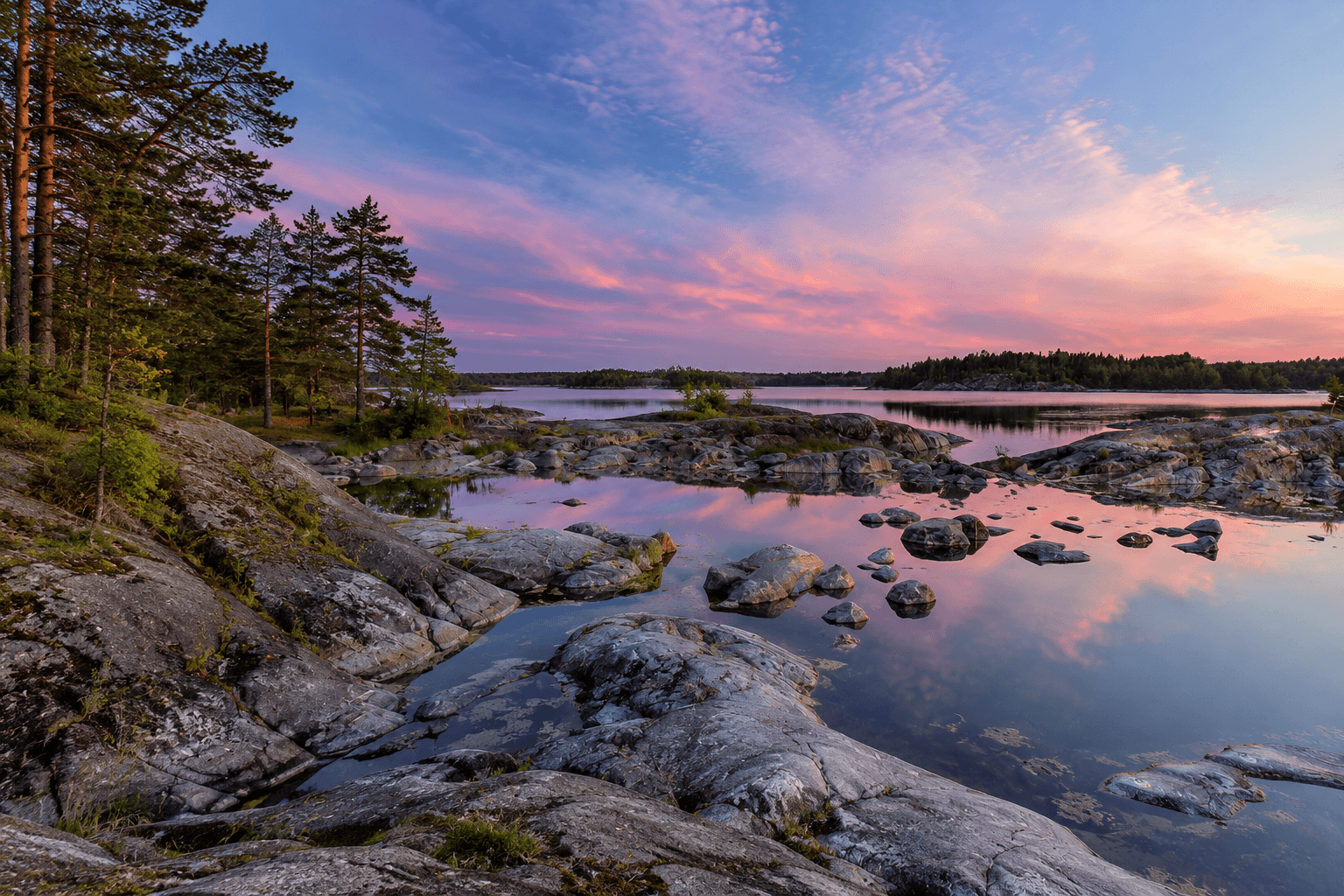
Ladoga skerries – rocky shores, islands, pines on stones, narrow straits and open water. In places like this Ladoga looks almost like the sea: open space ahead, granite on the sides, northern air all around.
The skerries are best seen from the water and from the coastal viewpoints of the northern Ladoga area. In clear weather the landscape turns out bright and airy, in overcast weather – more severe: grey sky, dark water, granite and pines come together into a truly northern shot.
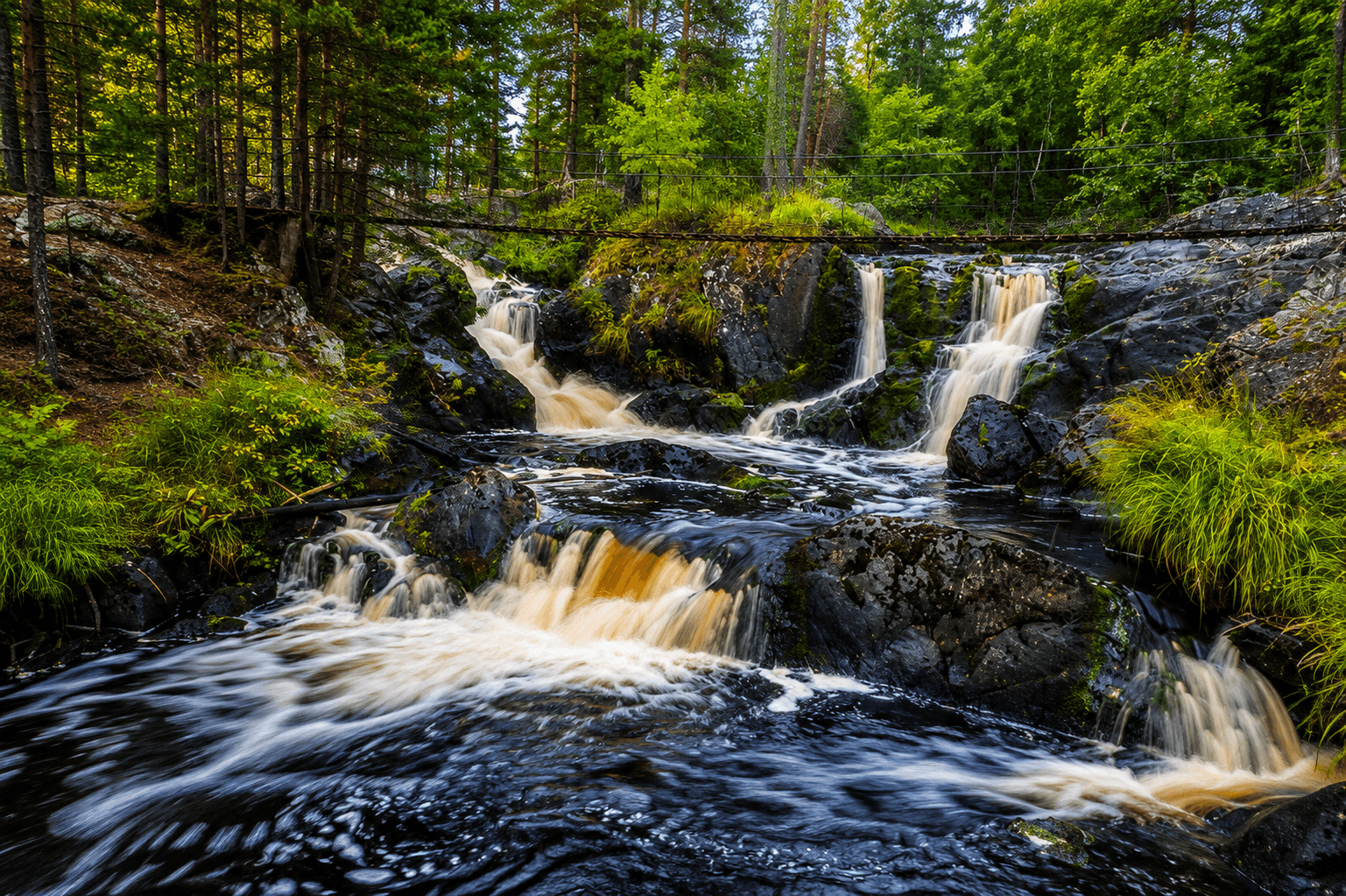
Waterfalls in Karelia sound like a short pause on the road. The bus stops, the stream can already be heard ahead, then a wooden walkway appears, damp air, stones and water cascading through the forest.
In southern Karelia, Akhvenkoski near Ruskeala is often visited. On longer routes, Kivach is added. Stops like these break up the journey nicely: walk a little, listen to the water, take a couple of photos and move on again.
Karelia reveals itself in layers. First come Ruskeala, Sortavala, the waterfalls and Ladoga. Then appear Valaam, Kizhi, Lake Onega, Petrozavodsk, the Belomorsk petroglyphs, Marcial Waters and the northern roads.
Valaam is chosen for its islands, monastery and Ladoga. Kizhi – for its wooden architecture and Lake Onega. Petrozavodsk is convenient as a base for a big route. Trips like these take more time and give a sense of a real journey through the region.
A great first route: Sortavala, Ruskeala, the Ahvenkoski waterfalls, beautiful stops along the way. The day is packed, but you immediately get rocks, water, forest and the marble canyon.
Over a weekend you can add a walk around Sortavala, more time in Ruskeala, the Ladoga skerries and an evening by the water. This format lets Karelia unfold without feeling like a quick stop.
Three days let you combine Ruskeala, Sortavala, the waterfalls, the skerries and a calm day in nature. The route makes room for lakes, viewpoints and walks without constant driving.
Five days already feel like a full journey through the region: southern Karelia, Petrozavodsk, Kizhi, Kivach, Marcial Waters, Lake Onega and additional nature stops.
In spring the rivers and waterfalls come alive, and the forest becomes damp and fresh. By May walks are already pleasant, and a windbreaker will come in handy by the water.
Summer is ideal for Ruskeala, the skerries, lakes and long walks. The warmest days usually fall in July.
September often brings beautiful forests and gentle coolness, October brings rain and fog, and by November a winter mood sets in.
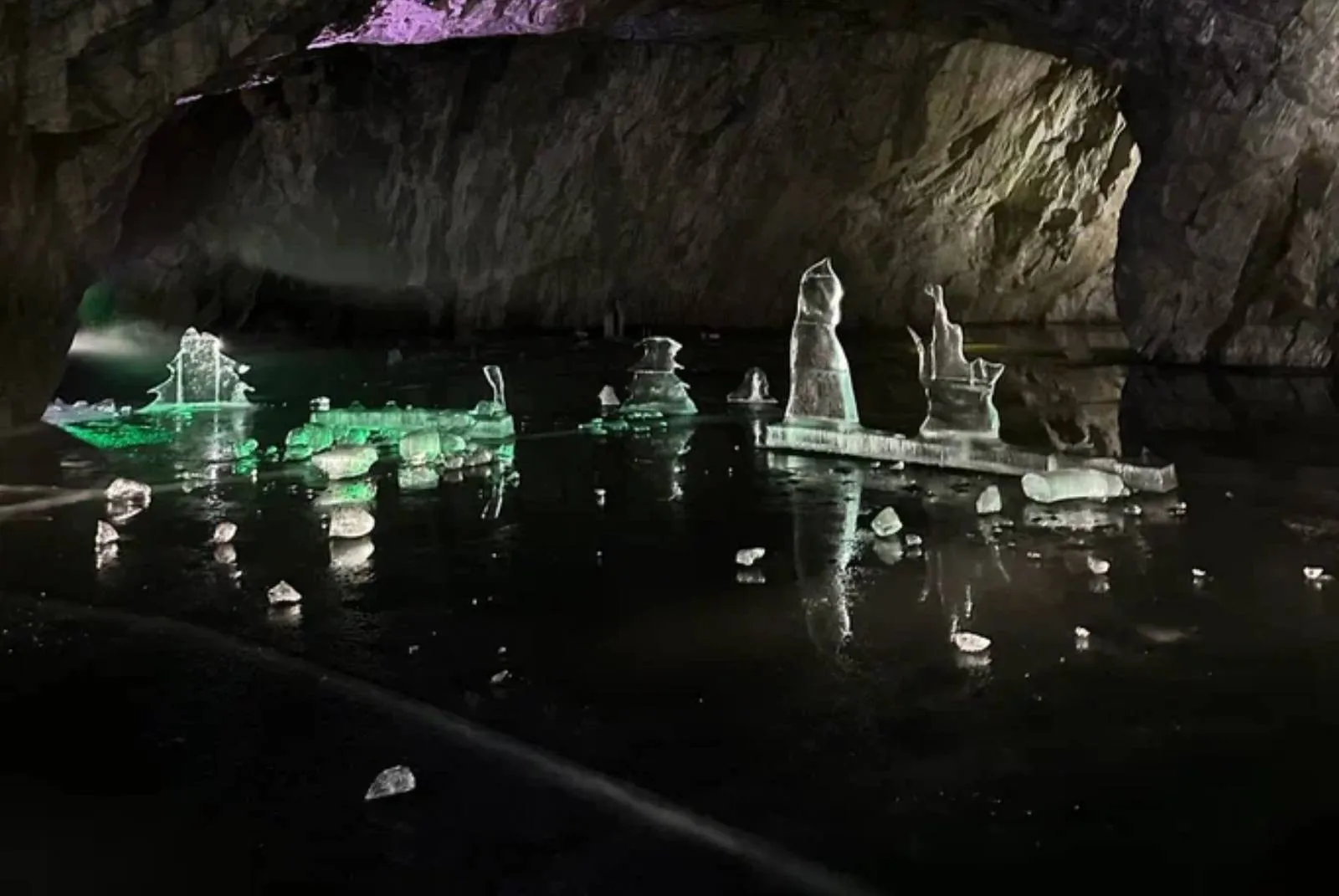
In winter Karelia becomes snowy and more northern. In Ruskeala the rocks, dark water, illumination and snow-covered forest look especially beautiful.
The most popular route from Petersburg heads toward Sortavala and Ruskeala. It is chosen for short trips, because in one day you can already see the real Karelia: forests, stone, water and the marble canyon.
Summer is ideal for the skerries, boat trips, long days and lake routes. Autumn brings bright forests, cool air and beautiful roads. Winter turns Ruskeala into an even more fairy-tale place with snow, illumination and dark water.
In spring, waterfalls and rivers are especially impressive. At this time, Karelia feels fresher: plenty of water, damp forest, clean air and the first long walks after winter.

Accredited historian and top-category guide for Saint Petersburg and its suburb…
Go
