

Office in the city center
Our office is in the center of Saint Petersburg, and bus pickup points are nearby. You do not need to search for the departure point or walk several blocks.

Our address:Saint Petersburg, Vosstaniya St. 1
Discount: -200 rub. per ticket

 5 - 6 h.
 Vosstaniya St. 1
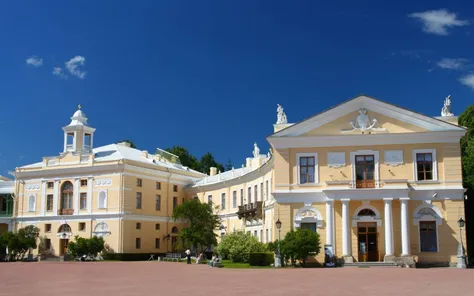
Pavlovsk is the most romantic suburb of St. Petersburg. The main attraction of the city is undoubtedly Pavlovsk Park – a recognized masterpiece of world landscape art
Discount: -450 rub. per ticket
10 h.
A one-day tour of three imperial parks: the picturesque lakes of Gatchina, the romantic alleys of Pavlovsk and the formal ponds of Tsarskoye Selo. Peace, views and the harmony of nature.
From 3550 ₽ per person
Our office is in the center of Saint Petersburg, and bus pickup points are nearby. You do not need to search for the departure point or walk several blocks.
You can book a trip for a large group, family, school class, corporate event or celebration. We will match the format and the number of seats you need.
Seniors, students, schoolchildren and preschoolers get discounted rates on a number of tours.
Besides Saint Petersburg and its suburbs, we offer multi-day tours to cities and regions across Russia.
Sightseeing, bus, boat, evening, walking and school tours, plus suburban trips — we will find a program for any kind of visit.
We operate clean, comfortable tourist coaches. A spacious cabin matters most on longer routes.
Pavlovsk is a palace above the Slavyanka valley, a huge landscape park, bridges, pavilions, old alleys, and a town with an amazing musical history. People come here for an unhurried walk: to go to Pavlovsk Palace, see the park, go down to the water, reach the Temple of Friendship, and feel a residence where nature plays no less a role than architecture.
The history of Pavlovsk begins in 1777, when Catherine 2 gave the lands in the Slavyanka River valley to her son Paul Petrovich and his wife Maria Feodorovna. The occasion was family-related and very important – the birth of their first child, the future Emperor Alexander 1.
At first it was the village of Pavlovskoye with small wooden buildings and hunting grounds. Then came the palace, park, pavilions, bridges, and an entire country residence, worked on by Charles Cameron, Vincenzo Brenna, Carlo Rossi, Andrey Voronikhin, and other masters.
In 1796, Paul 1 granted Pavlovsk the status of a town. After his death, the residence passed to Maria Feodorovna, and it was under her that the palace and park acquired a particularly refined, thoughtful character: more air, art, walks, garden corners, and a very personal atmosphere.
The first route is best built around three main experiences: the palace, the park, and the Slavyanka River valley. This way Pavlovsk quickly becomes clear: first the ceremonial part, then the water, bridges, pavilions, and long park vistas.
Pavlovsk reveals itself well on foot: the route can be short, or you can go deeper into the park and almost forget that St. Petersburg is right nearby.
Pavlovsk has a gentle character. Peterhof impresses with its fountains, Tsarskoye Selo with its ceremonial Baroque, while Pavlovsk relies on landscape, water, shady paths, classical architecture, and the feeling of a long country walk.
Pavlovsk is easy to tailor to the format of your day: a short walk by the palace, a full route through the park, or a relaxed trip with the palace, distant alleys, and additional spots near the town.
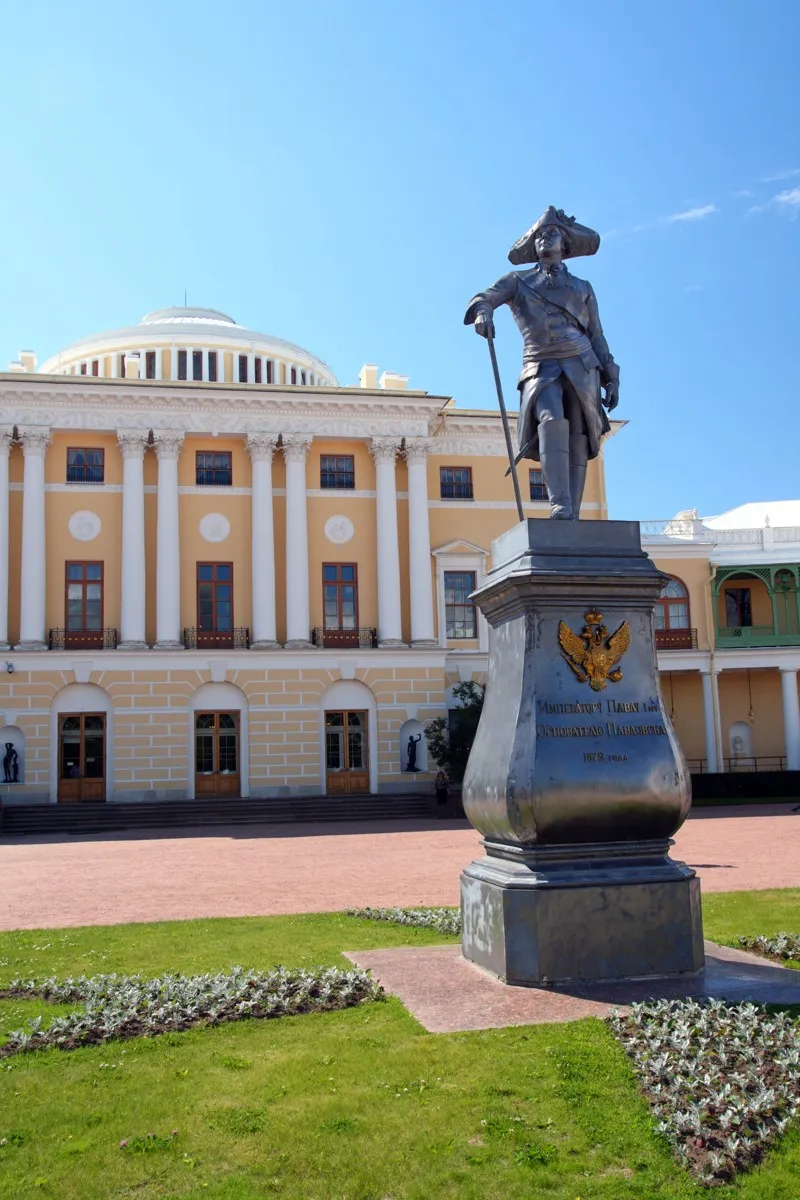
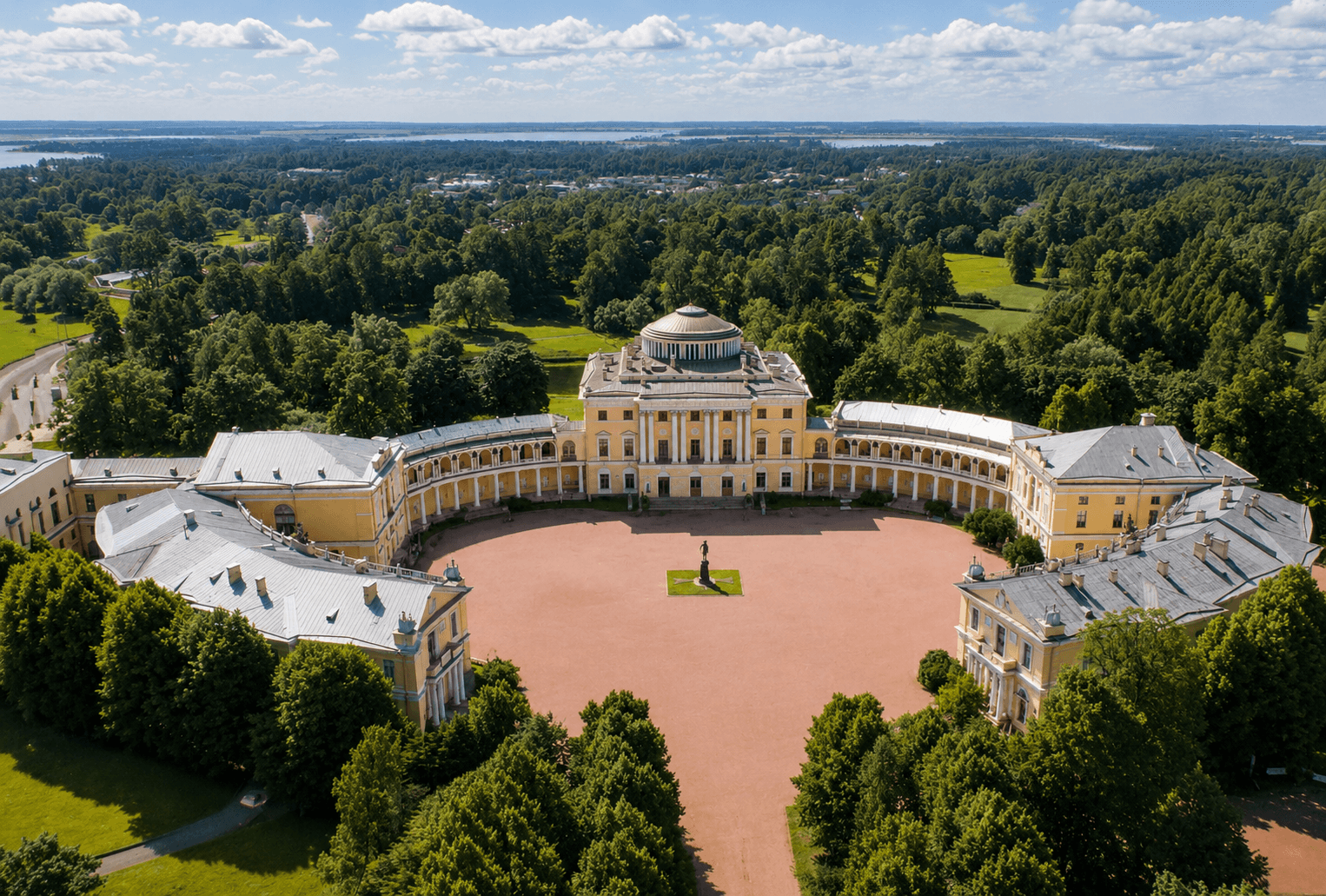
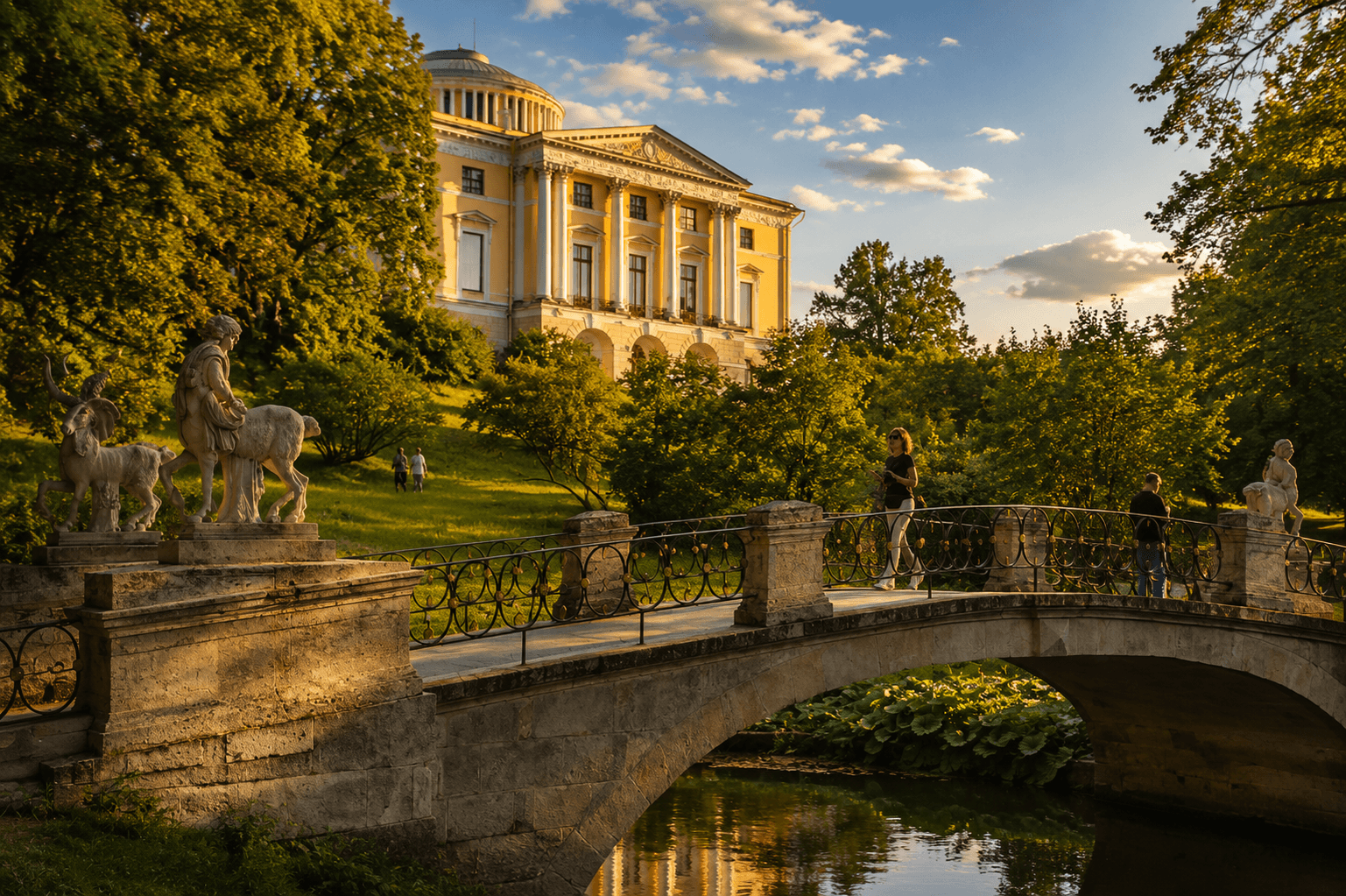
Suitable for a first introduction: Pavlovsk Palace, the monument to Paul I, the Private Garden, the Bridge of the Centaurs, and several spots by the palace part of the park.
A good format for the main route: the palace, the central part of the park, the Apollo Colonnade, the Temple of Friendship, the Slavyanka valley, and the Visconti Bridge.
You can add the distant areas of the park, Belaya Bereza, a walk along the Slavyanka, lunch in town, and a calm return through the main scenic viewpoints.
You can add BIP Castle and Mariental Park to the park visit, or combine the trip with Pushkin if you want to see two imperial residences side by side.
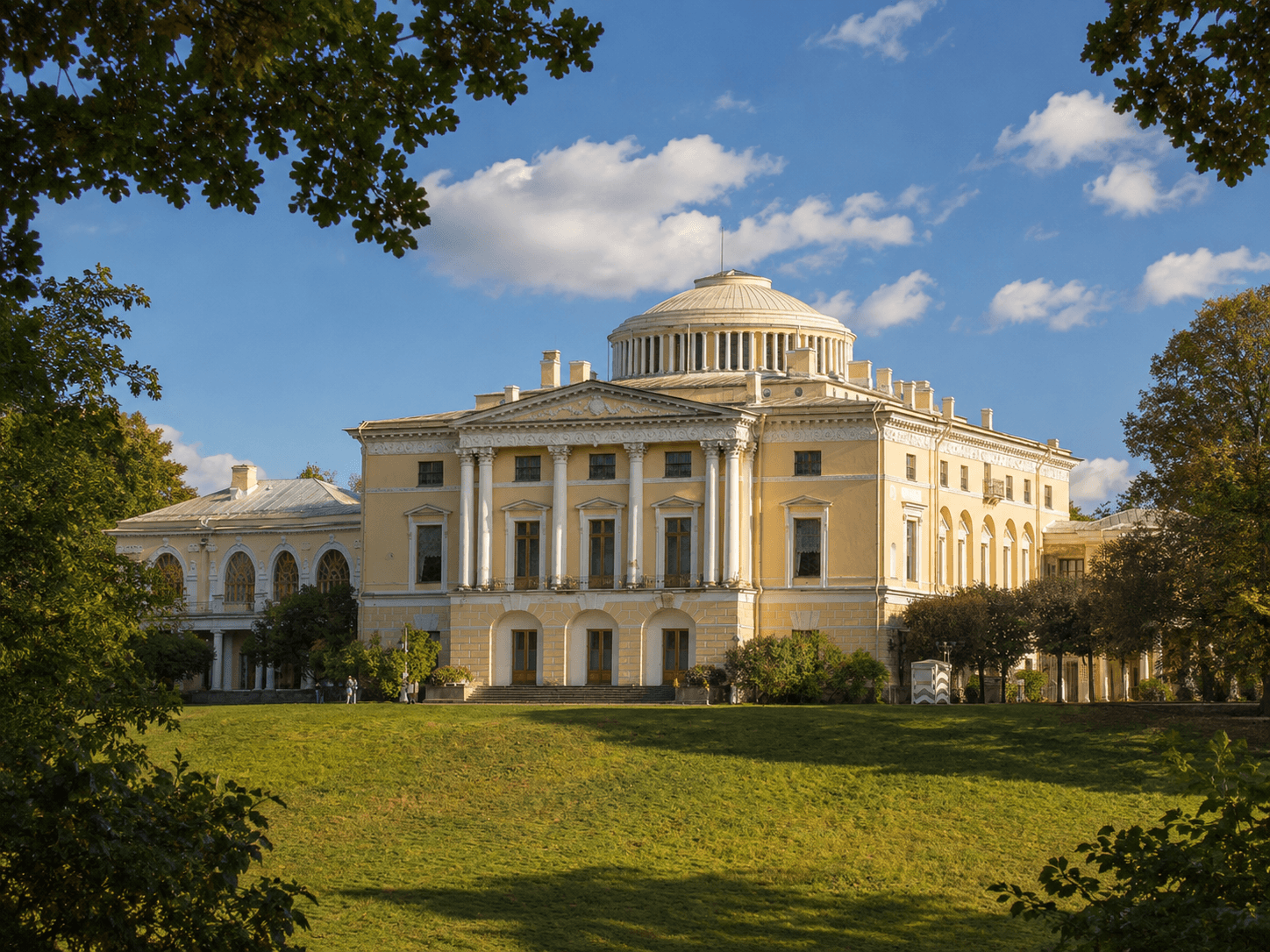
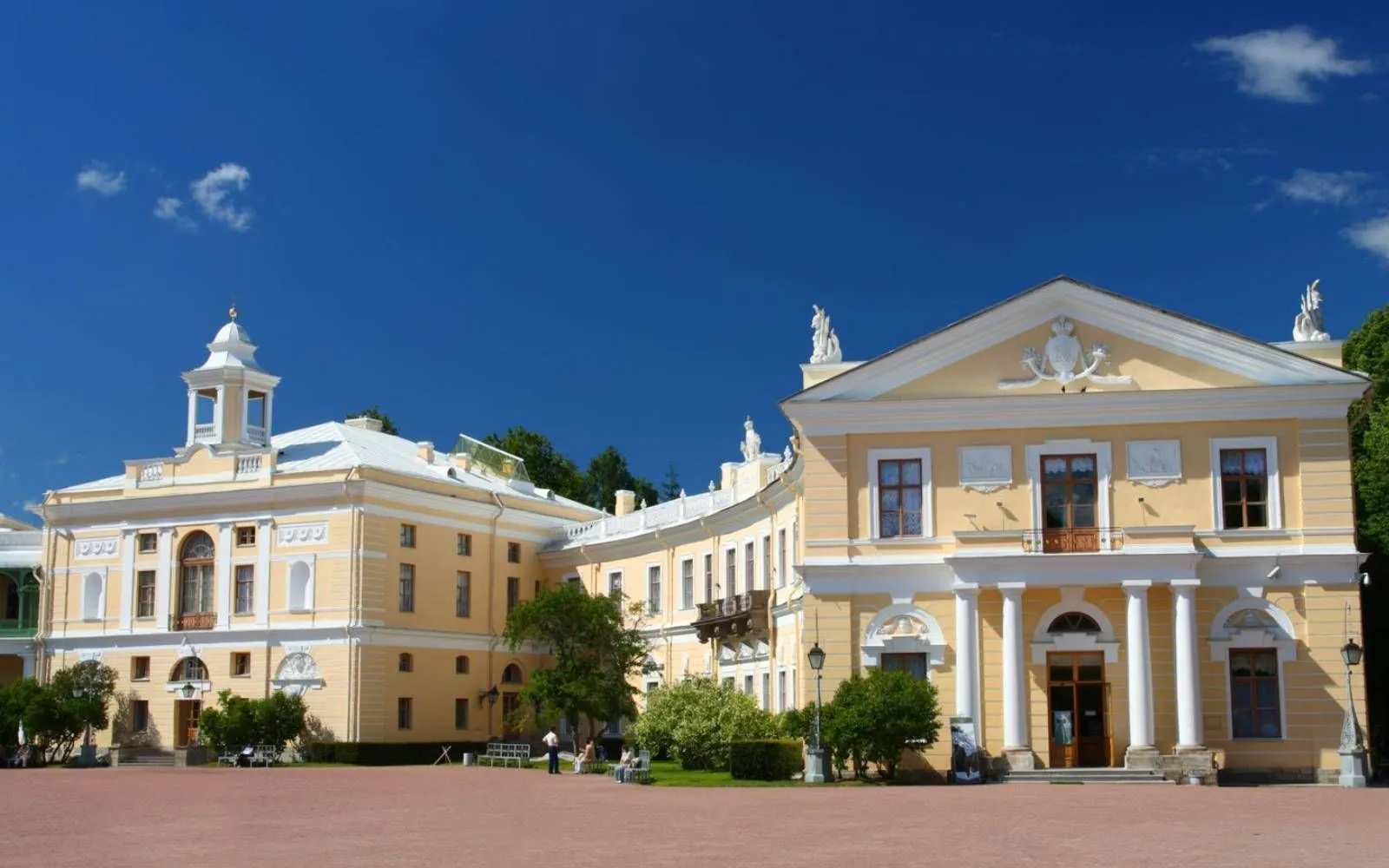
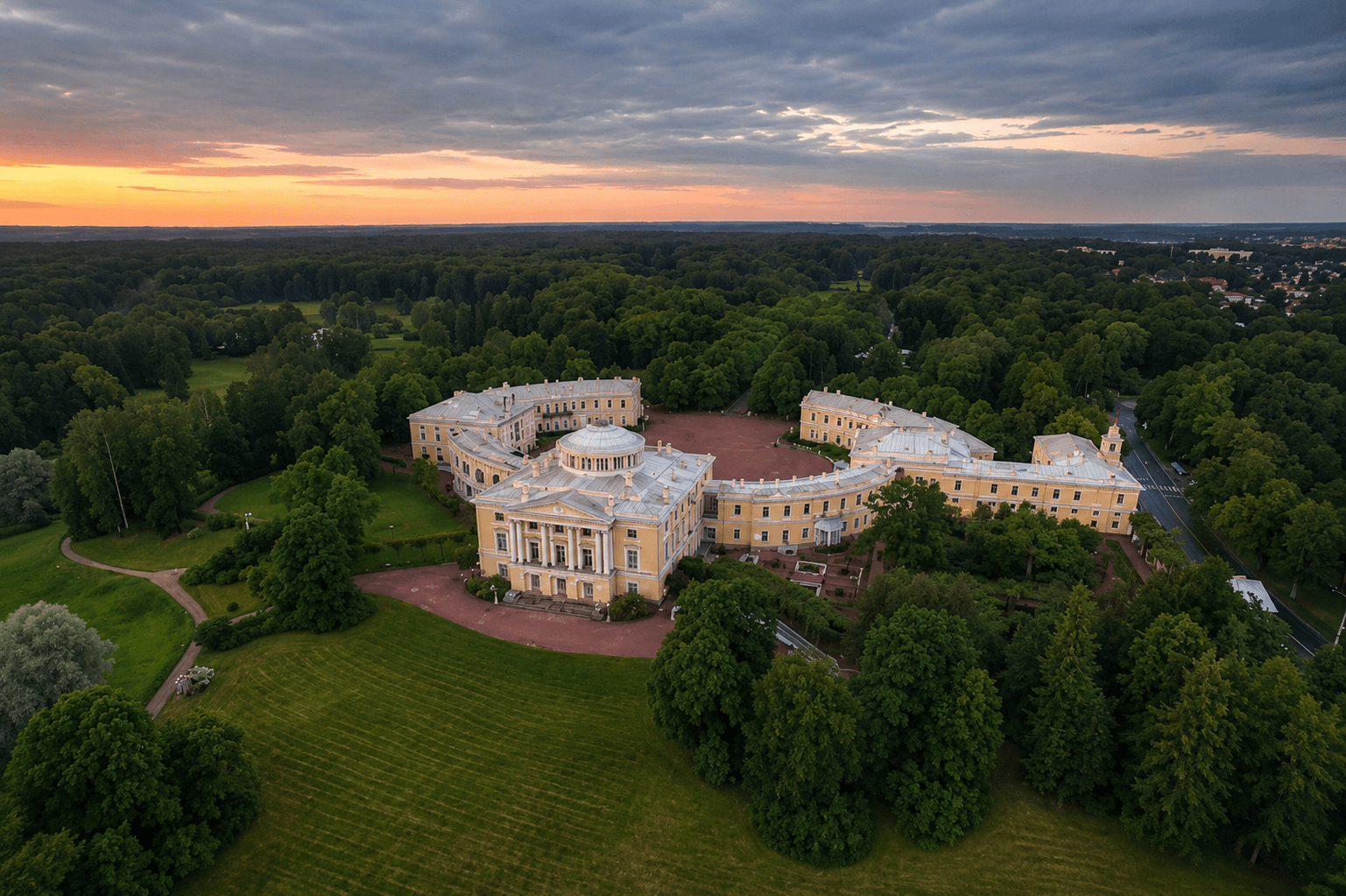
Construction of Pavlovsk Palace began in 1782 for Pavel Petrovich and Maria Feodorovna. The palace looks calmer than many grand residences around St. Petersburg: it stands on a hill next to the park and immediately sets a soft, very cohesive tone for the entire visit.
A special role in the palace's history belongs to Maria Feodorovna. She oversaw the decoration of the residence, loved art, collected items brought back from a European journey, and gave Pavlovsk a personal, almost homely touch. In the palace halls you can see interiors and collections of paintings, porcelain, furniture, and decorative art.
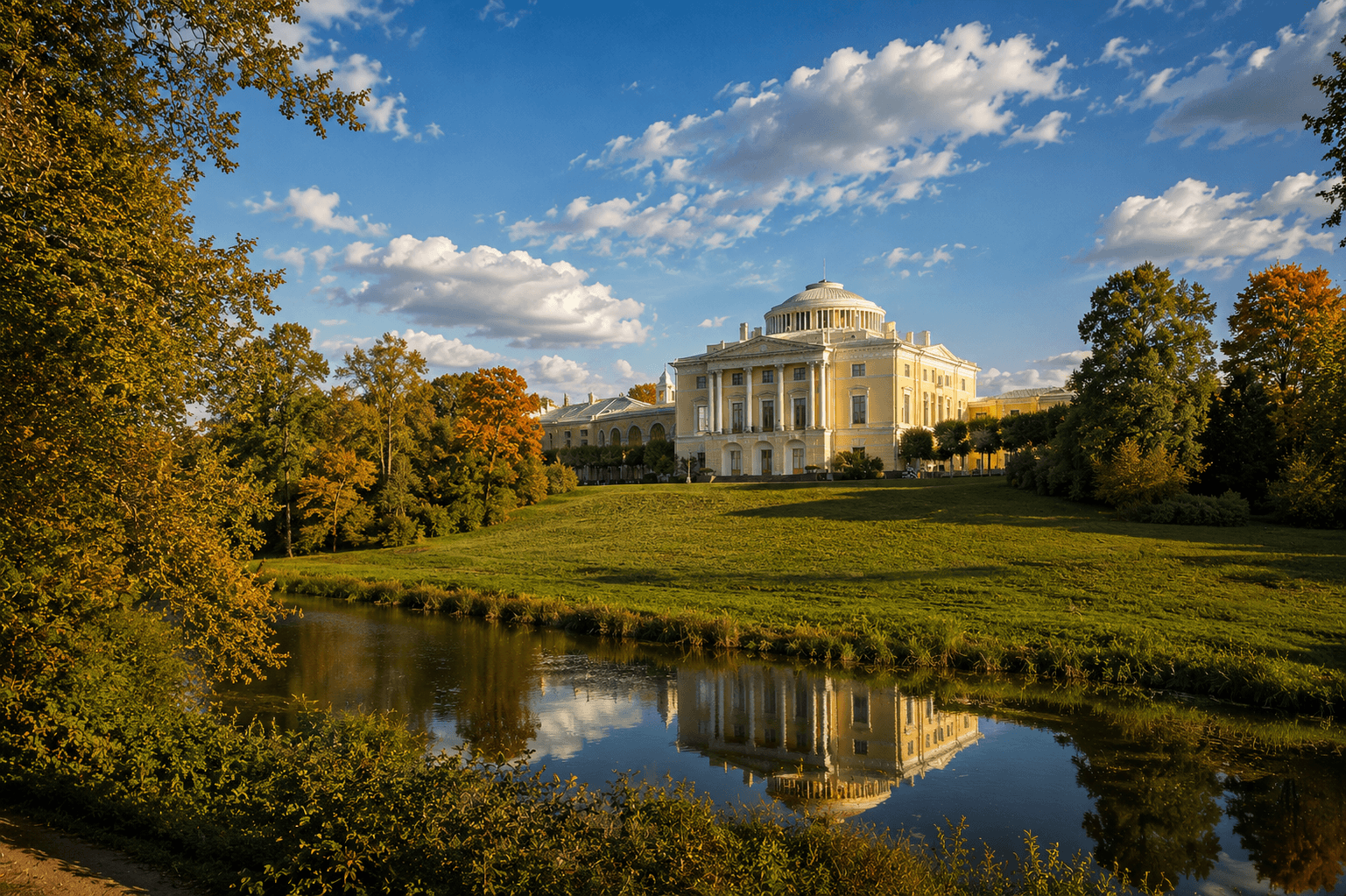
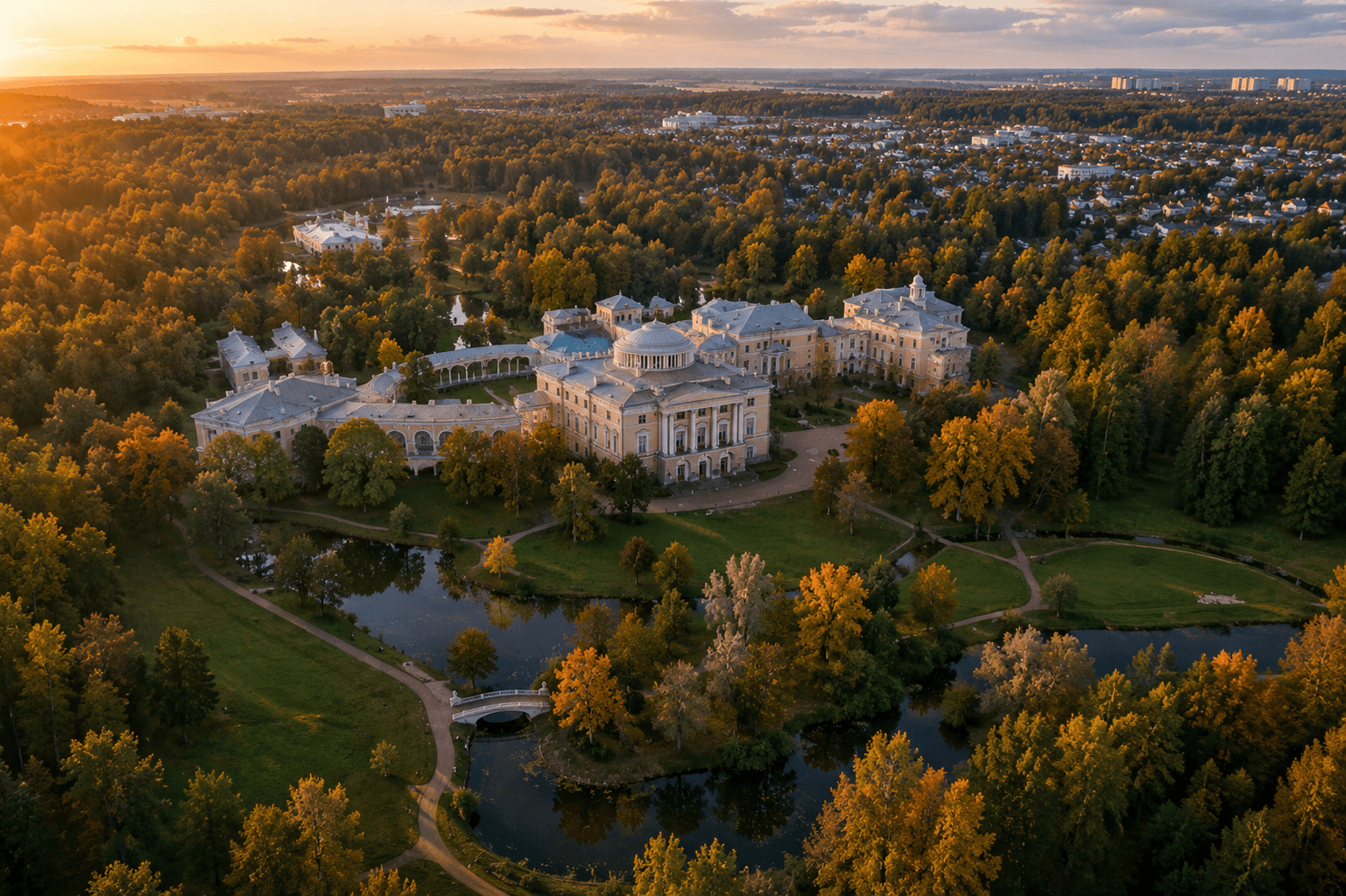
Pavlovsk Park covers about 600 hectares and stretches along both banks of the Slavyanka River. It is a landscape park, so the main role is played not by strict symmetry but by the feeling of a natural walk: paths, meadows, bridges, water, trees, and pavilions appear gradually.
The park has several areas with different moods: the Palace area, the Slavyanka Valley, the Old and New Sylvia, White Birch, the Parade Field, the Great Star, and the Valley of Ponds. For a first visit, it is enough to choose a route from the palace to the river and the main pavilions.
Pavlovsk looks good at any time of year: the park changes color, the paths feel different, and the palace is perceived anew each season. For a walk, it is important to consider the weather: by the water and in open meadows it can be cooler than in the city.
In spring the park comes to life: the first green shades appear, the Slavyanka sounds louder, and a walk to the palace and pavilions becomes especially easy.
In summer it is convenient to walk through the far areas of the park, heading to White Birch, the bridges, and the Slavyanka valley. In the shade of the trees it is usually more comfortable than in the city.
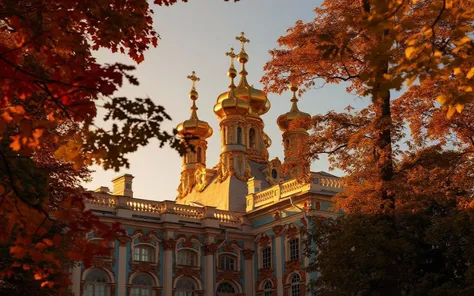
In autumn Pavlovsk Park gathers gold, copper shades, and soft light. A good season for photographs, long walks, and routes through scenic viewpoints.
In winter Pavlovsk becomes calm and graphic: white meadows, dark trunks, the palace against the snow, and short routes near the central part of the park.
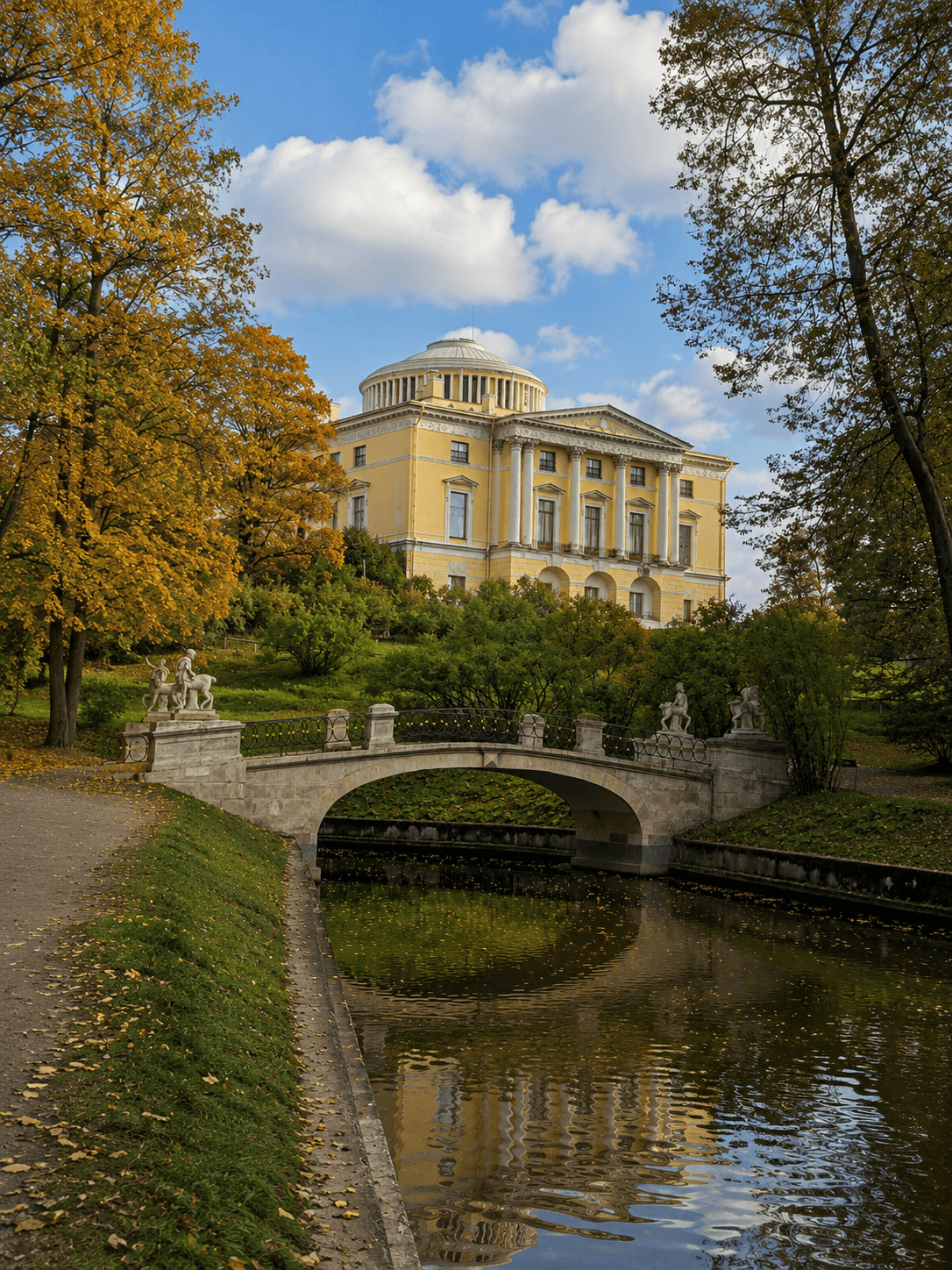
Pavlovsk is conveniently explored on foot. From the railway station you can walk to the palace, then head into the park and gradually reach the most beautiful spots of the Slavyanka valley. This route takes several hours and is well suited for a first visit.
The main logic of the walk is simple: first the ceremonial center by the palace, then bridges, pavilions, water and quieter areas of the park. If desired, the route can be shortened at the palace or, conversely, extended to Belaya Bereza and the far alleys.
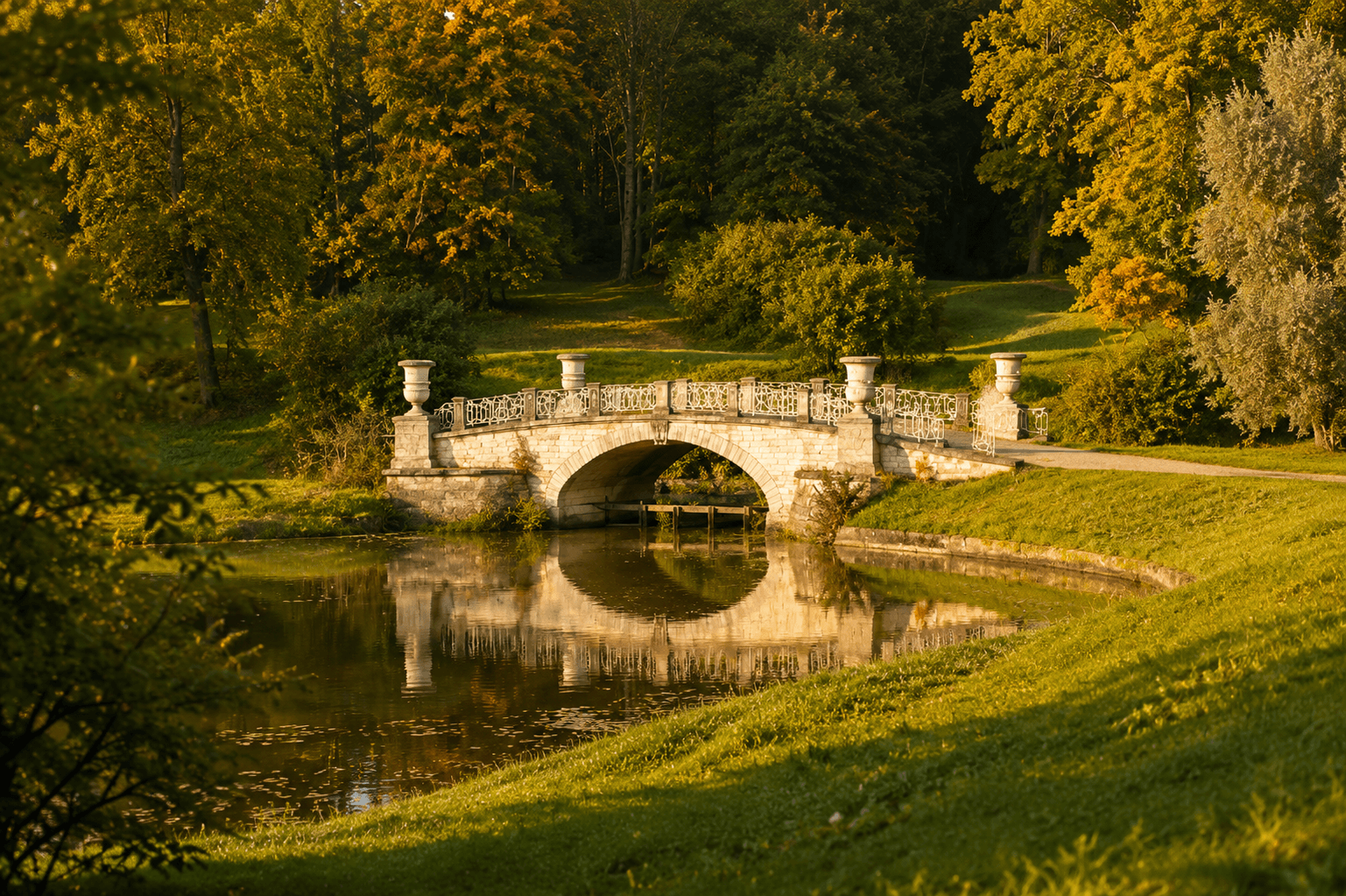
In Pavlovsk Park there are many places that are best appreciated while moving. First a bridge appears, then a turn toward the water, then a pavilion among the trees, then a view of a meadow or a bend of the Slavyanka.
The Temple of Friendship, the Apollo Colonnade, the Visconti Bridge, the Bridge of the Centaurs and the Pavilion of the Three Graces help you feel the park's design: architecture does not compete with nature but gently blends into it. That is why Pavlovsk is especially good for a leisurely route of several hours.

Accredited historian and top-category guide for Saint Petersburg and its suburb…
Go
Historian and top-category guide to Saint Petersburg and suburbs. Leads emotio…
Go
Creates multifaceted tours covering different eras of St. Petersburg — from imp…
Go
Creates poetic tours combining imperial residences with the literary heritage o…
Go
