Writes about St. Petersburg, its history, sights, museums and routes.

Museum guide to art, culture and St. Petersburg of the 18th–19th centuries.
The Central Naval Museum in St. Petersburg - the history of the Russian fleet.
The Central Naval Museum named after Emperor Peter the Great is a place where you feel like you're truly traveling through time. Here you can see how the maritime power was born, what ships defended its borders, and how the fleet developed from the 18th to the 21st century.
The museum is located opposite New Holland, in the building of the former Kryukov Naval Barracks. The long eastern facade faces the Kryukov Canal, and the southern part faces the Moyka River, Krasnoflotsky and Potseluev bridges.

Exhibitions and main exhibits of the museum
The exhibition is housed in more than 20 halls, each dedicated to a separate stage in the development of the Russian fleet. The route is arranged chronologically: from the first Petrine ships and sailing vessels to the modern Russian Navy. Moving from hall to hall, you feel as if you're living through different eras of the country's maritime history.

Some of the museum's most impressive exhibits are the detailed models of 18th–19th-century ships. Many of them were created as precise engineering samples: examining the hull, rigging, and artillery, you catch yourself thinking that before you is not a model but a reduced reality.
The halls display ancient sea charts, navigational instruments and weapons, trophies captured in battles, as well as exhibitions dedicated to the Baltic, Black Sea, and Pacific fleets and key naval battles.

A special place is occupied by Peter I's botik - a symbol of the birth of the Russian fleet. The country's maritime history began with such small vessels.

The authentic boat of Peter I, the «Saint Nicholas», was discovered by 16-year-old Peter I in 1688 in the royal village of Izmailovo near Moscow. According to one version, it was brought to Russia from England in the 1640s as a gift to Tsar Alexei Mikhailovich, according to another, it was bought for river walks.
The logical continuation of the theme is the halls of the 20th century, which tell about the development of the submarine fleet, naval aviation and shipbuilding of the Soviet period. In the museum you can see fragments of real ships, authentic control devices, elements of submarine conning towers, as well as exhibits that clearly explain the principles of navigation, communication and armament.
In the halls dedicated to the Great Patriotic War, the drama of the era is palpable. Personal belongings of sailors, documents, awards and fragments of ships tell about heroism without embellishment - simply and honestly, so they are remembered for a long time.

The modern part of the museum introduces the Russian Navy of the 21st century: multimedia screens, dynamic installations, real samples of torpedoes and missiles, models of the newest ships and submarines create the feeling that history does not end here, but continues today.

What to see near the museum

- New Holland - a historic island and a modern public space.
- Embankments of the Admiralty Canal - quiet picturesque embankments of the historic canal connecting the Neva with the Moyka.
- Mariinsky Theatre - one of the world's leading theatres, a symbol of Russian opera and ballet.
- Kryukov Canal - an artificial canal of the 18th century.
- Semimostye - a unique viewing point.
- Kolomna - a historic district of St. Petersburg with a system of canals, tenement houses and the intimate atmosphere of the city.
- Griboyedov Canal Embankments - a recognizable promenade area running through the historic center.
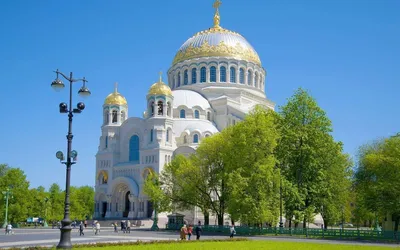
- St. Nicholas Naval Cathedral - a church of Russian sailors.