


Author of materials about St. Petersburg, travel, tours and city routes.

Historian and guide in St. Petersburg, Peterhof, Tsarskoye Selo and Vyborg.
Gatchina is a town where in a single day you can see an imperial palace, romantic parks, mysterious dungeons, ancient cathedrals, and the cozy streets of the historic center. Many come here just for the Great Gatchina Palace, but behind its walls there is far more of interest.
Here you can hear the famous nymph Echo, walk along the Silver and Black lakes, see the knightly Priory Palace, peek into the Birch House, and end the day with a stroll along Sobornaya Street. In this article we tell you what you must see in Gatchina, how to plan a one-day route, and the most convenient way to get there from St. Petersburg.
What to see in Gatchina: article contents
History of Gatchina
Gatchina, what do we know about it? Its history began back in 1499 with the village of Khotchino, but things really took off when Catherine II gifted these lands to her favorite Grigory Orlov in 1765.
Later the palace became the residence of Paul I, the most mysterious emperor, whose love of chivalry and fear of conspiracies still define the anxious and alluring atmosphere of this place.
Since 2023 it has been the official capital of Leningrad Oblast, and believe me, it is nothing like the ornate residences of Peterhof or Tsarskoye Selo.
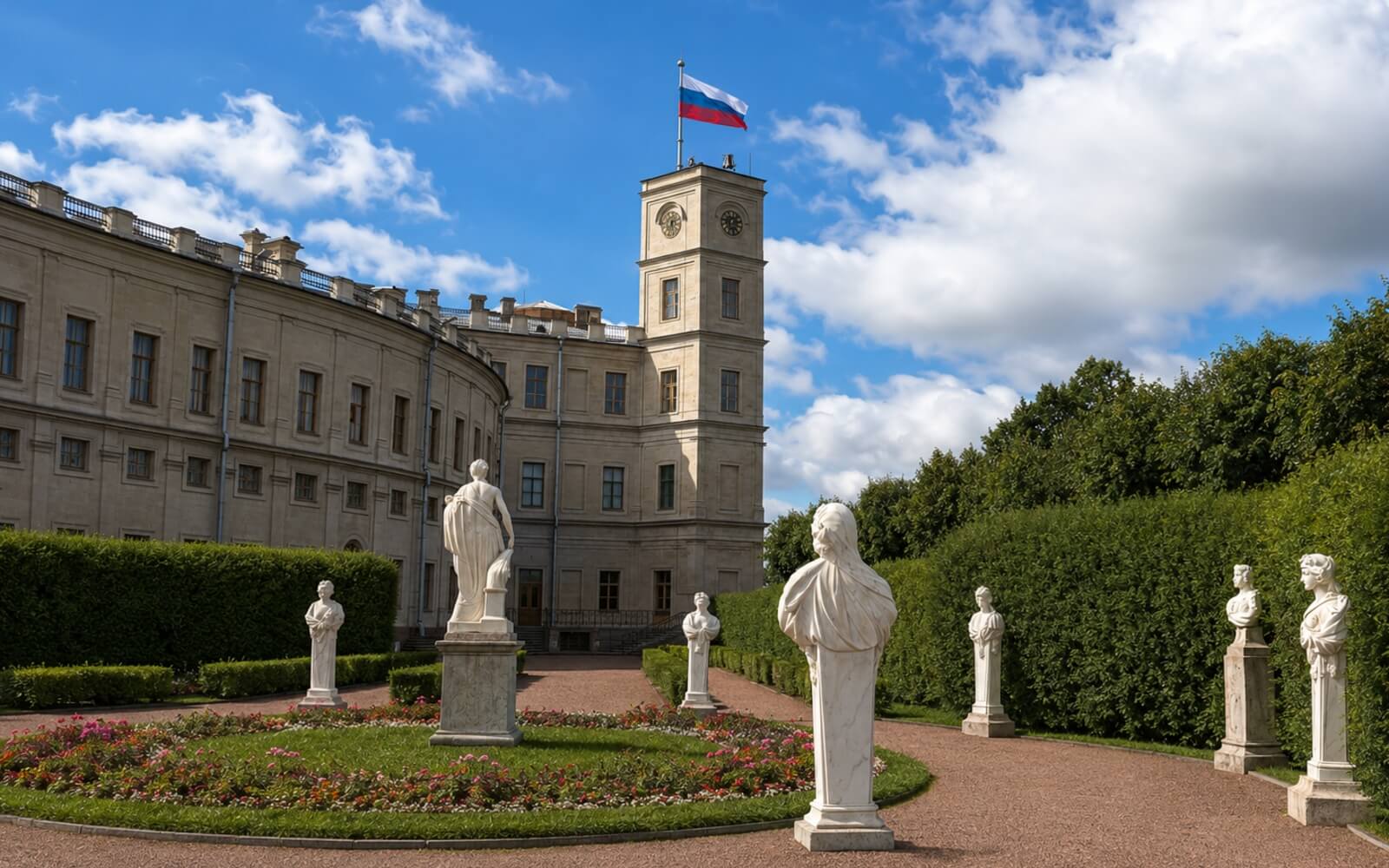
The Great Gatchina Palace
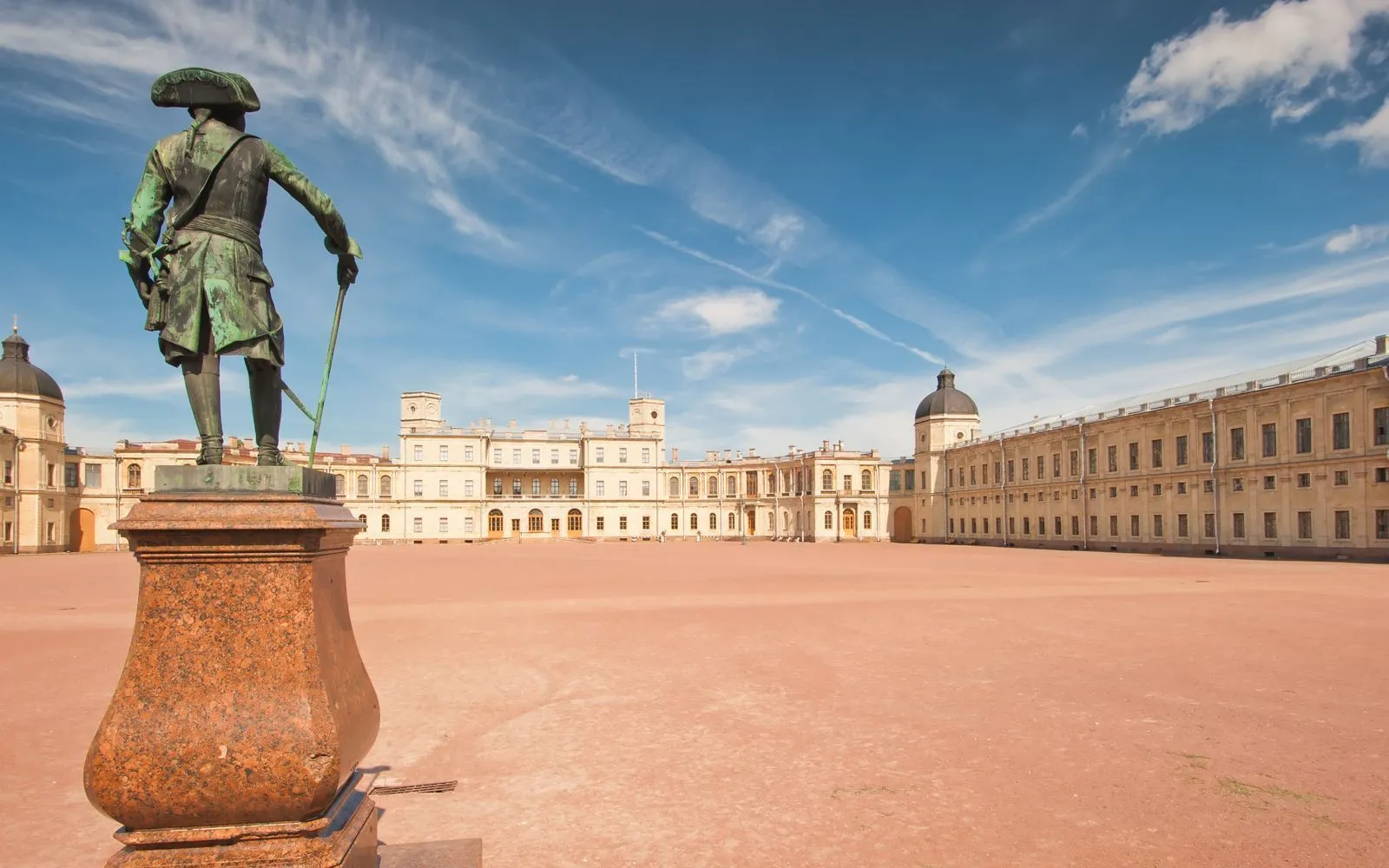
When you first see the Great Gatchina Palace, you immediately realize that before you is a truly stern fortress. Antonio Rinaldi built it as an elegant Italian palazzo for Orlov, but under Paul I the architect Vincenzo Brenna added bastions, moats, and cannons, turning the castle into an impregnable citadel.
Inside you'll find luxurious halls such as the White Hall or the Marble Dining Room, but the most gripping place is the 130-meter underground passage leading to the Silver Lake. There lives the famous "nymph Echo": if you stand by the second pair of lanterns and shout "Who ruled here?", the dungeon will distinctly answer "Paul!". Legends say the emperor's ghost still wanders these corridors, and who knows, maybe you'll be the one to meet him...
You can visit the palace with a guide during a tour to Gatchina with a visit to the Gatchina Palace and Park.
Palace Park
Leaving the palace, you find yourself in Palace Park – a vast landscape ensemble where nature seems natural, though every bush here was planted by order of the tsars.
Be sure to rent a boat on the White Lake to see the Pavilion of Venus on the Island of Love from the water – a graceful building that seems to rise straight out of the waves. Emperor Paul I brought this idea from France, deciding to recreate the atmosphere of romance in Gatchina. Right nearby, behind a stone wall with columns (it's called the "Mask" portal), hides the Birch House. And it comes with a surprise: outside it looks like an ordinary stack of firewood, but inside there is a dazzling gilded mirror hall, created especially to impress the guests of Empress Maria Feodorovna.
Priory Palace
Priory Palace appeared in Gatchina in 1799 as a residence for the knights of the Order of Malta, who found patronage in Russia. Its history is inextricably linked with Paul I, who headed the order and granted it the Priory along with the surrounding lands.
The building was constructed using a rare technology of compressed soil and clay. Instead of lavish halls, the interior has the ascetic tranquility of a medieval monastery. In the exhibition, you can see fragments of genuine "earth bricks." The appearance of the castle on the shore of the Black Lake is complemented by legends of a secret underground passage to the Grand Palace.
Priory Park
Priory Park spreads around the Black Lake, above which rises a snow-white palace with a red roof and a slender spire. Walking paths are laid along the water, offering especially beautiful views of the Priory and its reflection in the lake.
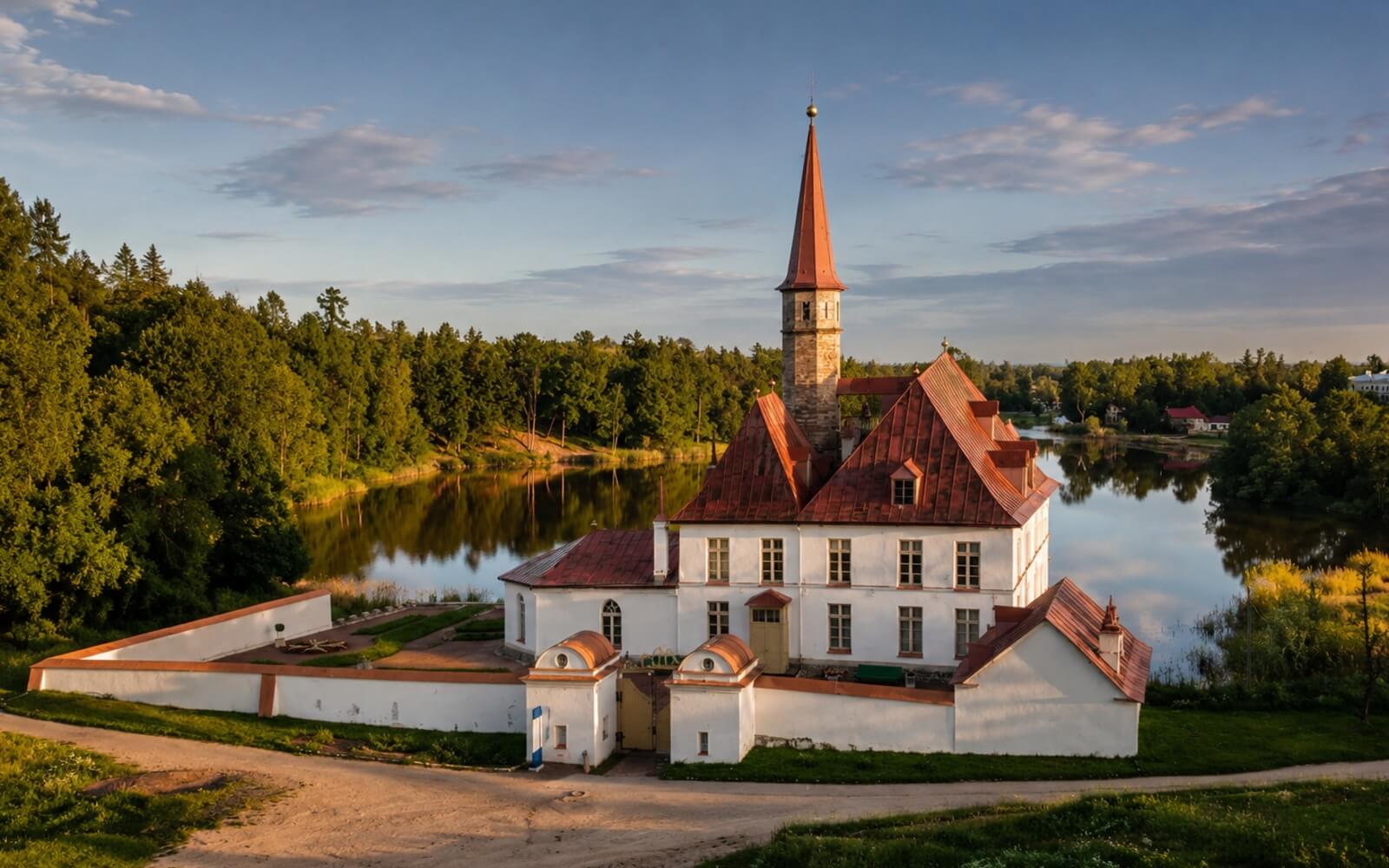
Unlike the more formal Palace Park, there are fewer architectural decorations here and more quiet forest paths, open shores, and natural landscapes. After visiting the palace, it's worth strolling around the lake: the park won't take much time, but it will help you see the Priory exactly as it was intended – as part of a romantic landscape.
Sobornaya Street
After a walk along the stern bastions of the Gatchina Palace, you'll want to change the scenery to something cozier and more lively – and that's where Sobornaya Street comes to the rescue, the heart of the historic center and the main pedestrian artery of the city, which used to be called Malogatchinskaya. Here time seems to slow down: low old houses create the atmosphere of a quiet European town, and the ground floors beckon with the smells of fresh coffee and pastries.
Fairs once bustled here, but today the main city Christmas tree is put up on Sobornaya and all holidays are celebrated, so life here is in full swing all year round.
St. Paul's Cathedral
If you go for a walk along the city's main pedestrian street – Sobornaya, where there are many cozy cafes and old low-rise buildings, then at the very end you will see the majestic Pavlovsky Cathedral. This is a huge white church with five domes, built in the mid-19th century.
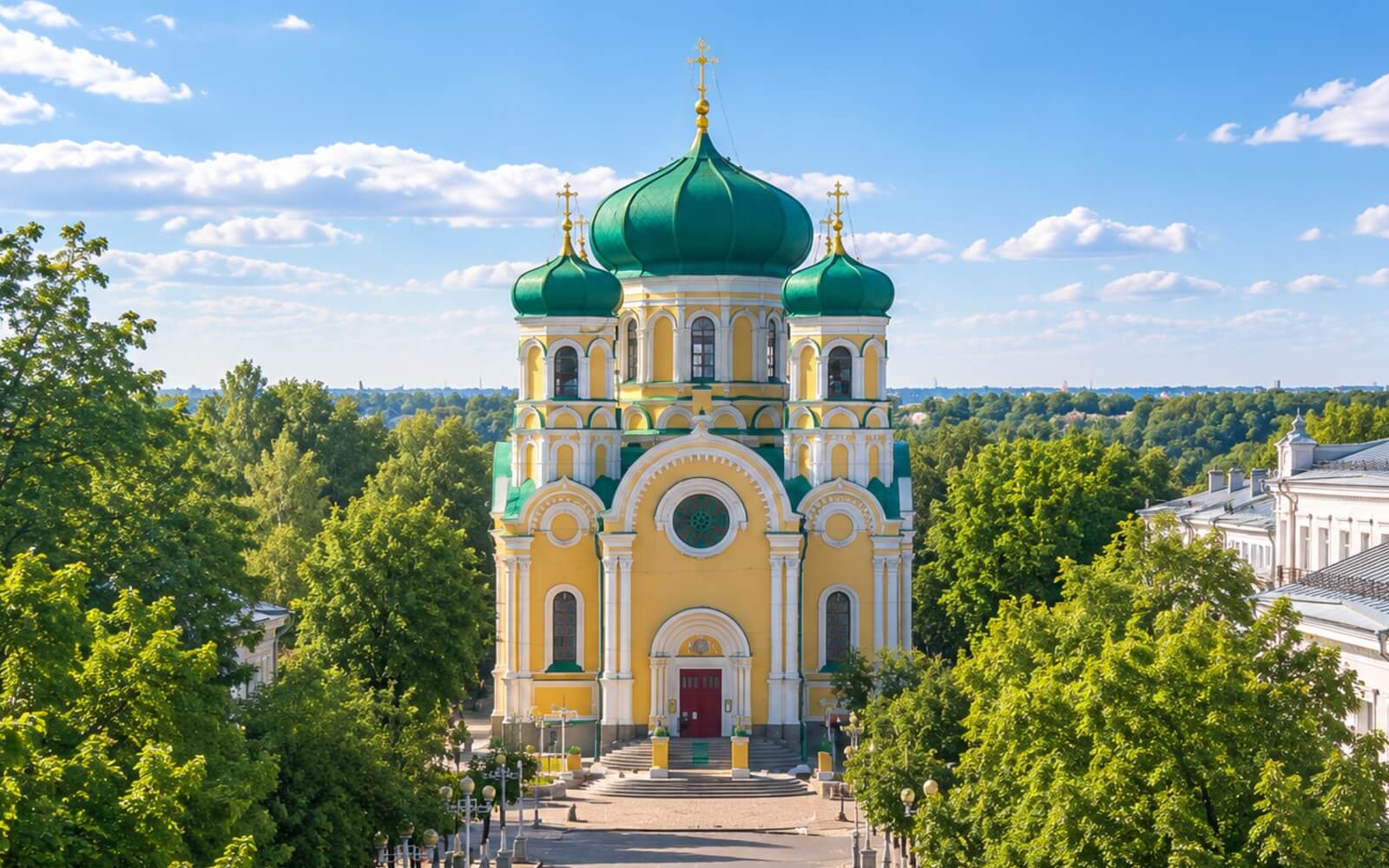
The site for construction was personally chosen by Emperor Nicholas I, who wanted to honor the memory of his father, Paul I. The cathedral was recently fully restored: now it looks very solemn, and its walls have been returned to the very historical color they had 170 years ago.
Intercession Cathedral
Just a 10-minute walk away, on Krasnaya Street, stands the Pokrovsky Cathedral – the largest church in the region dedicated to the Mother of God. Its white walls and bright blue domes look very elegant.
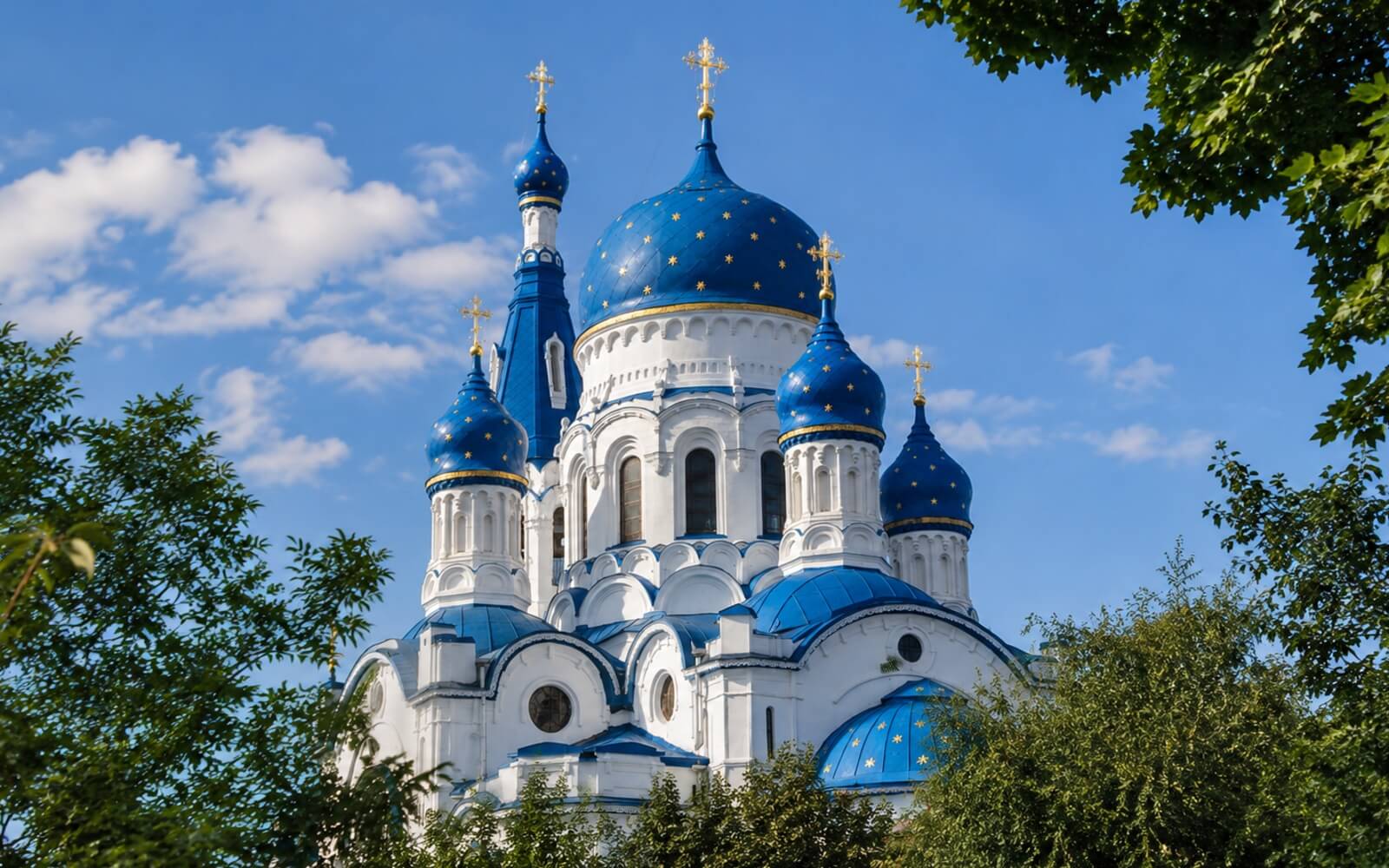
The history of this church is surprisingly "human": once the Karpov merchants won 90 thousand rubles in the lottery and, on the advice of John of Kronstadt, gave it all to the construction. The church was built "by the whole world": townspeople brought materials, and the nuns themselves gilded the iconostasis. Be sure to stop by here at sunset – the sun passes through the stained-glass windows, flooding everything inside with magical colored highlights. And nearby you can find the ruins of a Catholic church, where organ concerts are still held in a Gothic atmosphere.
How to get to Gatchina from St. Petersburg
The most convenient way is to go from the Baltic Station to Gatchina-Baltiyskaya station: the journey takes about an hour, and you can walk to the palace. Trains to Gatchina-Varshavskaya are faster – some trips take about 35 minutes; this station is more convenient for walking around the center and visiting the Priory Palace. From the "Moskovskaya" metro station, bus No. 431 and minibuses No. 18 and No. 18A also run. The journey takes about 40-50 minutes without traffic, and the fare is approximately rubles.
By car, it's about 50 kilometers to Gatchina and roughly an hour's drive. For those who don't want to keep track of schedules and plan a route themselves, it's more convenient to choose an organized tour from the center of St. Petersburg.
Excursion to Gatchina
Gatchina is multifaceted: here the history of Paul I intertwines with palace secrets, legends of ghosts, and the romance of an old park. During the trip, you can walk through the underground passage and hear the famous echo, see the house church, the state rooms, and the Priory Palace.
Head to Gatchina with a tour from Leningrad-Tour to see the residence, uncover its mysteries, and learn stories that are easy to miss during a self-guided walk. Also choose from Leningrad-Tour tours to other suburbs of St. Petersburg!
Excursion to Gatchina
Go to the tour →Frequently asked questions about a trip to Gatchina
What must you see in Gatchina?
In Gatchina, you should definitely see the Grand Gatchina Palace, the Palace Park, the underground passage and the "Echo" grotto, the Priory Palace, the Black Lake, Sobornaya Street, Pavlovsky and Pokrovsky Cathedrals.
What to see in Gatchina besides the palace?
In addition to the Great Palace, visit the Palace and Priory parks, the Birch House, the Pavilion of Venus, the Priory Palace, Sobornaya Street and the main cathedrals of the historic center.
What can you see in Gatchina for free?
For free, you can stroll along Sobornaya Street, see the Pavlovsky and Pokrovsky cathedrals, admire the facades of the palaces and walk along the Black Lake. The conditions for entering the Palace Park depend on the season and time of visit, so it is best to check them in advance on the official website of the museum-reserve.
How long does it take to get to Gatchina from Saint Petersburg?
The journey from Saint Petersburg to Gatchina takes on average from 35 minutes to one hour. The time depends on the chosen train, arrival station, traffic situation and departure point.
What is the fastest way to get from Saint Petersburg to Gatchina?
The fastest way is to take an express train from the Baltic Station to Gatchina-Varshavskaya station: some services take about 35 minutes. To visit the Great Gatchina Palace, Gatchina-Baltiyskaya station is more convenient.
What to see in Gatchina with children?
Children are especially interested in the underground passage with the nymph Echo, a boat ride on the White Lake, the Birch House, the Pavilion of Venus and the Priory Palace, which resembles a small knight's castle.
Can you visit the palace and the Priory in one day?
Yes, the Great Gatchina Palace and the Priory Palace can be visited in one day. For the trip along with walks in the parks, it is better to allow at least six to seven hours and check the museum opening hours in advance.
When is the best time to go to Gatchina?
For walks in the parks, it is best to choose the period from May to September. In autumn, Gatchina is especially beautiful thanks to the golden foliage, and in winter there are fewer tourists and you can calmly explore the palace interiors.
Do you need to buy tickets to the Palace Park?
The visiting rules of the Palace Park change depending on the season and time of day. In certain months and hours, admission may be paid, so before your trip it is recommended to check the current rules on the official website of the Gatchina Museum-Reserve.








