Author of materials about St. Petersburg, travel, excursions, and city routes.

Historian and guide, specializing in St. Petersburg, Pavlovsk, and Tsarskoye Selo.
The Hermitage Theatre – the "diamond" in the crown of the State Hermitage, one of the oldest theatres in St. Petersburg, located in the historic center of the city on the Palace Embankment. Iconic performances were staged here and emperors sat here. Today you can take those same seats and spend a beautiful evening that will remain in your memory for a long time, making you feel part of the imperial family.
The beginning of the legend: A theatre on the site of an imperial palace
The history of this place began on May 10, 1783, when the empress issued a decree to build a new court theatre for the entire imperial family and selected nobility. The choice of location is symbolic, as the theatre was built on the foundation of Peter the Great's Winter Palace. Architect Giacomo Quarenghi used the walls and elements of the previous buildings of the first Russian emperor as the foundation for the future theatre. Today, in the basement of the theatre, part of Peter the Great's rooms have been preserved, including his study and dining room.
The Hermitage Theatre was built very quickly, and already in November 1785 the first season opened with the comic opera "The Miller – Sorcerer, Deceiver and Matchmaker".
By the way, there was another Hermitage Theatre. It was called the Small Hermitage and was located near the chambers of Catherine the Great. She liked that the audience, when going to performances, passed by her chambers. But for the new theatre, they still decided to find another place.
The Hermitage Theatre after the empress's death: How the theatre became a riding hall
After the death of Catherine II in 1796, the theatre fell silent for a short time: her son, Paul I, closed the establishment, but a year later performances resumed, albeit under new, strict rules. Now the auditorium was strictly divided into male and female halves, "middle ranks" took seats by the walls, and ladies were instructed to appear at performances exclusively in Russian dresses. The emperor himself, however, preferred the halls of Gatchina and Pavlovsk to this stage.
In the times of Alexander I, the theatre was turned into a huge hall for masquerades, with a glowing "crystal tent" installed in the center for ceremonial dinners. In the darkness, this glass gazebo shone with all the colors of the rainbow, and music for the guests came from an orchestra hidden behind the walls, filling the halls of the Hermitage Theatre with magic.
By the way, in the 1820s the theatre was turned into a riding hall for three years, so horses galloped around the hall and military drills were held there, due to the transfer of the building to the Life Guards Preobrazhensky Regiment. Because of such training, the interiors were badly damaged, and the building then had to be restored for a long time. After the revolution, instead of a theatre, a university for workers was opened here, and then the building was used simply as a lecture hall for many years. Only in the early 1990s, after a major renovation, music and theatrical life returned here again.
Architectural perfection: Antiquity on the banks of the Neva
The building of the Hermitage Theatre is considered the pinnacle of the work of Giacomo Quarenghi, the architect. The theatre's facade, facing the Neva, looks very beautiful: in the niches "live" statues of Apollo and the nine muses, which symbolize the deep connection of the theatre with ancient traditions and immerse the audience in the atmosphere of ancient Greek art. According to sources, such decoration was chosen to reflect the dignity of the imperial court.
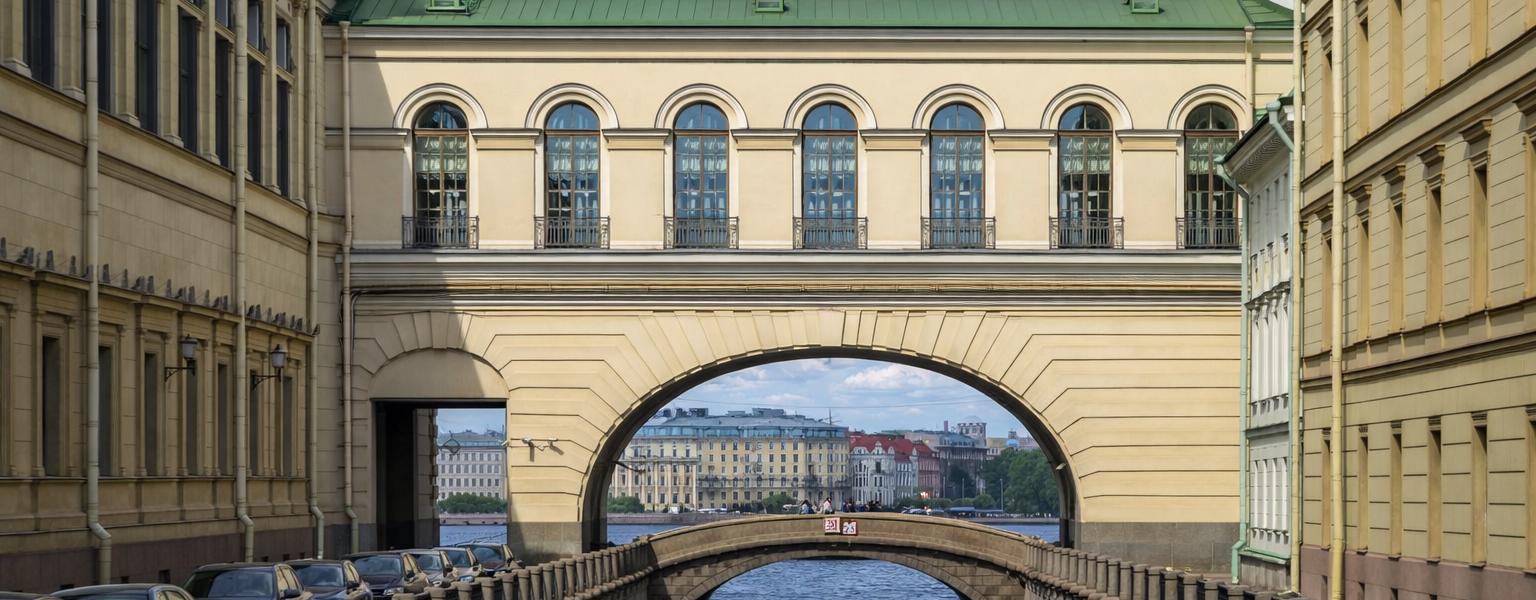
But the most curious detail is the arch over the Winter Canal, connecting the theatre with the main building of the Hermitage. Because of its graceful shape, tourists often compare this passage to the Venetian "Bridge of Sighs". Walking through this gallery before a performance is a separate pleasure, as its windows offer a panoramic view of the Neva and the Peter and Paul Fortress.
Life hack for tourists: don't look for the entrance in house No. 32, where the theatre's sign hangs. To get to a performance, you need to enter the neighboring house No. 34 (the entrance of the Large Hermitage) through the door with a canopy on the side of the embankment. You will walk through that very famous bridge and immediately feel like an honored guest of the imperial family.
Inside the "magic box": the interior of the Hermitage Theatre
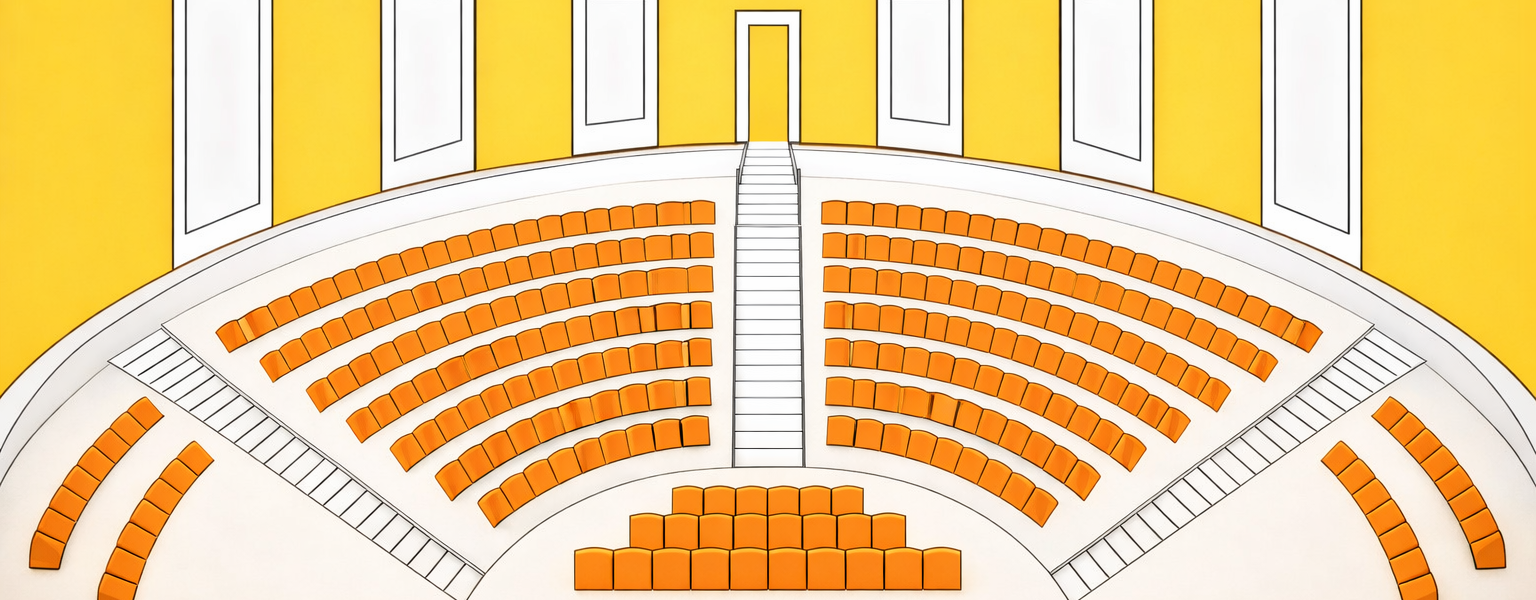
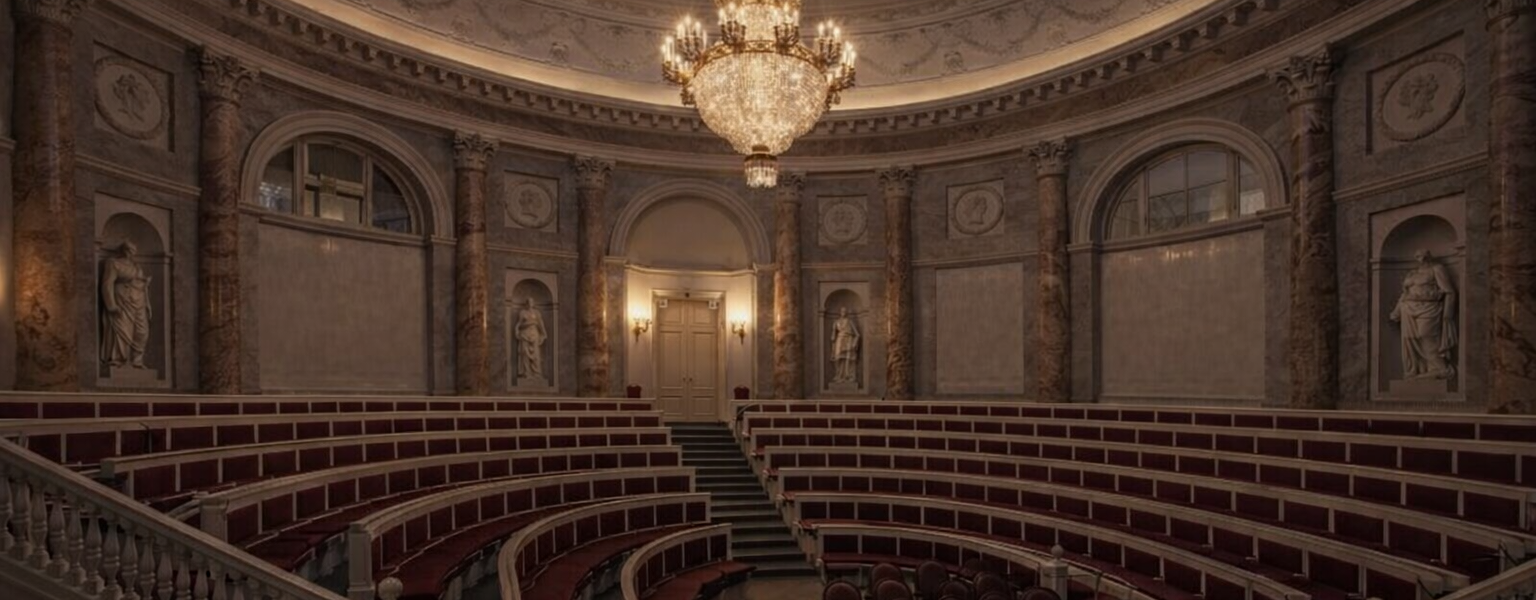
Quarenghi was a fan of antiquity, so he designed the hall for the Hermitage Theatre in the form of a semicircular amphitheater, as in Ancient Greece. The hall has only 6 rows and about 250 seats, so it creates a cozy, almost "homey" atmosphere – the stage is perfectly visible even from the last rows without binoculars, and the artists and orchestra are literally within arm's reach.
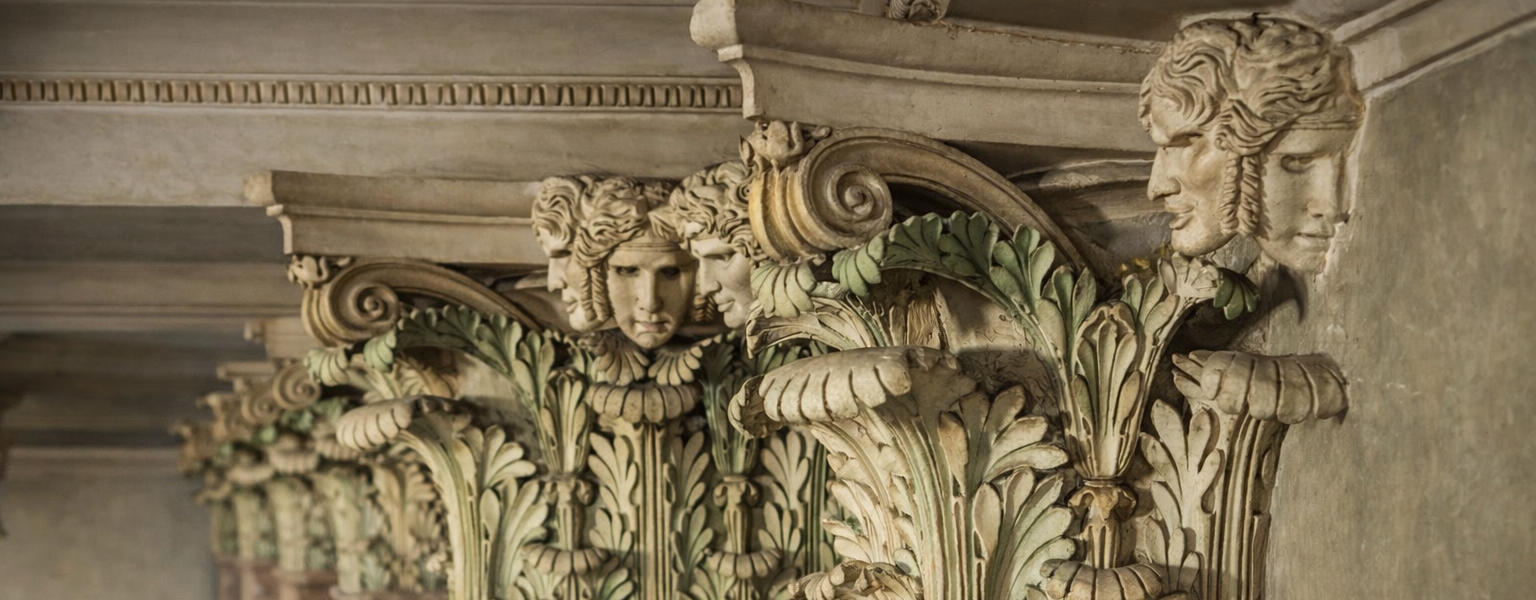
If you look closely at the pink marble columns, you can notice theatrical masks on their tops (capitals). These details were copied from real ancient finds that the architect personally discovered during excavations in Pompeii.
By the way, did you know that right under the stage you can find the actual rooms of Peter the Great? It turns out they were discovered during excavations, and now ordinary people can stroll through the tsar's study and dining room. There also stands his famous "Wax Person", which looks almost alive because the master used the emperor's real hair and his authentic clothing. If only one could take a photo with Peter the Great himself and show friends…
What is the secret of the acoustics in the Hermitage Theatre
One of the main highlights of the Hermitage Theatre is its phenomenal acoustics. To make the sound clear and voluminous, the architect made the vaults of pine wood and managed to find the perfect balance between the size of the hall and the depth of the stage, which experts consider unique and unmatched anywhere in the world. Thanks to this, the music literally "envelops" the listener, and in the front rows you can even hear the rustle of delicate ballet pointe shoes on the stage.
What happens at the Hermitage Theatre today?
Now you don't have to be a member of the imperial family to see the Hermitage Theatre from the inside in person. Today it is a venue where classics meet technology. The theatre has no company of its own, but leading ensembles perform here regularly, one of which is the "Imperial Ballet", or invited soloists of the Mariinsky Theatre. Modern productions of "Swan Lake", "The Nutcracker" and "The Sleeping Beauty" are accompanied by animated video projections on the walls of the hall, which complement the historical scenery and give you the opportunity to become part of the performance. It is safe to say that the theatre will leave no one indifferent!
You can go here alone, with your family, or with your significant other. Arrange a special evening – look at the evening lights of central St. Petersburg, put on your most beautiful outfit, allow yourself to dissolve in the aroma of fresh coffee in the theatre buffet before enjoying the famous "Pavlova" dessert, take a memorable photo in the foyer with a panoramic view of the Neva.
Hermitage Theatre: answering questions
-
Hermitage Theatre how to get there?
You can get to the Hermitage Theatre by taxi or public transport to the "Palace Square" stop (buses No. 7, 10, 24, 191 and trolleybuses No. 1, 7, 10, 11). -
Hermitage Theatre address
Palace Embankment, 32, however the entrance for spectators is in the neighboring building (house No. 34, the Large Hermitage). -
How many seats are there in the Hermitage Theatre?
The hall has a total of 250 seats. -
What is the dress code at the Hermitage Theatre?
Although in the past it was mandatory, modern reviews only recommend elegant attire to maintain the atmosphere. -
Architect of the Hermitage Theatre
The architect of the Hermitage Theatre is Giacomo Quarenghi.
Tour of the Hermitage
Why limit yourself to just the Hermitage Theatre when you can visit the entire Hermitage? It has become so easy to touch the beautiful, and Leningrad Tour will help you with that!
We have thought of everything to make your day of getting acquainted with the Hermitage comfortable, hassle-free and without fuss. You simply enjoy the impressions and beautiful views, while we take care of all the organization.
Besides the Hermitage, on the tour you will visit the most famous sights without which it is impossible to imagine St. Petersburg - the cruiser Aurora, St. Isaac's Cathedral, the Church of the Savior on Spilled Blood. A must-see point on the route will be the Peter and Paul Fortress – the very heart of the city, where its history once began. This walk will let you see all the main symbols of the Northern Capital in just one day.

Tour of the Hermitage
Go to tours →