Author of materials about St. Petersburg, travel, excursions, and city routes.

Mikhailovsky Palace in St. Petersburg was once a famous place for musical evenings, lavish balls and simply the chambers of the imperial family. Today it is the main building of the State Russian Museum, which houses genuine world-class masterpieces. Let's find out how an empty lot in the city center first turned into a palace and then into a treasure of Russian culture, and what is a must-see inside.
How Mikhailovsky Palace came to be
Where the palace now stands, in the early 19th century there was an ordinary vacant lot and wild thickets. The idea to build housing here for the youngest son of Paul I, Mikhail, belonged to the emperor himself. Immediately after his son's birth, Paul ordered money to be set aside from the treasury every year so that by coming of age the prince could "live like a tsar."
The emperor did not live to see the result – construction began only in 1819 under his eldest son, Alexander I. The project was handled by the architect Carlo Rossi, who redesigned the entire district, creating a square and new streets. It all took about 8 million rubles – a huge sum for that time.
From balls to museum halls
From 1825 the palace became home to Grand Duke Mikhail Pavlovich and his wife Elena Pavlovna. The residence quickly turned into a center of St. Petersburg's cultural life. Balls for 850 people were held here, musical evenings were organized, with guests including Tchaikovsky, Liszt and Schumann themselves. At the famous "Thursdays" at Elena Pavlovna's, the entire intellectual elite of that time gathered.
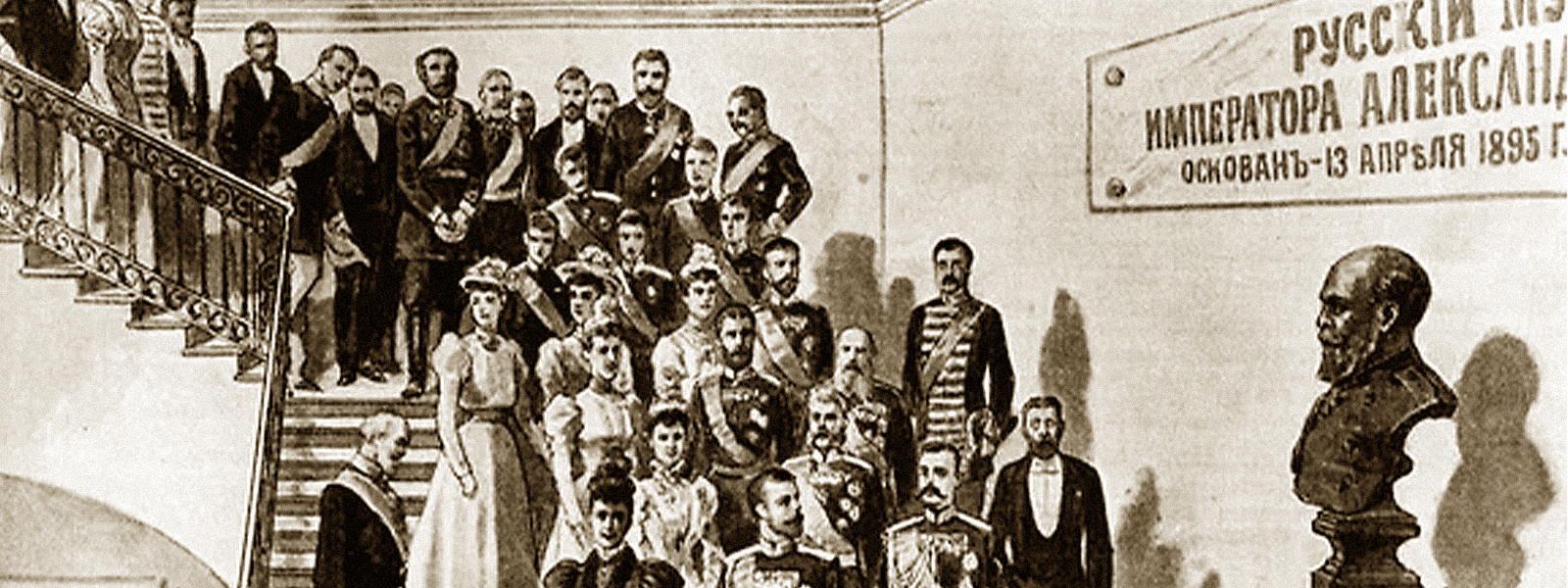
By the end of the century the building had begun to decay, and in 1895 it was bought by Nicholas II. He decided to open here the first state museum of Russian art in memory of his father Alexander III.
Most of the palace halls were rebuilt as exhibition spaces. After a three-year reconstruction, the museum opened its doors to visitors. The collection featured items of Russian art from the Winter, Gatchina and Alexander Palaces. The museum opened to the public in March 1898.
Architecture of Mikhailovsky Palace
Mikhailovsky Palace occupies an area of about 10 hectares. The building is designed in the Empire style, its compositional center is the main building, complemented by two symmetrical wings. Rossi's project united the palace with the city square (now Arts Square).
On the far side of the palace, which faces the Field of Mars, Carlo Rossi laid out the Mikhailovsky Garden. The architect transformed what had been a "wild forest" into a space where strict planning combines with a natural park style. The former regular-shaped ponds were given a more natural appearance and adorned with charming little bridges. In front of the building itself a large open meadow appeared, and on the embankment of the Moyka River a neat pavilion with a pier was built.
Interesting fact: the palace facade is free of excess gold; its beauty lies in its laconicism and details. For example, on the fence and walls you can notice images of military trophies – swords, armor and laurel wreaths, symbolizing Russia's success in the wars of the early 19th century.
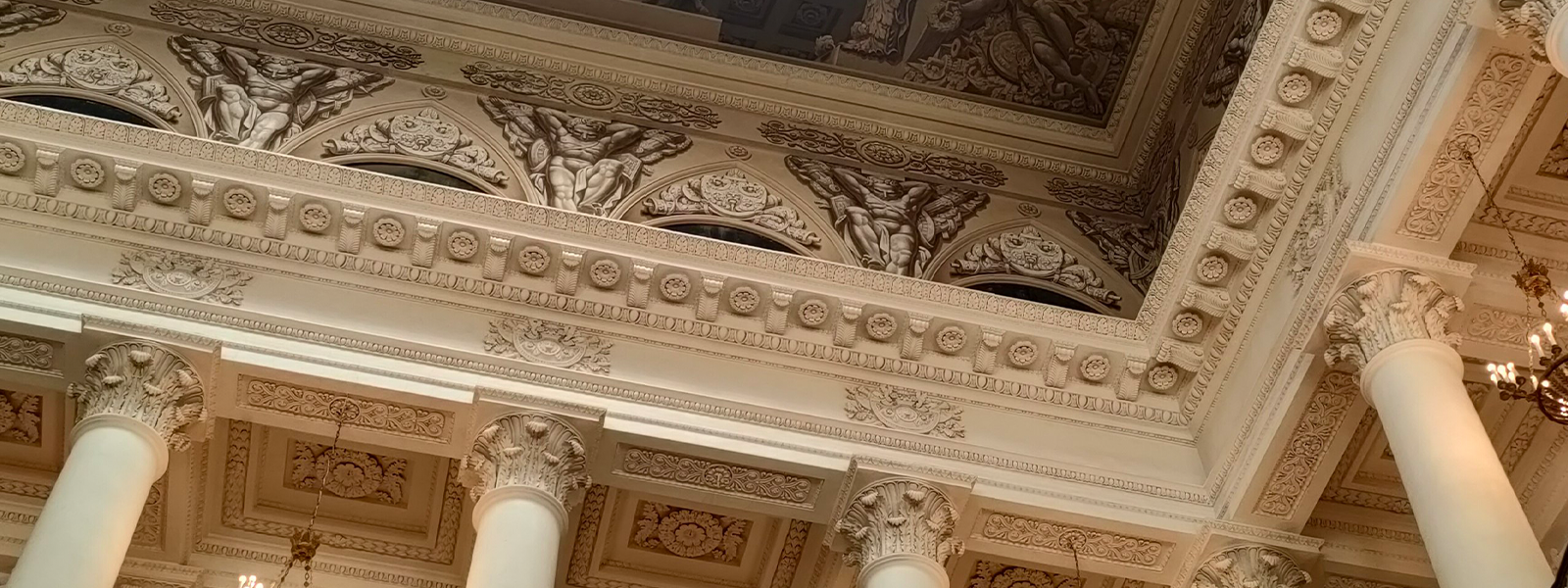
Layout and interiors of the Mikhailovsky Palace
The palace has 4 floors. The height of the central room – the grand vestibule – is a full 25 meters. It is worth paying attention to the ceiling: it is painted so skillfully that flat images seem like three-dimensional sculptures. So beautiful it takes your breath away.
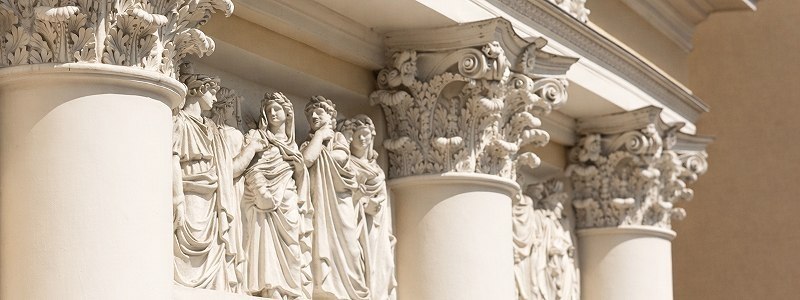
The building is divided into zones: the first floor housed ordinary living rooms and children's rooms, while the second was intended for celebrations and receptions. The building also has a mezzanine floor, where in the south-eastern corner a house church of Saint Archangel Michael was arranged. Just imagine that ordinary people like us once lived here, but on what a grand scale!
If there is a place in the palace where time decided to stand still, it is the White Hall. This is the only interior that has come down to us almost in its original form: elegant armchairs upholstered in blue silk, parquet made of various types of wood. In this hall everything has been preserved exactly as Carlo Rossi himself saw it 200 years ago.
It was here that Grand Duchess Elena Pavlovna held her famous soirées, and the walls of the hall still remember the vibrations of the keys touched by the hands of famous composers of that time.
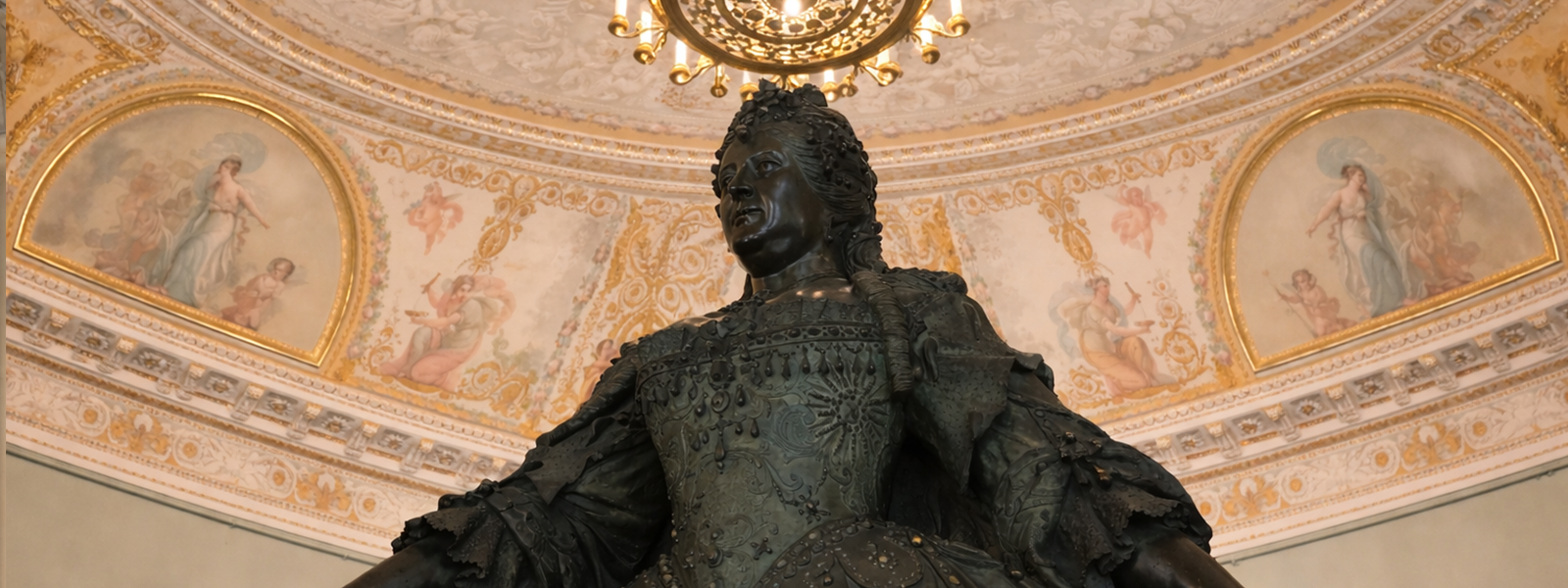
The Small Study (Hall No. 7) is one of the coziest halls, also preserving the authentic interior of the private chambers of Princess Elena Pavlovna. Here an antique fireplace, a mirror and wall paintings that the wife of the great man once saw have been preserved. By the way, it is in this hall that the famous sculpture "Anna Ioannovna with a Little Blackamoor" is located. It seems that no matter which side you stand from the sculpture, it watches you intently, as if keeping order in the chambers.
Museum collections: what to see in the Mikhailovsky Palace
Today the halls hold thousands of works – from ancient icons to 19th-century canvases, but there are "hits" that everyone comes for:
- Ancient art (Halls 1–4): "Angel with Golden Hair" (12th century). The oldest icon in the collection, and if you come closer to it, you can see thin threads of real gold on the angel's hair.
- Karl Bryullov "The Last Day of Pompeii". In the left corner of the painting the artist depicted himself with a box of paints on his head.
- Ivan Aivazovsky: the famous "The Ninth Wave" always draws crowds of people.
- The Peredvizhniki: on the first floor hang Repin's "Barge Haulers on the Volga", Vasnetsov's "The Knight at the Crossroads" and Kuindzhi's "Moonlit Night on the Dnieper".
Everyone without exception should see the exposition of the Russian Museum within the walls of the Mikhailovsky Palace. To visit here means to touch the history of your country and St. Petersburg through art, which is a mirror of the past. Here you can still catch the scent of rosewood, amaranth and maple, from which the antique parquet is assembled, and you can still hear the piano on which Schumann played. You want to pause for a second, breathing in the freshness of the Mikhailovsky Garden from the open window, feel Anna Ioannovna's humble gaze upon you and experience pride for your country and its great cultural heritage, preserved to this day. It doesn't matter whether you come here alone, with family or with your significant other – the place will give you inspiration and a sense of belonging to something truly great.
From the memory of an emperor to the treasure of the people: the history of renaming the Russian Museum
Since 1917 the museum was officially called "The Russian Museum of Emperor Alexander 3", as it was founded by Nicholas 2 specifically in memory of his father. After the October Revolution, the mention of the royal family was removed from the name, securing its status as the main national art repository under the name familiar to us – the State Russian Museum. This change officially turned the imperial collections into the world's largest national collection of Russian art, open to everyone.
Mikhailovsky Palace: answering questions
-
Mikhailovsky Palace how to get there
The easiest way to reach the palace is on foot from the metro stations «Nevsky Prospekt» or «Gostiny Dvor». Also, from the side of Sadovaya Street, the public transport stop «Inzhenernaya Street» is nearby. -
Mikhailovsky Palace ticket price
A standard adult entrance ticket costs 550 rubles, and for privileged categories (pensioners, students) – 400 rubles. Depending on the specific exhibition, the cost of admission may range from 200 to 900 rubles. -
Mikhailovsky Palace where is it located
Mikhailovsky Palace is located at: Inzhenernaya Street, 4. The entrance to the building is from the side of Arts Square. -
Mikhailovsky Palace paintings
The Russian Museum displays the following famous paintings: «Suvorov's Crossing of the Alps», «The Knight at the Crossroads» and «Boyan», «Moonlit Night on the Dnieper», «Christ and the Sinner», «The Last Day of Pompeii», «The Ninth Wave» and others. -
Mikhailovsky Palace opening hours
The Russian Museum is open daily except Tuesday, from 10:00 to 19:00 or 20:00 (depending on the day of the week), and on Thursdays it may operate from 13:00 to 21:00. Admission to the halls ends one hour before the museum closes.
Tour of Mikhailovsky Palace
And to enjoy all the luxury of the cultural capital, we invite you on a tour with Leningrad Tour. In addition to the Mikhailovsky Palace, you will visit St. Smolny Cathedral and learn its secrets, take photos with the mysterious Egyptian sphinxes and admire St. Isaac's Cathedral from all sides. There will also be an opportunity to look into a souvenir shop so you can take a little piece of St. Petersburg with you.

Tour of Mikhailovsky Palace
Go to the tour →