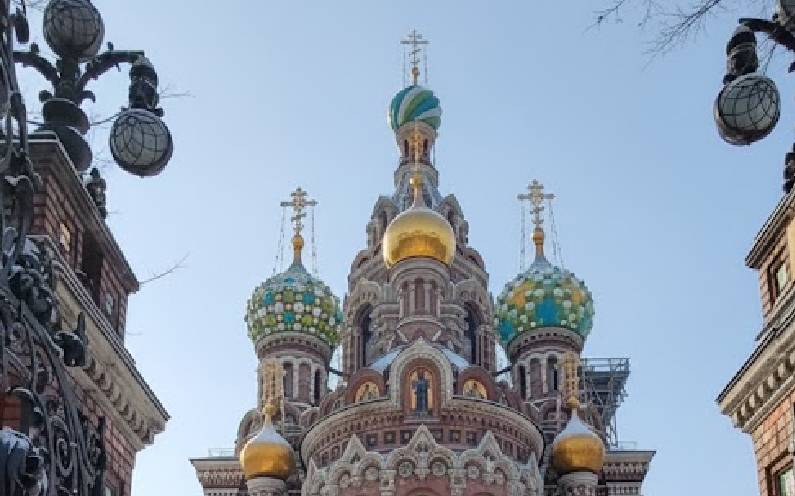
The Church of the Savior on Spilled Blood has many names - it is also called the Cathedral of the Resurrection of Christ.
In any case, it is a special church, as it was built on the site of the mortal wounding of Tsar Alexander II in March 1881.
Coming to power in 1855, Alexander II initiated a series of political, judicial, and urban reforms. For example, in 1861 he freed Russian serfs from serfdom and began military reforms. He knew the danger he was exposing himself to, having survived a series of assassination attempts, including an explosion in the Winter Palace and a train derailment. It all ended in 1881, when he did not survive the bombing of his royal carriage by the anarchist group "Narodnaya Volya".Inside the church, you can see a skillfully crafted chapel marking the exact spot of Alexander's death. The chapel is decorated with precious stones - topazes, lapis lazuli, rhodonite, and even mother-of-pearl. At its base, you can even see a piece of the cobblestone pavement from that time.
Immediately after his death, his successor, Alexander III, announced his intention to build a church on the site of his father's death. The result was a masterpiece of world architecture.
The Church of the Savior on Spilled Blood is today one of the most beautiful and recognizable churches in Russia and is among the best mosaic churches in Europe, where 7,000 square meters of mosaics cover the walls and ceiling. The unique mosaics, the shine of the domes, and the atmosphere of old St. Petersburg make the Church of the Savior on Spilled Blood a must-see on every traveler's itinerary.
Here you can slow down, take a closer look, and feel the spirit of 19th-century Russian history.