


Writes about St. Petersburg, its history, sights, museums and routes.
Historian and guide for Peterhof, Oranienbaum, and St. Petersburg architecture.
A trip to St. Petersburg is impossible to imagine without the town of Pushkin (Tsarskoye Selo). Amid the splendor of palaces stands the Imperial Tsarskoye Selo Lyceum, founded in 1811 - a place with a special energy, where people who changed Russian culture and the history of the state were educated.
The idea of Alexander I and Mikhail Speransky
The name "lyceum" refers to antiquity and Aristotle's philosophical school. The Russian Lyceum became a bold experiment of Emperor Alexander I and reformer Mikhail Speransky. Its goal was to educate a new generation of statesmen guided not by ranks, but by love for the Fatherland. Education at the lyceum was equivalent to a university one.
Lyceum life: "cells" and daily routine
The first intake of 1811 consisted of boys aged 10–12 of noble origin. The Lyceum became their home for six years. The conditions were spartan but fair: discipline was combined with respect for the individual - a rarity for the early 19th century.
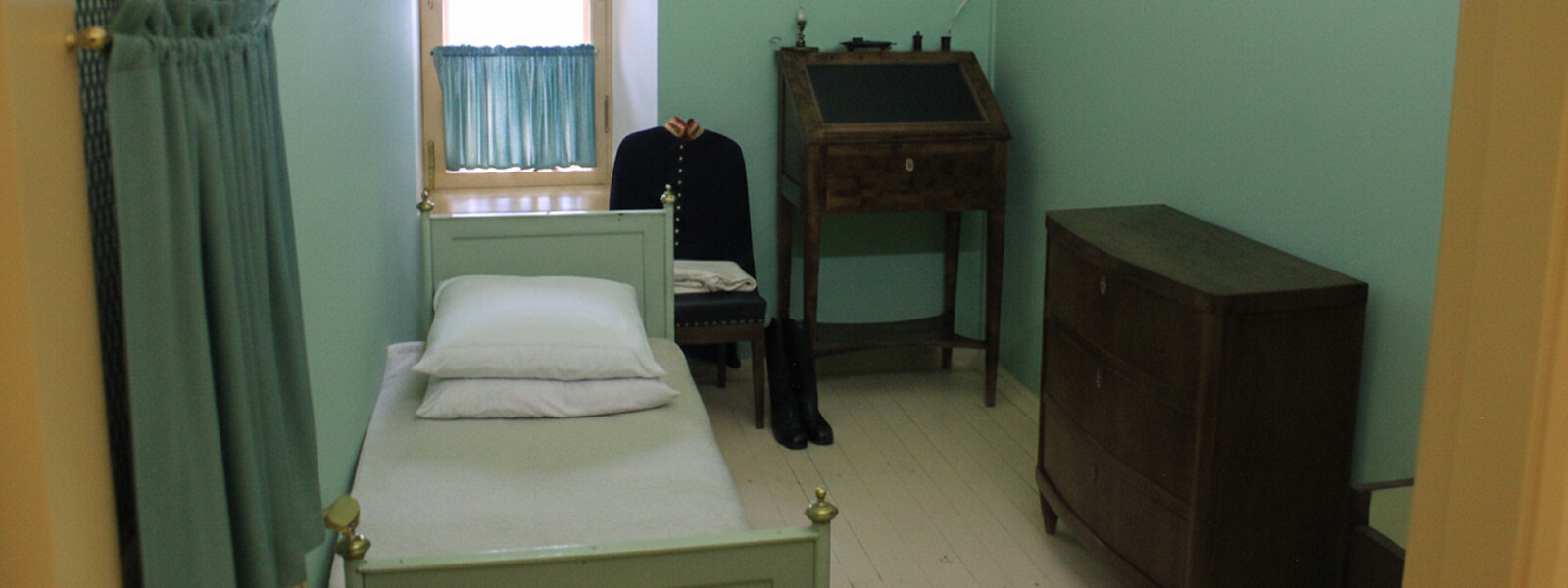
Each student was entitled to a small separate room with an iron bed, a chest of drawers and a table. The partitions between the cells did not reach the ceiling — the lyceum students could talk at night, holding their own "secret councils."
Wake-up was at 6 a.m., classes lasted until 5 p.m. Leaving the lyceum grounds was forbidden even during holidays - the idea was for the young men to live "inside" the educational system and form a common circle and habits.
Director Vasily Malinovsky banned corporal punishment and introduced addressing students with "Vy" (the formal "you") - for its time this sounded almost revolutionary. Hence the famous "lyceum spirit": freedom, dignity and camaraderie.
Studying at the Lyceum: one is the highest grade
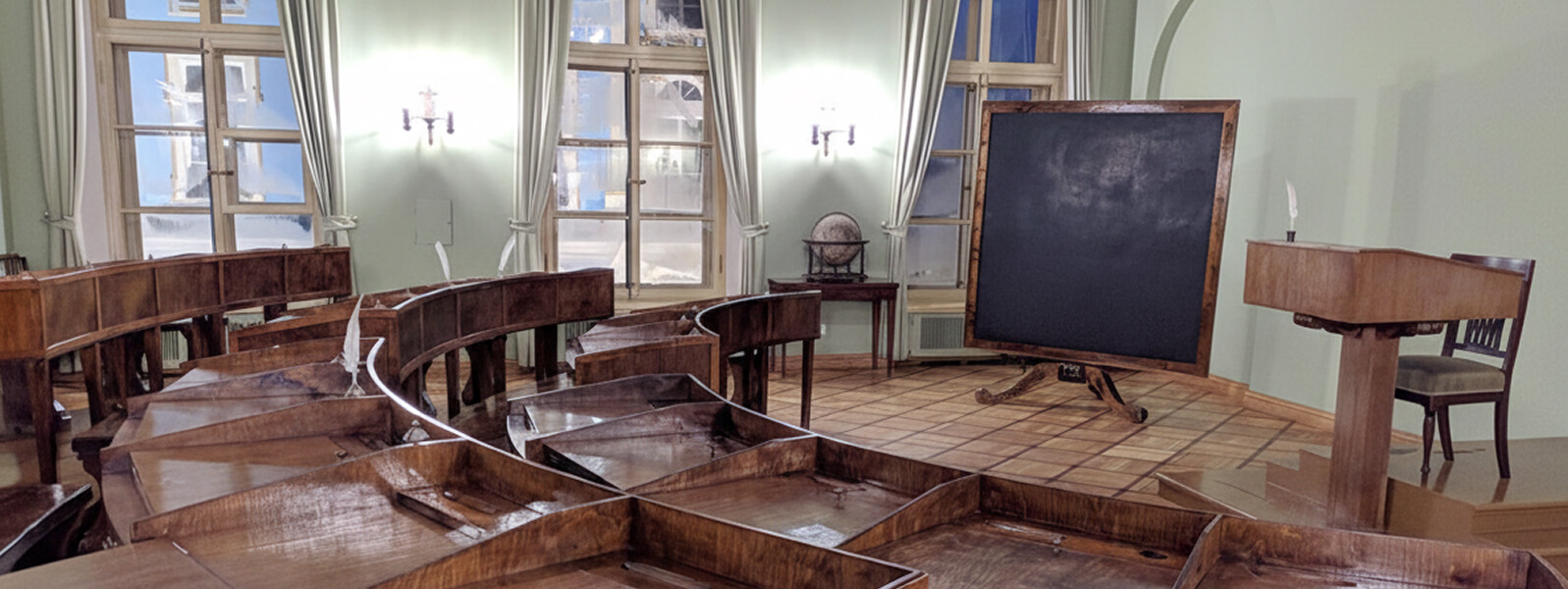
The grading system was unusual: "one" was considered the highest grade, while "four" meant a mediocre level of knowledge. Academic performance directly affected the daily life of the lyceum students. Alexander Pushkin was an average student and upon graduation received the rank of the X class. Besides lessons, the young men fenced, played music and published handwritten journals - including "The Lyceum Sage."
Secrets of the Lyceum: the murderer and the infirmary
The history of the lyceum also holds dark pages. In 1814-1816 it turned out that the lyceum students' assistant Konstantin Sazonov was a serial killer. Pushkin later recalled ironically that he survived only by a miracle.
A more pleasant place was considered Dr. Franz Peschel's infirmary: it was warmer there, the food was better, and sometimes patients were treated to red wine or English porter - almost a resort by the standards of lyceum discipline.
Famous graduates of the Tsarskoye Selo Lyceum
On October 19, 1817, the first graduation took place. As a memento, the young men received cast-iron rings in the form of joined hands - a symbol of brotherhood and loyalty. This "golden class" gave Russia and the world names that even today sound like a password of the era.
- Alexander Pushkin - the great poet, the "voice" of the Russian Golden Age.
- Alexander Gorchakov - statesman and chancellor, one of the greatest diplomats of the 19th century.
- Ivan Pushchin and Wilhelm Küchelbecker - members of the Decembrist movement.
- Anton Delvig and Fyodor Matyushkin - vivid figures of the Lyceum circle and the cultural milieu of the era.
Visiting the Tsarskoye Selo Lyceum today
The Lyceum is located in the center of Pushkin, next to the Catherine Palace. In the museum you can see cell No. 14, where Pushkin lived, and the Great Hall, where he read his poems to Derzhavin. Around it is the Lyceum Garden: a place of walks, conversations and those very "first ideas" that would later become great history.
How to get to the Tsarskoye Selo Lyceum
By commuter train: from Vitebsky railway station in St. Petersburg to the "Tsarskoye Selo" station. Travel time is about 30 minutes.
By bus: from the metro stations "Moskovskaya", "Kupchino" or "Zvezdnaya". Travel time is 40-60 minutes (depending on traffic).
By car: along Pulkovskoye Highway, about 40-50 minutes.
Would you like to touch the history of the "golden age"? Book a tour today and walk through the corridors where great poetry was born!
Tours around Saint Petersburg
Tsarskoye Selo is convenient to visit as part of a one-day tour: this way you will have time to see not only the Lyceum, but also the main highlights of Pushkin - palaces, parks and atmospheric walking routes without extra logistics.

Excursion to Pushkin from Saint Petersburg
Visit Catherine Palace →








