


Author of materials about St. Petersburg, travel, excursions, and city routes.

A guide to St. Petersburg's architecture, the history of the Romanovs, and the suburban residences.
In the very heart of Saint Petersburg, right on the embankment of the Griboyedov Canal, there is a place where classical rigor meets genuine creative rebellion. Yes, we are talking about the Benois Wing — the "youngest" building in the Russian Museum, which holds masterpieces by Malevich, Vrubel, Kandinsky and many other extraordinary artists.
History of the Benois Wing: from printing house to Palace of Arts
It all began in the early 20th century, when the Academy of Arts realized it was catastrophically short of space for exhibitions. The idea of creating a "Palace of Arts" was supported by Nicholas II himself, who personally allocated a plot at the corner of Inzhenernaya Street and the Griboyedov Canal. Previously, the old State Printing House stood there, which by that time was in disrepair.
Two architects took on the project – Leonty Benois and Sergei Ovsyannikov, but the building is named after Benois, although Ovsyannikov's role was greater, as he was a full co-author of the project and supervised all construction work. The foundation stone was laid on June 27, 1914, but the war made its adjustments and construction was completed only by 1919. The building was transferred to the Russian Museum only in the early 1930s. In 4 years there will be an anniversary, 100 years since the opening of the wing.
We may have already noticed that the Russian Museum holds many palaces of St. Petersburg and their relics, one of which is the Marble Palace.
You can read about how Catherine II gifted it to her favorite Orlov, its walls of 32 types of marble, unique interiors, and the collections of the Russian Museum in our article .
Architecture: restraint and light
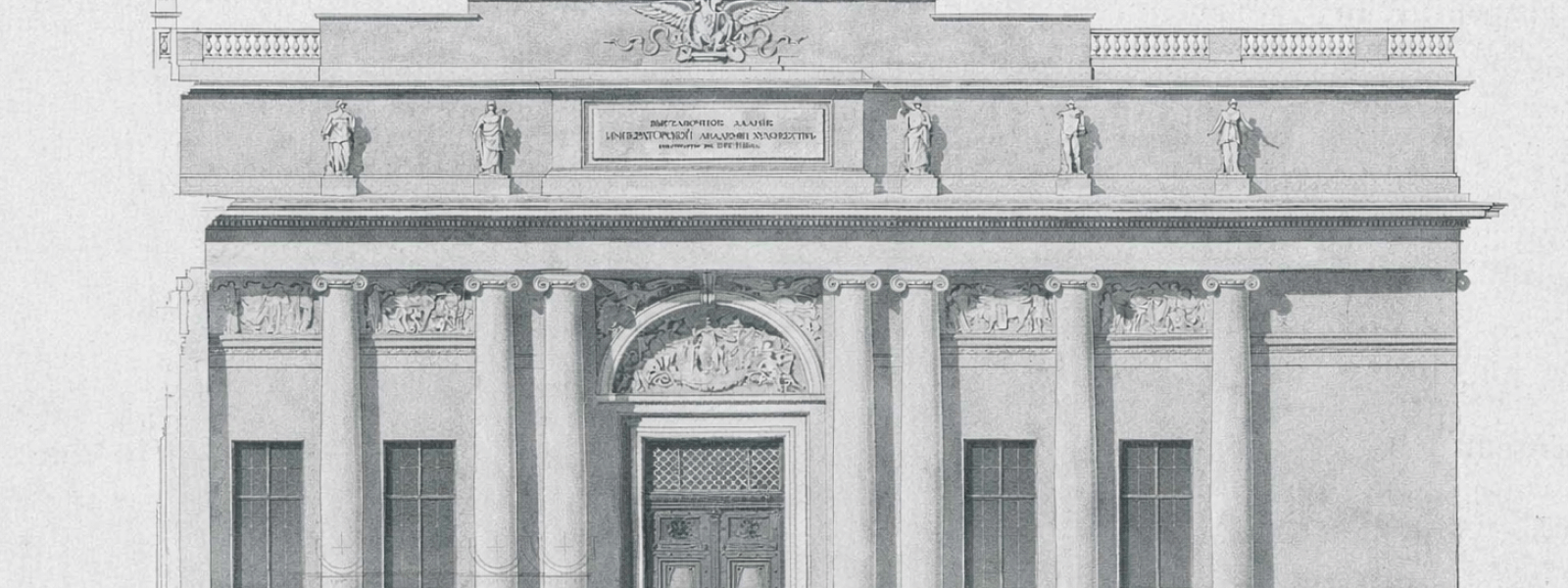
If the Mikhailovsky Palace is imperial chic, then the Benois Wing is restrained elegance. The building was constructed in the neoclassical style: yellow walls, snow-white Ionic columns. Everything is very strict and St. Petersburg-like. According to the original plan, the facade was to be decorated with various sculptures and bas-reliefs, and here too the war made its adjustments, and the decoration remained very restrained.
By the way, it was only in the 1950s that the wing was connected to the main Mikhailovsky Palace by a special passage, creating a unified museum complex.
What to see in the Benois Wing: from classics to avant-garde
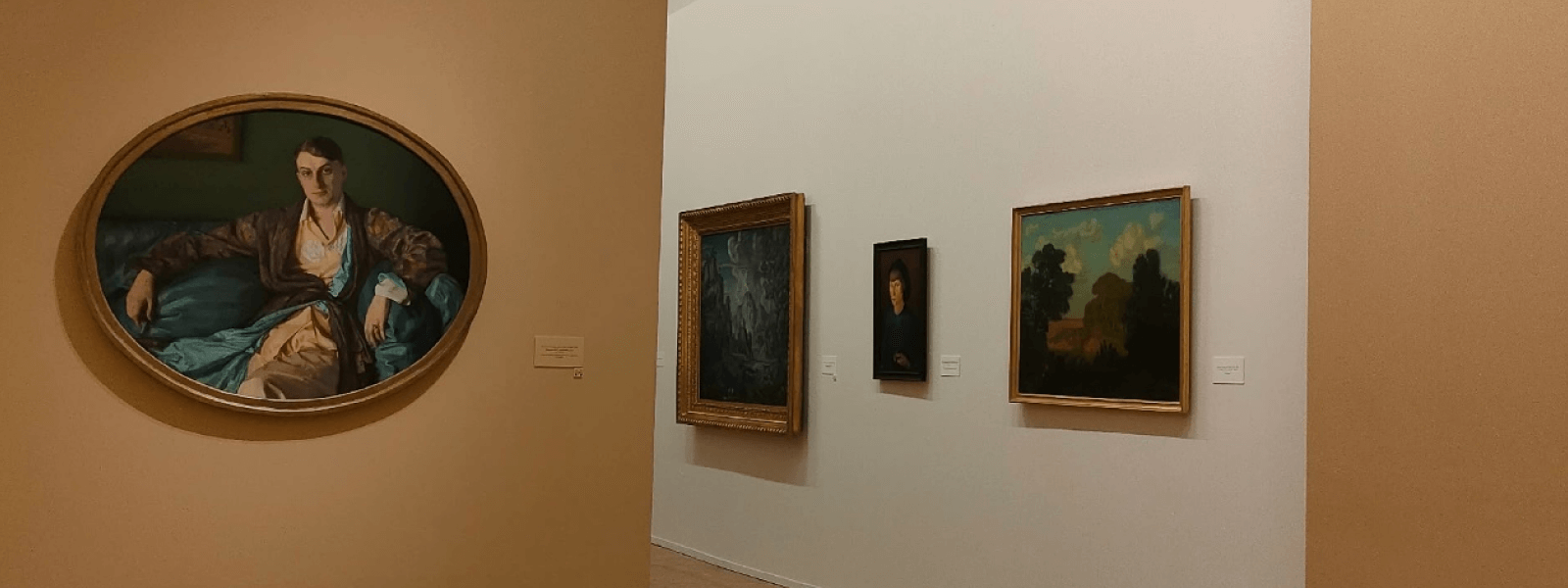
The Benois Wing got all the most unusual and modern art.
An important fact: the museum complex follows a chronological order: the Mikhailovsky Palace displays works from the 12th–19th centuries, and the Benois Wing logically continues the story, starting from the late 19th century to the present day.
To learn more about when the Mikhailovsky Palace was built, how Nicholas II's imperial collections became public, and what you must see in the main building of the Russian Museum, read in our article .
Avant-garde, abstractionism
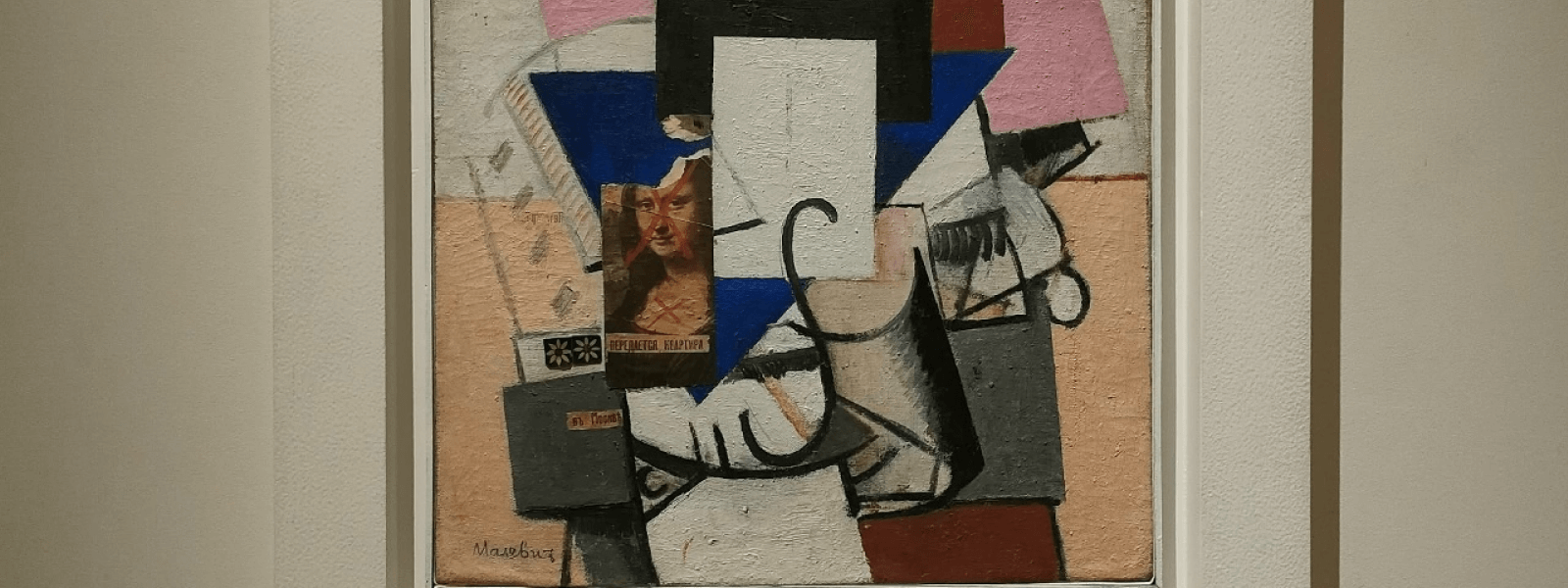
For those who love to seek meaning in forms and colors, masterpieces by Kandinsky, Chagall, Malevich, and many other 'revolutionary' artists are on display. The authors created their own new reality, rejecting the ideals of the past. Can colorful squares, triangles, and other geometric shapes be called art? Come here and decide for yourself…
Yes, it is within the walls of the Benois Wing that a huge collection of famous Malevich paintings is gathered: 'Sportsmen', 'Boy (Vanka)', 'Composition with Mona Lisa', and many others.
Soviet art
Sharply incomprehensible subjects and figures give way to slogans, everyday life, and labor that were aspired to in Soviet times; the amazing life of an entire era of the 20th century, of which the most famous are two huge canvases: 'Glory to the Great Stalin' and 'Hymn to October', dedicated to Stalin.
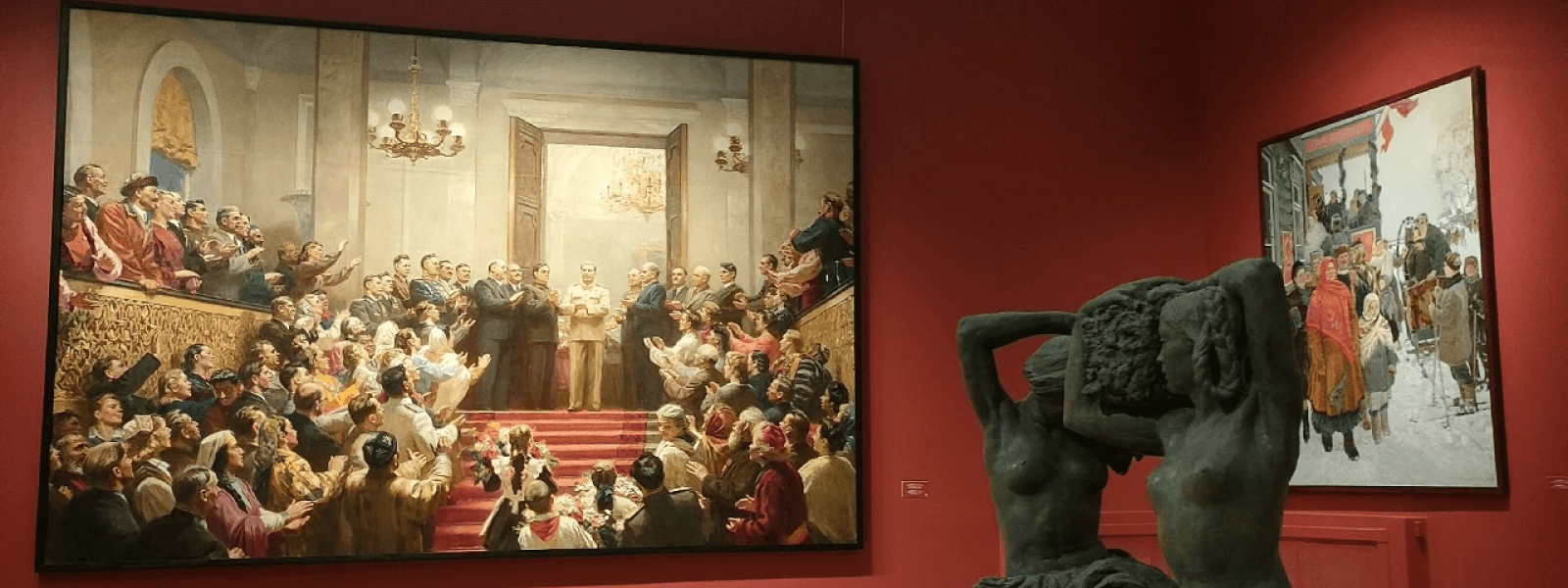
There are many other movements, paintings, and statues that can be considered the priceless wealth of the Russian Museum in the Benois Wing. Don't forget about temporary exhibitions that periodically replace each other. So hurry to join a tour and see everything with your own eyes!
The uniqueness of the Benois Wing
The Benois Wing is a place of concentrated genius. Here you can see the originals that we all know from school textbooks, for example, Malevich's 'Red Square', Vrubel's 'Flying Demon', or Chagall's 'Promenade'. The place gives incredible emotions: from bewilderment at the boldness of the avant-gardists to delight at the skill of portraitists. Within the walls of Benois, you can feel how the world and people's consciousness changed during the most turbulent period of our history. Trace the change of artistic styles, symbols, and ideals. Choose what is closer to you.
Address – Griboyedov Canal Embankment, building 2 (or Inzhenernaya Street, building 2, reachable on foot from Nevsky Prospekt metro station). Anyone can visit the exhibitions daily from 10:00 to 20:00, except Tuesday, which is a day off, and the ticket offices close half an hour earlier.
Tour of the Benois Wing of the Russian Museum
It's worth going to the Russian Museum for emotions. In the Benois Wing, art seems to stop being 'museum-like' and becomes alive, mysterious, and very personal. It's definitely worth a visit if you're tired of imperial refinement and want a breath of fresh air, and it's best to do it with Leningrad Tour!
We offer a sightseeing tour of St. Petersburg on a comfortable bus, which includes a visit to St. Isaac's Square and Smolny Cathedral. You will also see the legendary Egyptian sphinxes on the University Embankment. And the pearl of the tour will be a visit to the Russian Museum within the walls of the Benois Wing. Buy tickets and make your impressions of the city and art unforgettable!

Tour of the Benois Wing of the Russian Museum
Go to the tour →








