


Writes about St. Petersburg, its history, sights, museums and routes.

Historian and guide in St. Petersburg, Peterhof, Tsarskoye Selo and Vyborg.
The Catherine Palace is a portal to the times when empresses knew how to live large and love truly. Everything here is steeped in stories: from Peter I's gift to his wife to secret rendezvous in the park alleys.
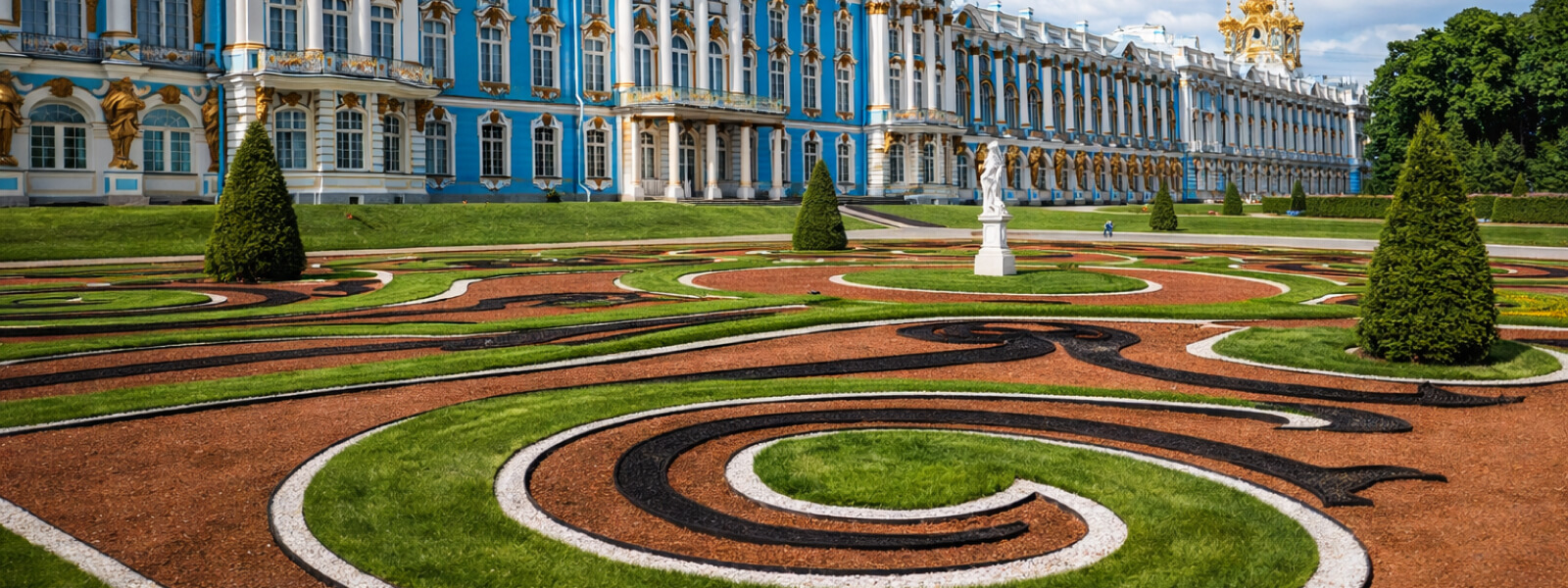
The building, almost 300 meters long, shines in the sun thanks to its azure facades adorned with snow-white columns and gilded stucco – the builders spent about 100 kilograms of pure gold on the exterior decor alone. Each hall of the palace holds memories of grand balls, where guests from around the world danced by the light of thousands of candles.
How it all began: the history of the Catherine Palace
In 1717, Peter I decided to give his wife Catherine I a special gift – a country estate. The place was then called Saari Mois (Finnish for 'manor on a hill'), which later became the familiar Sarskoye Selo, and then Tsarskoye. The first palace was quite tiny by today's standards: German architect Johann Friedrich Braunstein built a cozy two-story house 'with 16 rooms' in a typical Dutch style. Peter loved such simplicity, and in August 1724 a celebration was even held here with a triple salute from 13 cannons to mark the completion of the work.

The Catherine Palace in the era of Elizabeth
The true flourishing of luxury occurred when Peter's daughter, Elizabeth Petrovna, ascended the throne. She considered her father's house too cramped and modest for an empress, so over the 15 years of her reign, the palace underwent four major reconstructions. First, Russian masters Mikhail Zemtsov and Andrey Kvasov worked on it, and Savva Chevakinsky expanded the building to its current incredible length.
However, the very dazzling Russian Baroque look we see today is the work of the great Francesco Bartolomeo Rastrelli. Between 1752 and 1756 he turned the palace into a 325-meter masterpiece. About 100 kilograms of pure gold were used to gild the facades, statues, and domes of the palace church. Elizabeth wanted to astonish Europe, and she succeeded: the palace became one of the richest residences in the world.
The era of Catherine the Great
When Catherine II came to power, she was initially shocked by such extravagance and called Rastrelli's Baroque style an old-fashioned "whipped cream." She even ordered a halt to the gilding of the statues in the park, considering it a waste of the treasury.
The empress invited the Scot Charles Cameron, an expert on antiquity, to add classical rigor to the interiors. Thanks to him, the palace gained the Arabesque and Lyon Halls, and the park gained the famous Cameron Gallery. Under Catherine II, the park expanded and turned into a vast landscape garden with pavilions, ponds, and monuments commemorating Russia's military victories.
The mystery of the Amber Room
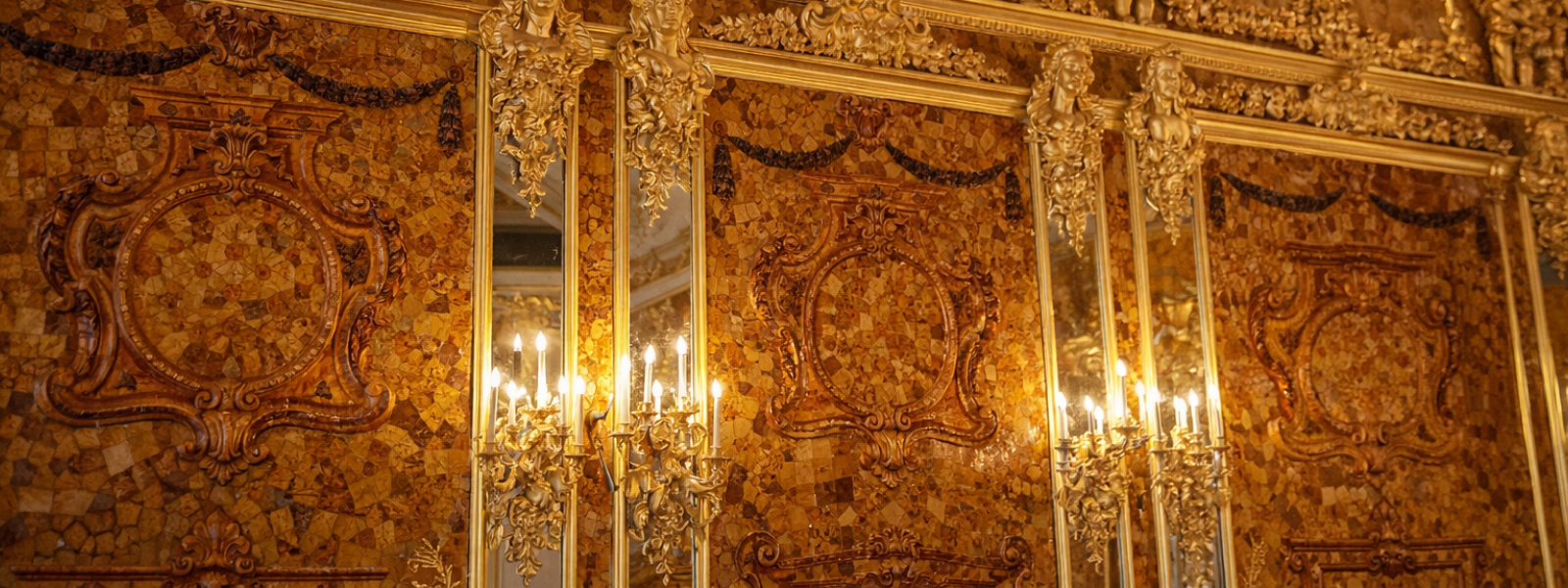
The palace's main myth and treasure is the Amber Room. Its panels were presented to Peter I by the Prussian king back in 1716, but for a long time they simply lay in warehouses. Only under Elizabeth, in 1755, were they transported to Tsarskoye Selo and assembled in one of the halls. It was a marvel of 22 panels and 180 pieces of amber, which contemporaries called the "eighth wonder of the world." Unfortunately, during World War II the Nazis completely dismantled and removed it to Königsberg, after which the traces of the original were lost forever.
The fact that we can walk through the palace today is a true miracle. During the war years the building was almost destroyed, the interiors looted, and the most valuable parquet floors and furniture were taken away or burned by the Germans. After the war, the legendary curator Anatoly Kuchumov literally gathered the remnants of the treasures from the fields and factories of Germany: for example, the bronze statues of Hercules and Flora were found in the courtyard of a copper smelter in Saxony.
Today, 32 historic halls are open to visitors, including the grandiose Throne Hall with an area of 800 square meters.
What's inside the Catherine Palace
Our journey begins with white marble and the Rococo style. Around us are elegant stucco moldings, ceiling paintings, and antique Chinese and Japanese vases on the shelves.
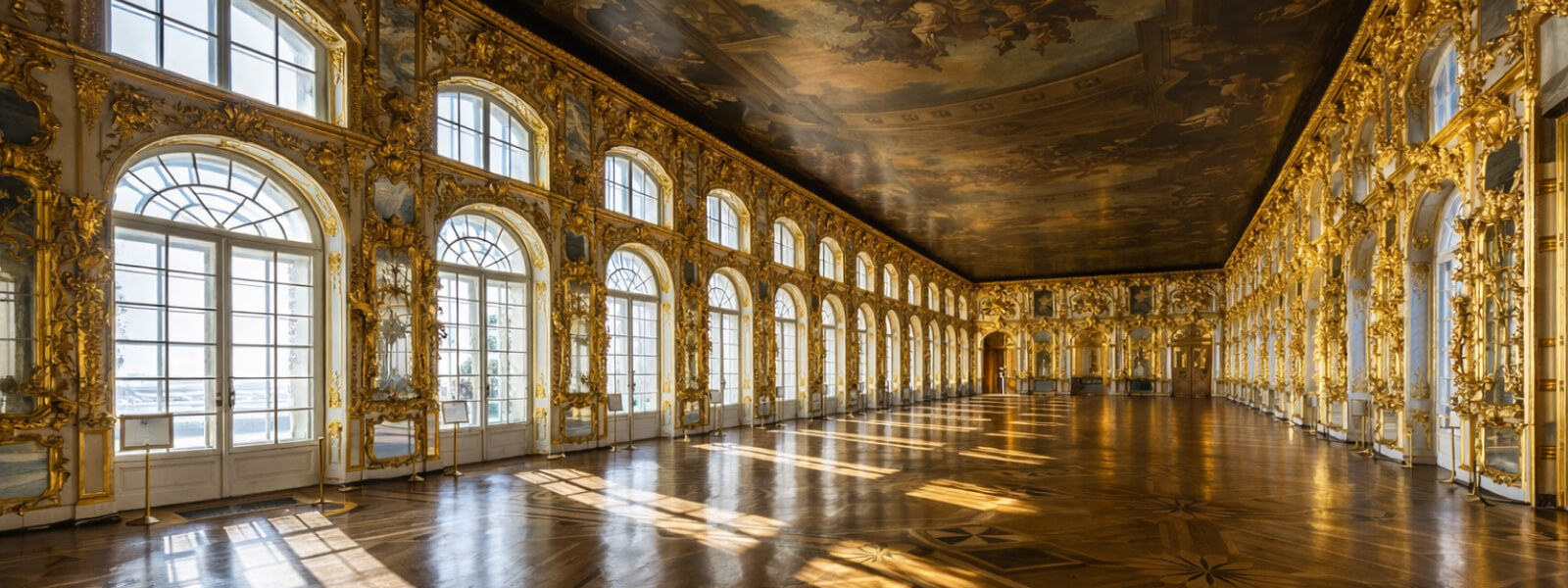
The Great Hall (Throne Hall). With an area of more than 800 "squares." The light from the huge windows multiplies in the mirrors and reflects off the gold carvings, while overhead hovers a gigantic painting glorifying Russia's victories. If you want photos that will take everyone's breath away on social media, this is the place for you.
The Cavaliers' Dining Room. A smaller hall, but just as elegant. Here it is worth examining the original 18th-century porcelain service, which remembers the dinners of the monarchs themselves.
The White State Dining Room and the Green Dining Room. These halls show how tastes changed: from lavish gold to the calmer and more delicate tones of classicism.
The Arabesque Hall. Catherine II's personal space, created by the architect Cameron. Here one feels feminine elegance: the walls are decorated with delicate painting featuring flowers and antique subjects.

The Lyon Hall. One of the most luxurious places, where the walls are upholstered in genuine Lyon silk in the color of old gold. The main highlight is the blue lapis lazuli in the decoration of the furniture and portals, which, combined with the mother-of-pearl parquet, looks simply fantastic.
The Picture Hall. Here the walls are turned into a continuous "painterly carpet" of dozens of paintings by Western European masters, selected by size and color.
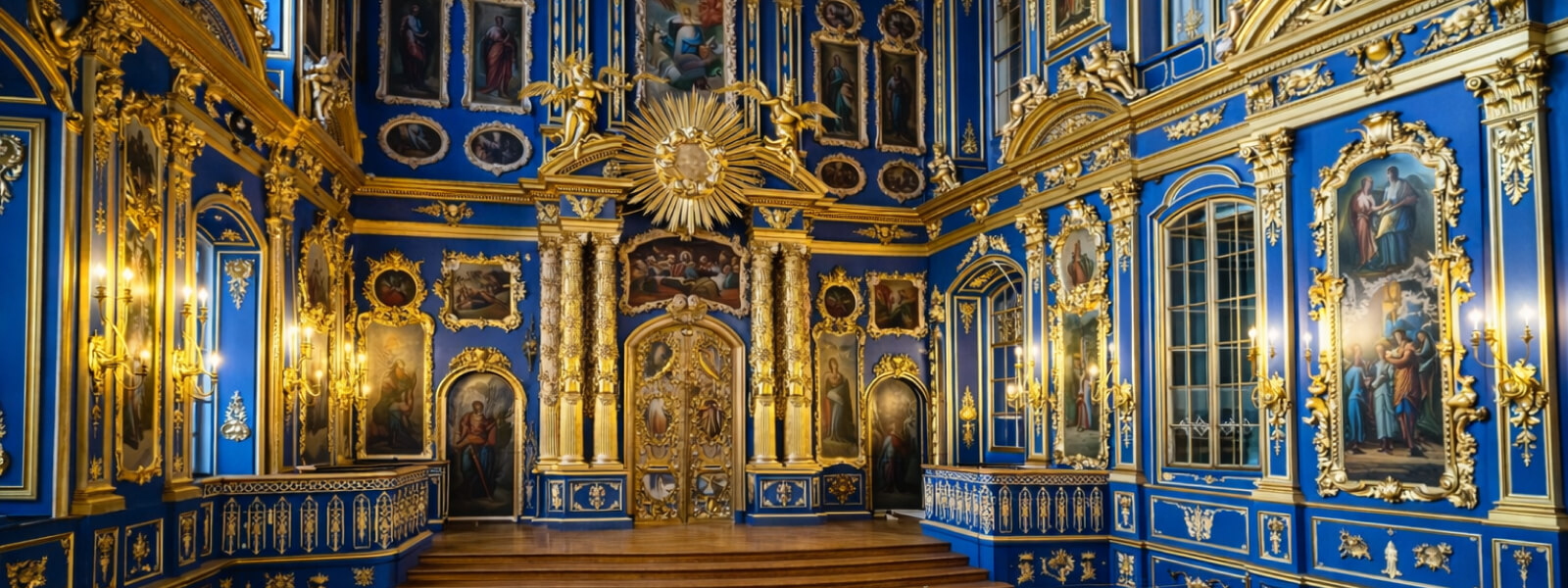
The Palace Church. In the northern wing we are greeted by a sky-blue interior with a dazzling gilded iconostasis. This is a very solemn and important place where emperors were baptized and the main family ceremonies of the Romanovs took place.
To preserve the unique parquet floors, all guests are asked to wear shoe covers, and photography is allowed only without flash, so as not to damage the delicate amber and antique fabrics.
The Catherine Palace and the parks of Tsarskoye Selo
Catherine Palace is surrounded by a colossal green area of 300 hectares, shared between Catherine Park and Alexander Park.
Right in front of the ceremonial facade, strict symmetry greets you. Everything here is ruler-straight: even alleys, trimmed shrubs and perfect lawns. Along the paths stand snow-white marble statues, which Catherine II once wanted to gild, but changed her mind in time because of the price tag.
In the warm season, the park is literally drowning in flowers. As for the trees, although during the war the park was badly damaged and many old trees were cut down, the appearance of the gardens was restored on a strictly scientific basis. The foundation consists of centuries-old lindens, oaks and maples, whose crowns remember the steps of great rulers and poets. The oldest sections of the park date back to the mid-18th century, when Rastrelli worked here.
The air is filled with the scent of flowers and the freshness of large ponds, where imperial boating parties were once held.
Reading about the splendor of the Golden Enfilade and the mystery of the Amber Room is fascinating, but only personal presence will allow you to fully feel the grandeur of this place. To make your acquaintance with history as comfortable and rich as possible, a guided tour is the best way to see everything important without unnecessary worries.

Excursion to Pushkin from Saint Petersburg
Visit Catherine Palace →








