Writes about St. Petersburg, its history, sights, museums and routes.

A guide to the history and architecture of Petersburg and its imperial suburbs.
The cruiser Aurora stands by the Petrogradskaya Embankment, remaining a living symbol of the strength and glory of the Russian fleet. The steel ship attracts the gaze of inquisitive explorers of the past, inspires young dreamers of sea voyages and gives discoveries to connoisseurs of engineering perfection.
In it, the echo of three great wars has frozen, and the deck of Indian teak carefully preserves the memory of the feats of hundreds of heroes. Every rivet on the hull of the highest quality steel, the copper sheathing sheets and the famous bow gun tell of fateful moments that have forever entered world history.
Immersion in the secrets of this unique museum ship will be a vivid event for anyone who longs to touch eternity and feel the pulse of time in the very heart of Saint Petersburg.
History of creation: why was the Aurora built?
At the end of the 19th century, the foreign policy situation for Russia grew tense. The strengthening of the "German threat" in the Baltic and contradictions with England forced the empire to adjust its shipbuilding program. Thus appeared the series of protected cruisers of the Diana class, which, besides the Diana herself and the Pallada, also included our heroine – the Aurora.
By the way, the name for the cruiser was personally chosen by Emperor Nicholas II from eleven proposed options, among which were such names as "Psyche," "Juno," and even "Boyarin." The choice fell on "Aurora" in honor of the famous sailing frigate from the Crimean War era.
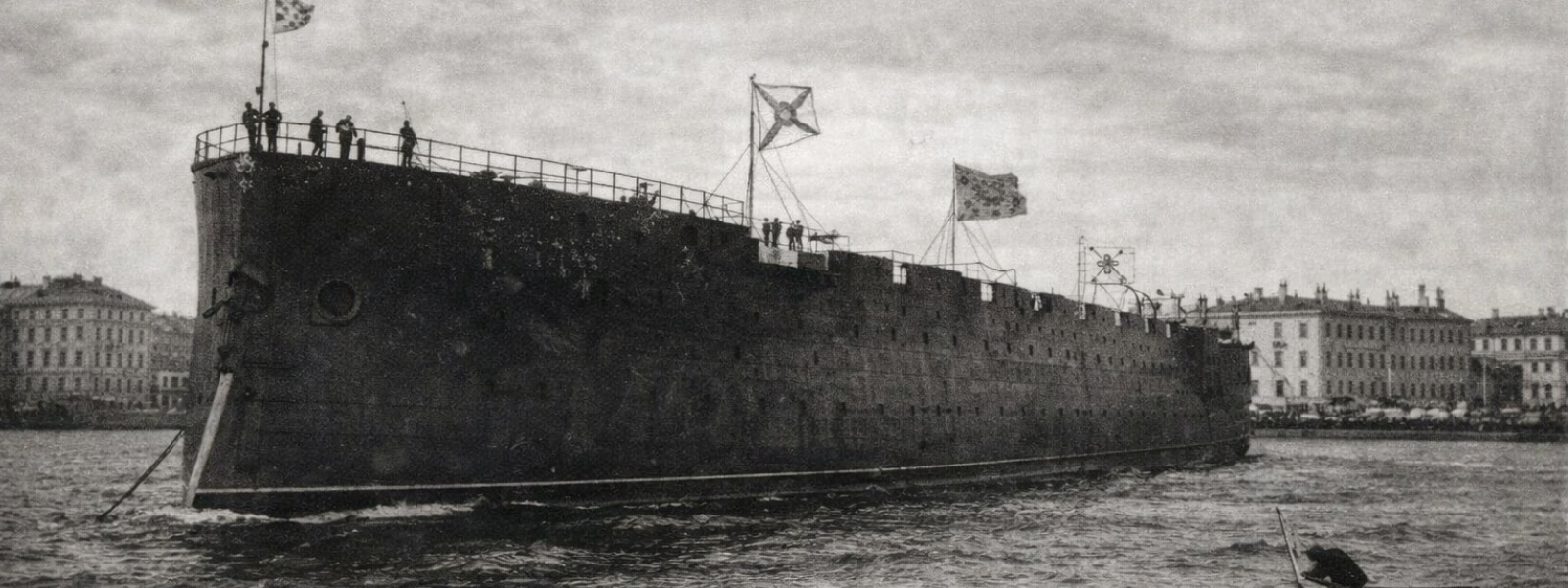
Construction was carried out at the New Admiralty under the supervision of engineer E. R. de Grofe. Work began in September 1896, and the launch took place in May 1900 in the presence of the entire imperial family. Interestingly, on the deck in the honor guard then stood a veteran sailor who had served on that very first frigate Aurora – an astonishing continuity of generations.
Structural features and technical perfection
The cruiser's hull was assembled from steel from the Izhora and Alexandrovsky plants – at that time, it was a top-class material. Strong, reliable, designed for serious loads, it allowed the ship to withstand combat damage and long voyages. Below the waterline (the line where water meets the ship), the hull was divided into 14 watertight compartments. The pumping systems were so powerful that the entire internal volume of the ship could be drained in about an hour – a figure that still sounds impressive today.
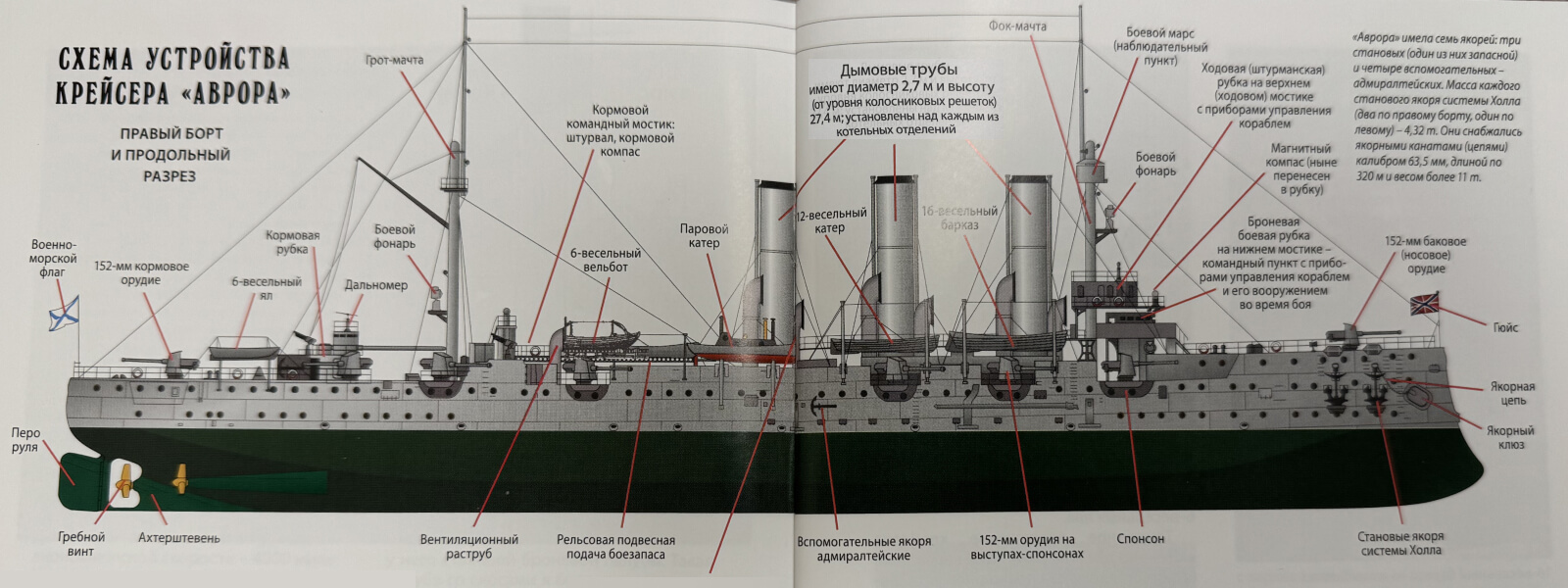
The bottom of the Aurora was sheathed in wood and covered with copper sheets. This was done not for beauty: copper protected the hull from algae and mollusks that slowed the ship. For a warship, speed was critically important, and such solutions directly affected combat capability.
Inside the cruiser, electricity was used for many things: for lighting, for operating fans, and even for refrigerated storage of provisions. By the standards of the early 20th century, this seemed almost luxurious and greatly eased the crew's life during long voyages.
At the same time, the Aurora retained features of a passing era. For example, the bow ram, which was a massive hull element designed to ram enemy ships. By the time the ship was commissioned in 1903, such tactics were already considered outdated, but the ram was still designed "just in case."
Baptism of Fire and Revolutionary Myth
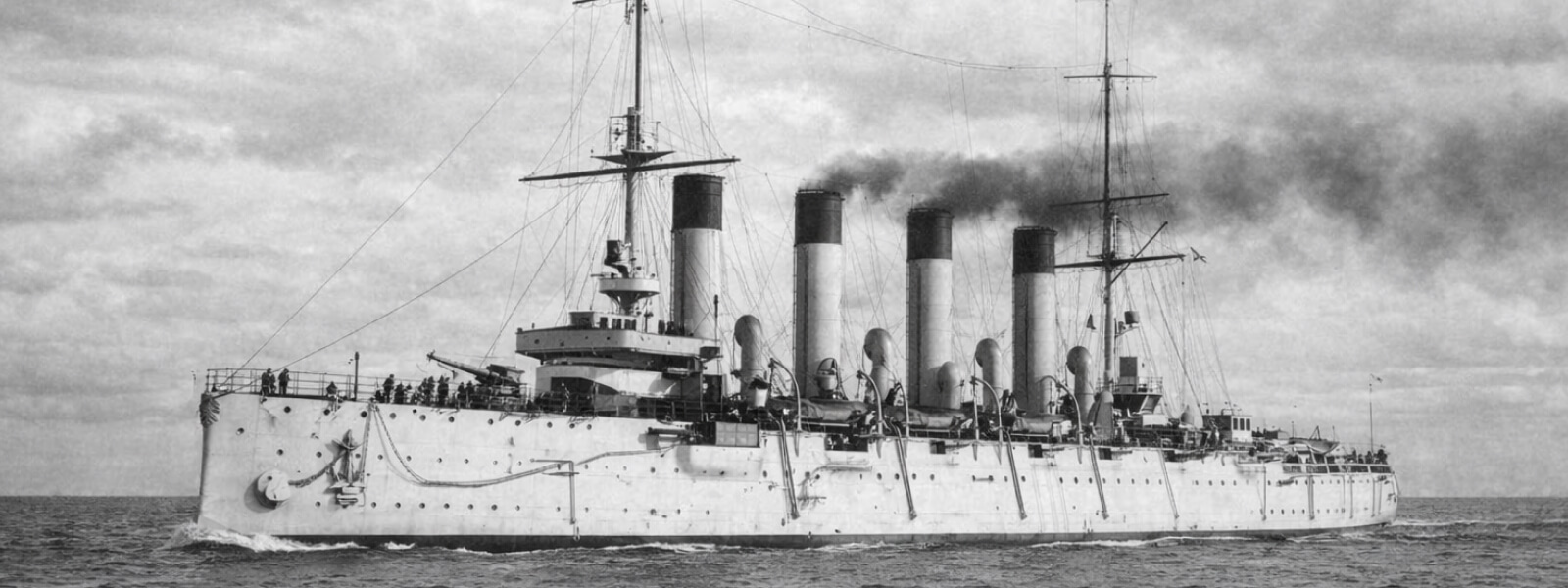
The fate of the "Aurora" was full of trials. The cruiser went through the Battle of Tsushima in 1905, where it received 18 hits and lost its commander – E. R. Yegoryev. Despite heavy damage, the ship heroically held out, broke through to Manila, and was interned with its crew until the peace treaty was concluded, only after which it returned to Russia.
During World War I, she performed patrol duty and supported landing operations in the Gulf of Riga. With the outbreak of the Great Patriotic War, its guns were removed for the defense of Leningrad and installed on batteries "A" ("Aurora") and "B" ("Baltika"). These guns effectively worked on enemy positions, defending the besieged city. And the ship itself, camouflaged by the wall, continued its service – its anti-aircraft guns repelled air raids, and the crew fought fires and rescued the wounded.
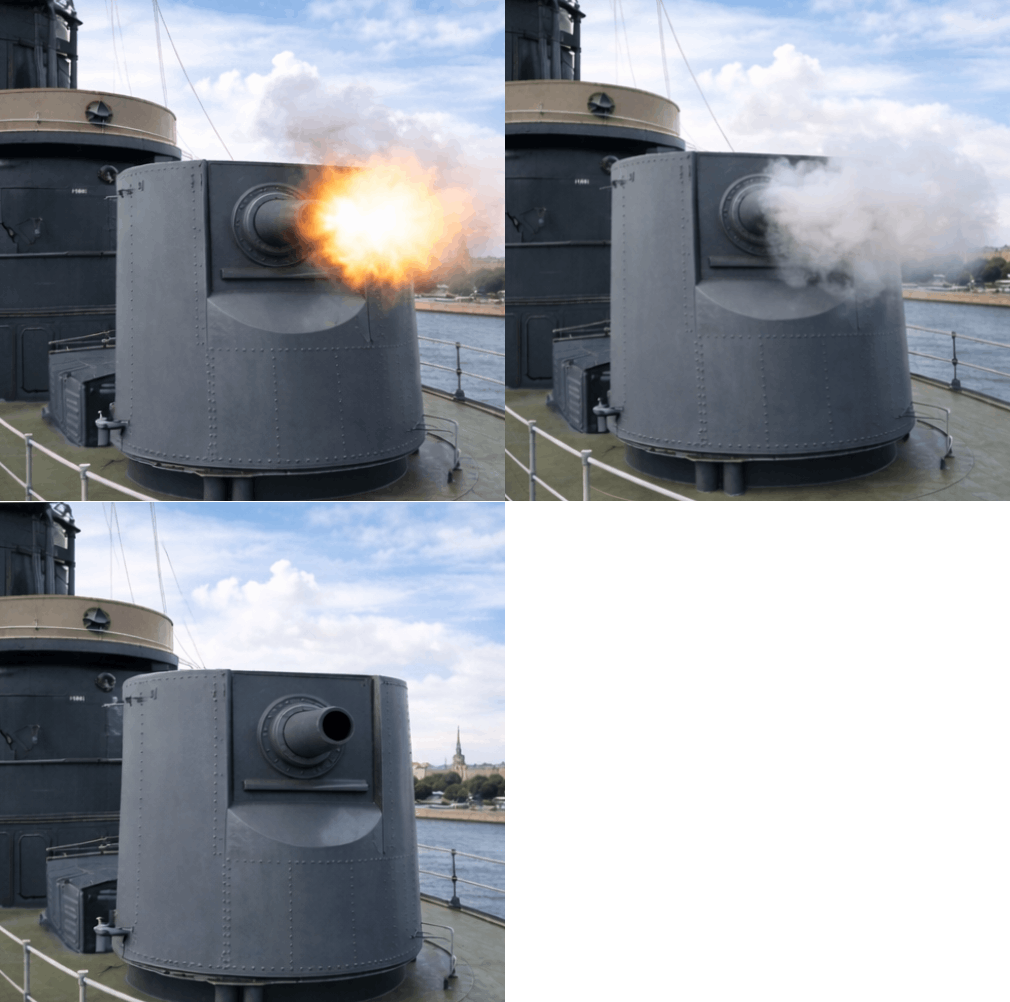
Undoubtedly, the most famous event in the ship's history was the blank shot on October 25, 1917. Despite Soviet legends that the cruiser allegedly smashed the Winter Palace with live shells, the historical truth is more prosaic: the shot was merely a signal (according to one version) and a psychological tool. Obviously, the authorship of this "myth" was necessary to give the revolution a special pathos, although the ship itself had already earned its place in history through combat valor.
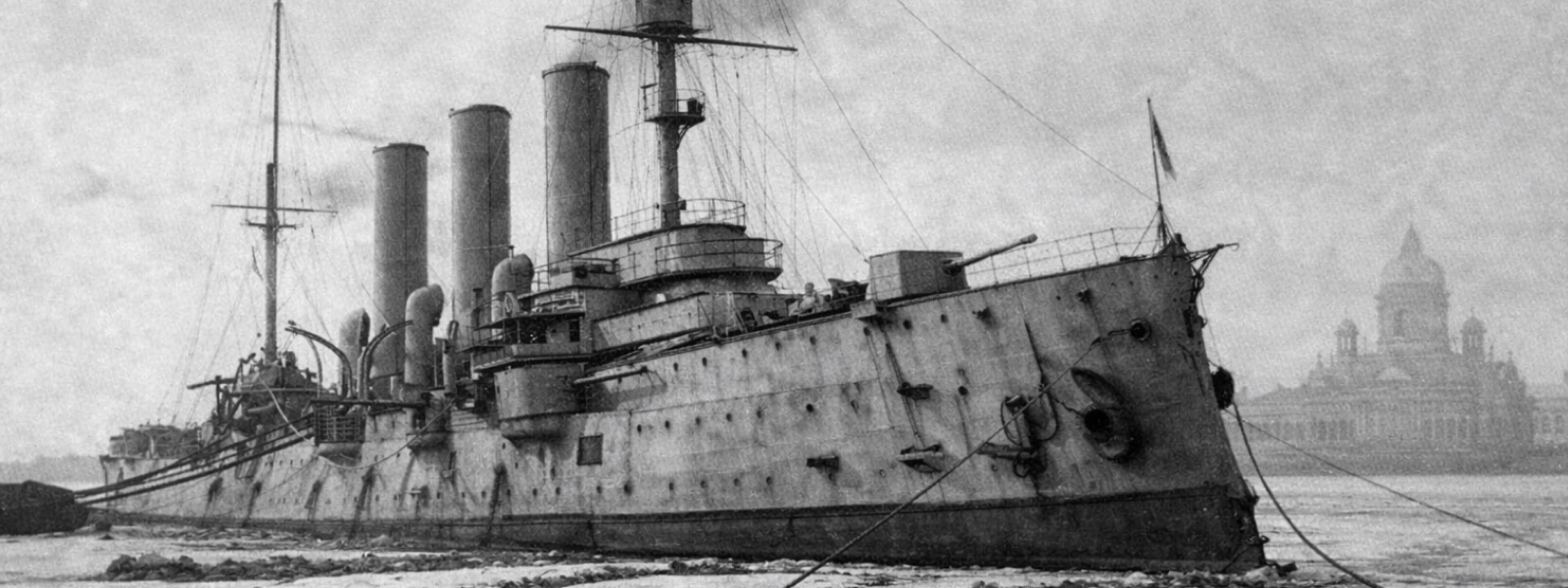
Cruiser Aurora Today
It is a deeply elaborated museum complex located on an active warship. In 2026, the vessel will celebrate its 126th anniversary.
The first sensation when boarding the ship is that it is unexpectedly tall. From the shore you don't feel it. The Neva turns out to be somewhere far below, and a slight inner tension immediately appears, as if you are standing on a living ship.
On deck there is nothing decorative: guns, boats, funnels, metal structures. The metal is cold to the touch, even in summer. You can hear the hum of the city mixing with the splash of water. If you linger by the bow gun, you can take that legendary photo with the jack – the red-and-blue flag of the Navy.
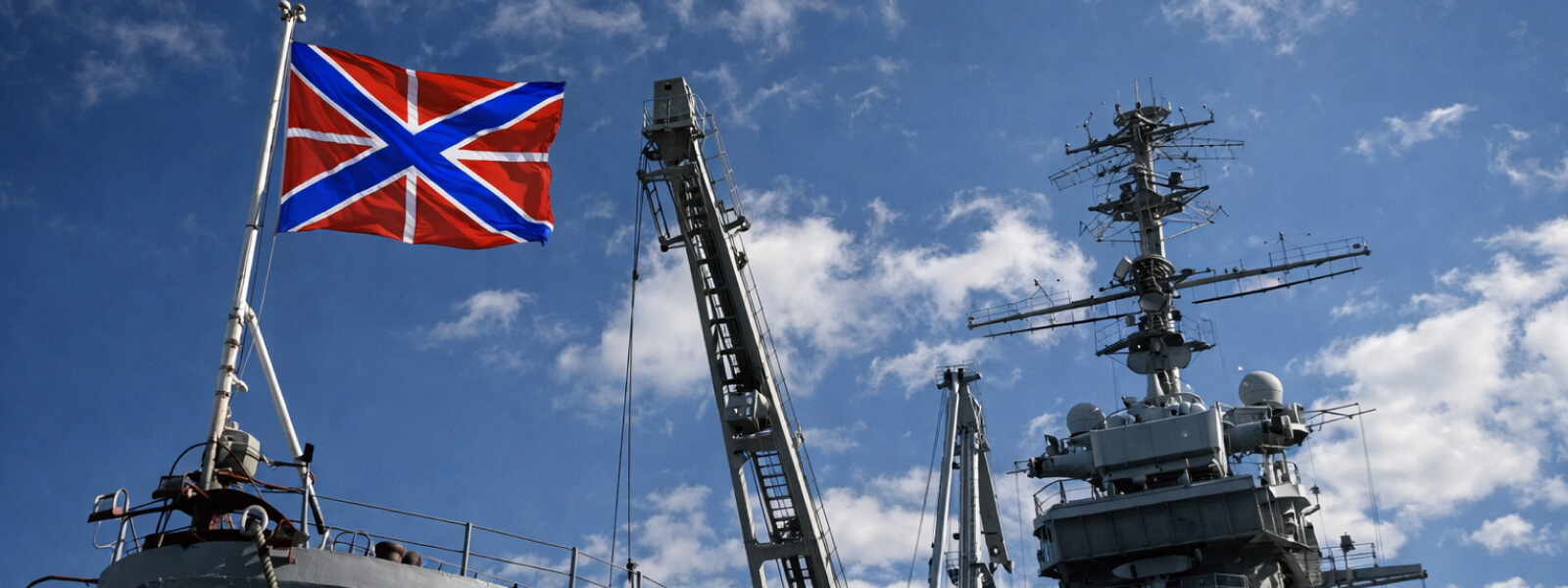
Interior Spaces
Inside you won't find ballrooms like on the "Titanic", because this is a harsh vessel where every meter was designed for combat missions.
Narrow passages, low ceilings, metal steps. The air becomes heavier, denser. It's hot here, stuffy, smelling of iron and wood. You are inside a real warship.
Hall No. 1. History of the cruiser and its combat path
The exhibition begins in the rooms that previously housed the boatswain's team, utility services and the brig. Along the sides are paintings by marine artists of the Central Naval Museum. They depict key stages of the Aurora's combat history. Also displayed here are naval flags of the pre-revolutionary and Soviet eras, under which the cruiser served from 1903, including the twice-decorated Naval Flag and the patronage banner of 1924.
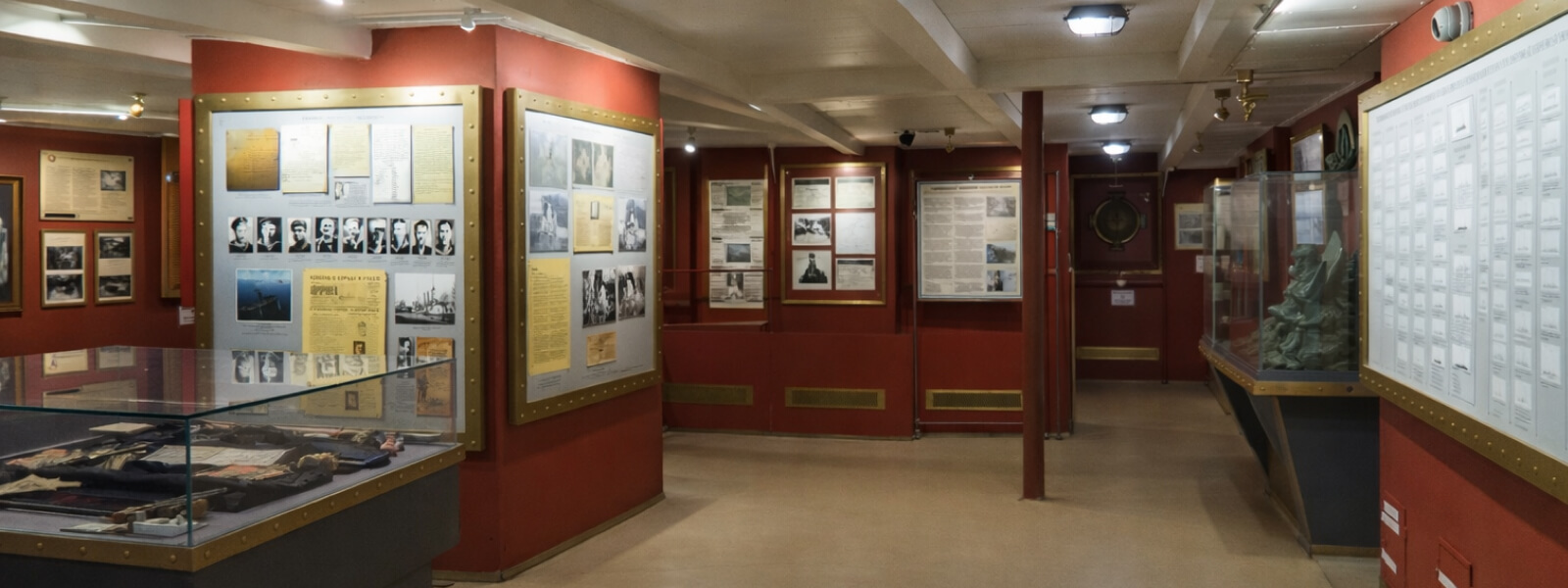
Hall No. 2. Daily life and service of the crew
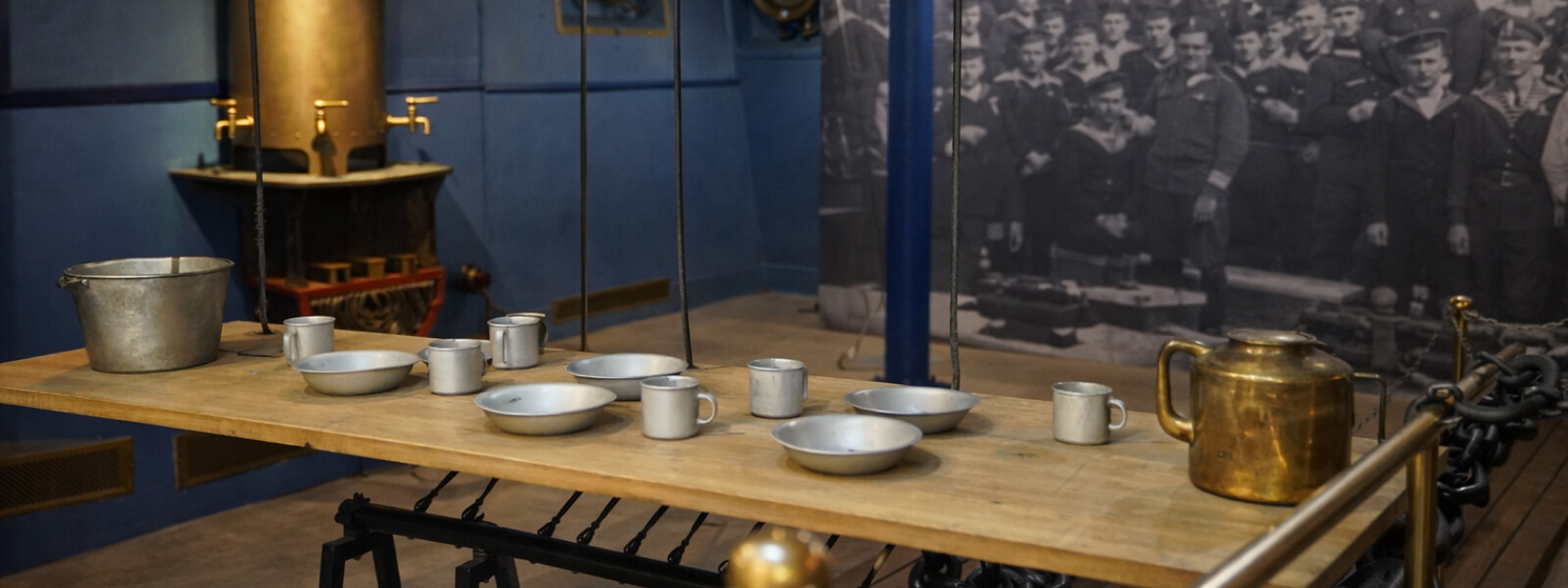
This hall particularly vividly shows the daily life of the sailors. After the ship was commissioned, the Aurora's crew numbered about 570 people. The sailors lived in cockpits, slept in hammocks and ate at suspended tables. In the display cases are personal belongings of crew members, household items, dishes and elements of uniform. The space immediately makes clear how cramped and physically difficult shipboard service was.
Hall No. 3. Shipbuilding and the Battle of Tsushima
The exhibition is dedicated to the development of Russian shipbuilding in the late 19th – early 20th century. It tells about the design of armored ships and the construction of cruisers of the "Diana" type, including the "Aurora". A separate section is devoted to the voyage of the 2nd Pacific Squadron and the Battle of Tsushima in 1905. Navigational instruments are presented, including sextants, as well as materials about the cruiser's return to Russia, its modernization and further use as a training ship.
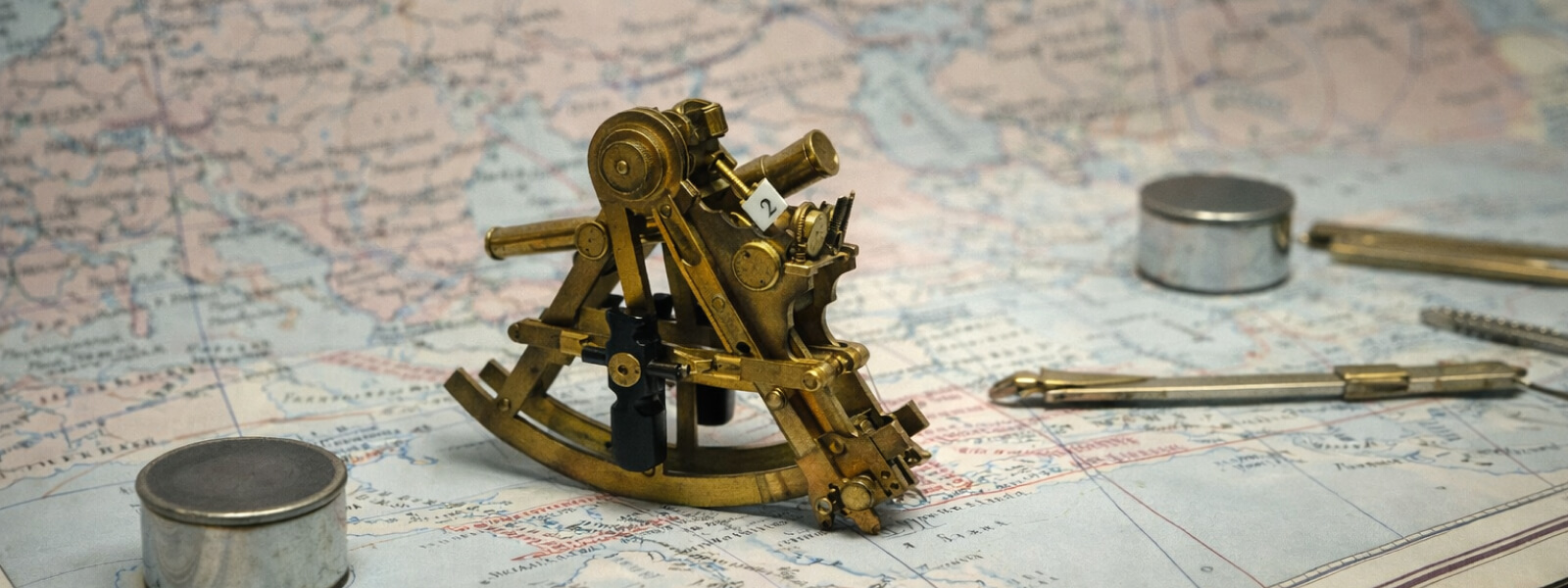
Halls No. 4–5. Wars and revolutions
These halls cover several key periods at once: World War I, the revolutionary events of 1917 and the Great Patriotic War. Collected here are documents, photographs and authentic items related to the historic shot signaling the storming of the Winter Palace, as well as the Aurora's participation in the defense of Leningrad. The exhibition is perceived in a restrained and weighty way, without external effect, but with a clear understanding of the scale of events.
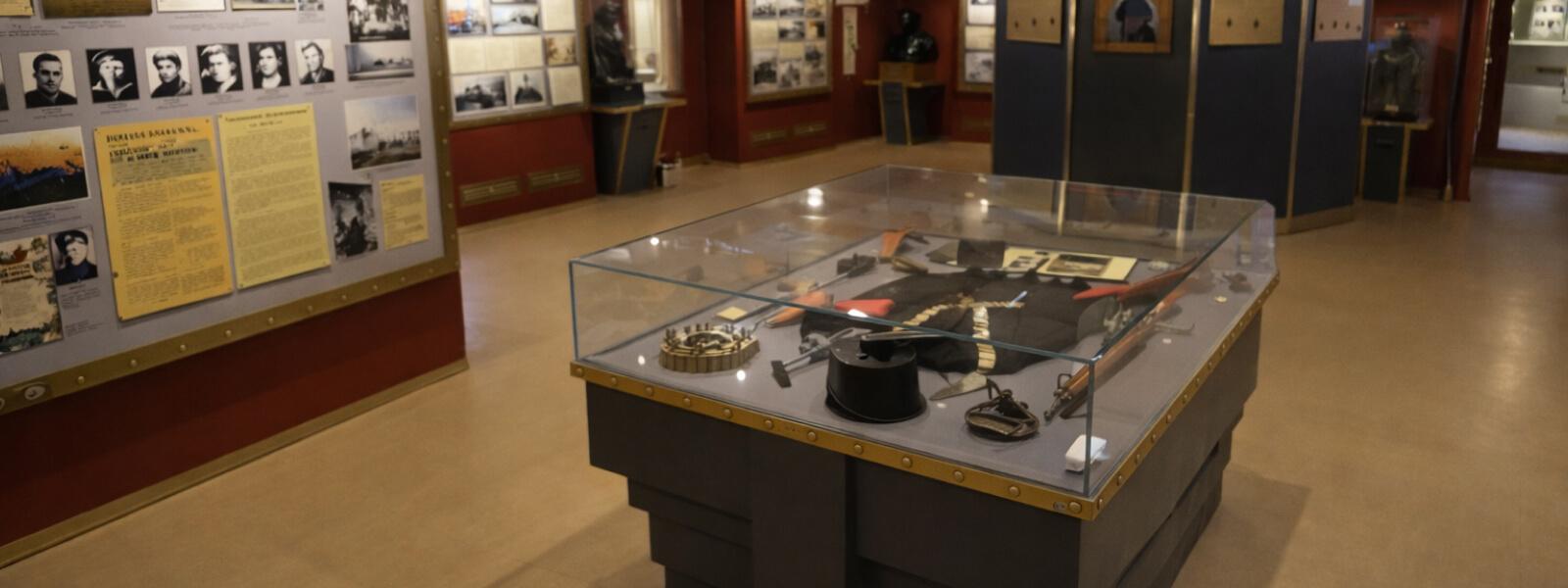
Halls No. 6–7. The modern stage of the cruiser Aurora's life
These halls display gifts from foreign delegations, holographic models of ships, and the iconostasis of the restored ship church. A separate section is devoted to the naval cathedrals of St. Petersburg and Kronstadt as spiritual centers of the Russian fleet.
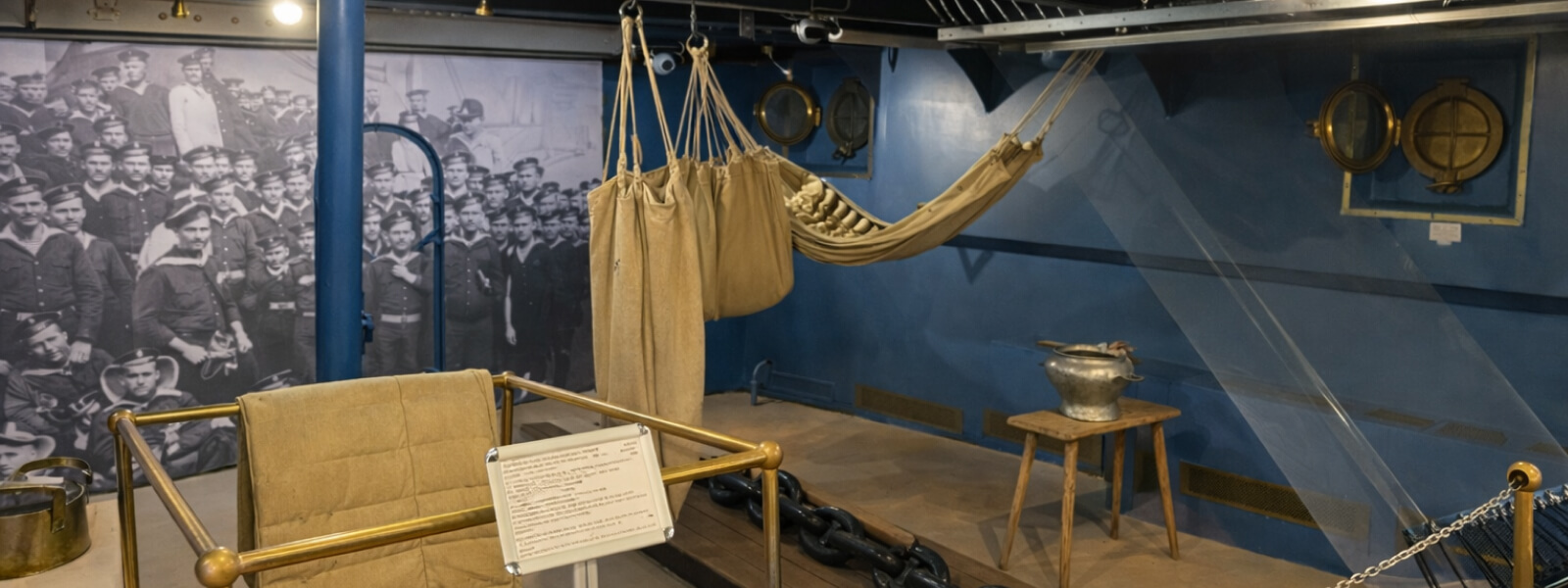
Halls No. 8–9. Naval medicine
One of the rarest and most powerful exhibitions. The ship's doctor's cabin and an operating room from the time of the Battle of Tsushima have been recreated. You will see medical instruments, equipment, and a replica of the X-ray apparatus that was first used by the navy in combat conditions. These halls offer a rare opportunity to understand the conditions in which medical care was provided aboard a ship in the early 20th century.
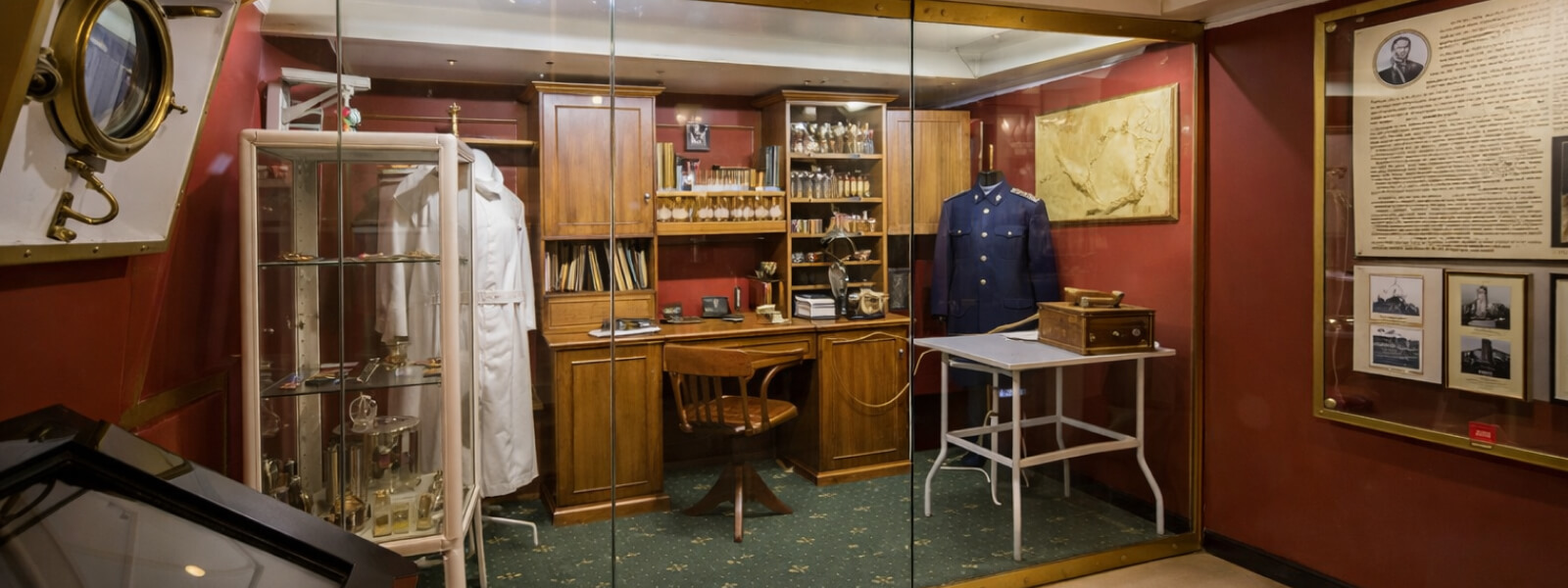
Interesting Facts About the Cruiser Aurora
- In 1946, the Aurora played the role of the cruiser Varyag in the film of the same name. For the filming, a fourth dummy funnel was even added to her.
- This is the only ship in Russia awarded two orders at once – the Order of the Red Banner and the Order of the October Revolution. Both orders are displayed on its St Andrew's flag.
- During the Great Patriotic War, the guns removed from the cruiser defended Leningrad on land near Dudergof, and almost all of them were lost in battle.
- Since 2013, the ship has again officially been part of the Navy as a non-self-propelled vessel, and a military crew serves aboard her.
Tour of the Cruiser Aurora
The optimal option is to combine a visit to the Aurora with a large sightseeing tour of St Petersburg. The route starts at Vosstaniya Square, runs along Nevsky Prospect, past the Anichkov Bridge with its famous Horse Tamers, and leads to Kazan Cathedral, the Church of the Savior on Spilled Blood, and St Isaac's Cathedral. Then comes the Winter Palace and Palace Square, the Palace Bridge, and the Spit of Vasilyevsky Island, which offers one of the city's most recognizable panoramas.
The final stop is a visit to the cruiser Aurora. Here you step onto the deck, see the ship's guns, go down into the interior spaces, and feel the scale of a real warship. After the grand facades and wide avenues, this makes a particularly strong impression: history stops being abstract and is literally beneath your feet.

Cruiser Aurora tour
Go to the tour →