


Author of materials about St. Petersburg, travel, excursions, and city routes.
Museum guide to art, culture and St. Petersburg of the 18th–19th centuries.
'Crime and Punishment' – may seem like boring classic from the school curriculum, although it is not at all. This is a novel that grew out of the author's personal revenge, real crime reports and the suffocating heat of 1865. Petersburg on the pages of Dostoevsky does not look like the cultural capital, here it is an accomplice to the loudest murder in literature…
Psychological geography and 'stuffiness'
Dostoevsky's Petersburg is a city-accomplice, whose atmosphere "suffocates" the individual, imposing painful ideas and depriving one of "a breath of fresh air." One of the key characteristics of the city is the unbearable stuffiness, which in the novel serves as a metaphor for moral deadlock and the absence of freedom.
The events unfold in the abnormally hot July of 1865, when the temperature reached 31 degrees in the shade. Which, by the way, is a real fact. July 1865 turned out unbearably stifling. The heat, dust, and stench from the taverns create the backdrop, a kind of scenery, in which Raskolnikov exists, and also cloud his consciousness, pushing him toward the crime.
City of contrasts and thresholds
Dostoevsky constructs Petersburg as a space of thresholds and boundaries, emphasizing the instability of the characters' lives.
The symbolism of the ditch: the Catherine Canal (now the Griboyedov Canal), which Petersburgers simply called "the ditch," serves as a boundary between worlds and a constant backdrop for tragedies – from here Raskolnikov goes to commit murder, and here too suicide attempts take place.
The social divide: There is a stark contrast between the beggarly slums and the "magnificent panorama" of the Neva. Raskolnikov feels an "inexplicable cold" from the grand Petersburg, realizing that for people like him, this city remains hostile and indifferent.
Yellow color in 'Crime and Punishment'
It is hard not to notice that everything in the novel is yellow. Yellow wallpaper, furniture made of yellow wood, the yellow faces of drunkards. Today this color seems to us very warm and cheerful. For Dostoevsky, however, this color was a marker of illness, hypochondria, and madness, creating an atmosphere of total unhealthiness and melancholy.
Dwellings of the characters
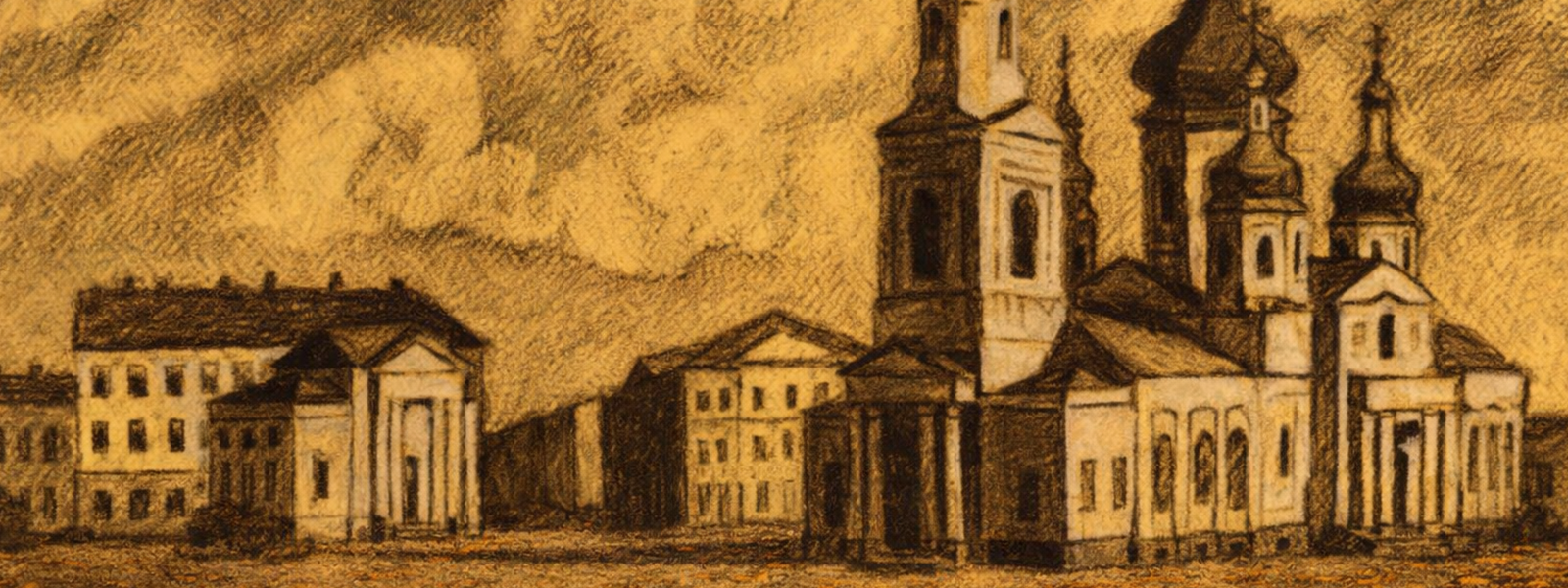
The dwellings of the characters in the novel serve as an extension of their state of mind and social status. Dostoevsky deliberately describes them as "ugly" and cramped spaces in order to emphasize the atmosphere of hopelessness and psychological pressure.
The main reason for the "ugliness" of these interiors lies in the fact that they reflect the inner world of the characters and serve as an instrument of psychological influence on them; they are devoid of comfort and more resemble functional objects of death or poverty. Raskolnikov's cubbyhole is a "coffin" or "closet" that constricts the soul and mind, while Sonya's apartment is an "ugly shed," emphasizing her unsettled life and social rejection.
Real prototypes
Despite the fact that Dostoevsky sometimes "confused" the geography for artistic purposes, many buildings have quite real prototypes, which today are part of tour routes:
Raskolnikov's House
It is traditionally believed to be a tall five-story building on the corner of Stolyarny Lane and Grazhdanskaya Street (formerly Srednyaya Meshchanskaya). Dostoevsky himself lived nearby on Stolyarny Lane when he was writing the novel. The famous cubbyhole was located right under the roof – at that time, the higher a person lived, the poorer he was.
The Pawnbroker's House
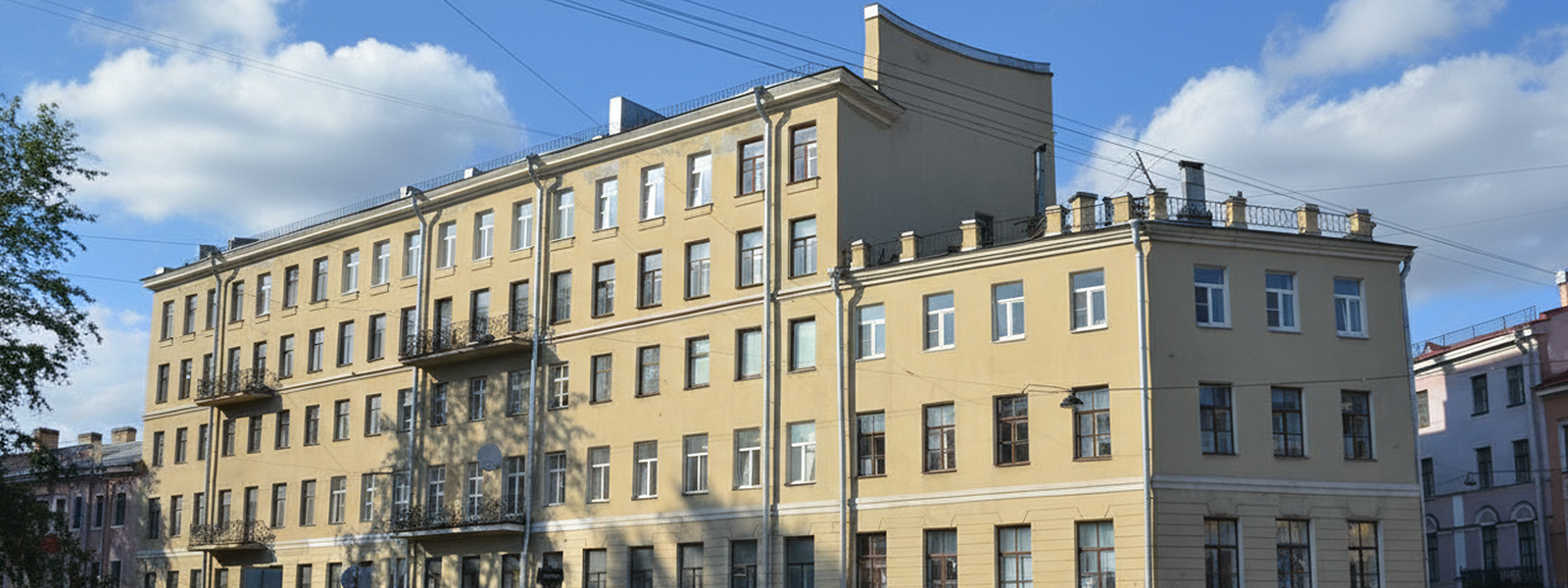
This is a corner apartment building on the embankment of the Griboyedov Canal (Catherine Canal) and Srednyaya Podyacheskaya Street. An interesting fact: the real publisher Stellovsky, with whom Dostoevsky had a bonded contract, lived in the same area. Researchers believe that the author may have deliberately placed his victim nearby in order to take revenge on his offender in this way.
Sonya Marmeladova's House
It was located on the embankment of that very "ditch" (the Griboyedov Canal). From the windows of her room, one could see the dirty water of the canal, which in those years was used for sewage discharge.
Dostoevsky's Petersburg is a place devoid of imperial luxury; here the houses resemble prison cells, and the characters are enveloped in a sense of abandonment and hopelessness. It is a city of contrasts: while the rich rode in carriages along the embankments, the poor huddled in tiny rooms on the top floors...
Dostoevsky's Petersburg: Answering Questions
-
Was Petersburg really that dirty and unpleasant?
Yes, in the summer of 1865 there was terrible heat in the city, and the "ditch" (today's Griboyedov Canal) was then used as a sewage pit, so the streets really had an unbearable stench of lime, dust, and slops. -
Why is Dostoevsky's Petersburg yellow?
The yellow color in the novel is not just paint; here it is a symbol of illness, hypochondria, and mental disorder; it appears everywhere: from the faces of drunkards to the wallpaper in tiny rooms, emphasizing the unhealthy atmosphere of Petersburg -
Why did Raskolnikov count the steps to the old woman's house?
It was part of his "test" or experiment on himself: he wanted to check whether he was ready for the crime, and he measured exactly 730 steps from his yard to the murder site
Tour "Dostoevsky's Petersburg: Raskolnikov's Route"
Do you want to feel this chill down your spine from Raskolnikov's crime, personally see the very locations where the characters of the novel lived, and discover the cultural capital from a completely different side? Then Leningrad Tour invites you on a unique excursion.
You will see Petersburg without its ceremonial splendor by visiting Sennaya Square, the houses of the old pawnbroker and Raskolnikov. You will feel the atmosphere of the "yellow" city and see the famous ditch where Sonya Marmeladova lived. This excursion will give you the opportunity to discover another one of the many facets of Saint Petersburg!

Dostoevsky's Petersburg
Go to the tour →








