


Author of materials about St. Petersburg, travel, tours and city routes.

Guide to Petersburg and its suburbs, the history of the Romanovs, and evening and night routes.
You know, there are pages in history that even decades later make your heart clench and send a chill down your spine. The Siege of Leningrad is the story of how three million people found themselves trapped, but refused to surrender.
How it all began: the calm before the storm
Sunday, June 22, began as an ordinary sunny day, and yesterday's graduates were still wandering along the embankments after their balls when Molotov's voice suddenly came over the loudspeakers, announcing the war. The city was not immediately gripped by horror: people simply froze by the loudspeakers, and street sweepers in gas masks and red armbands instantly appeared on the streets…
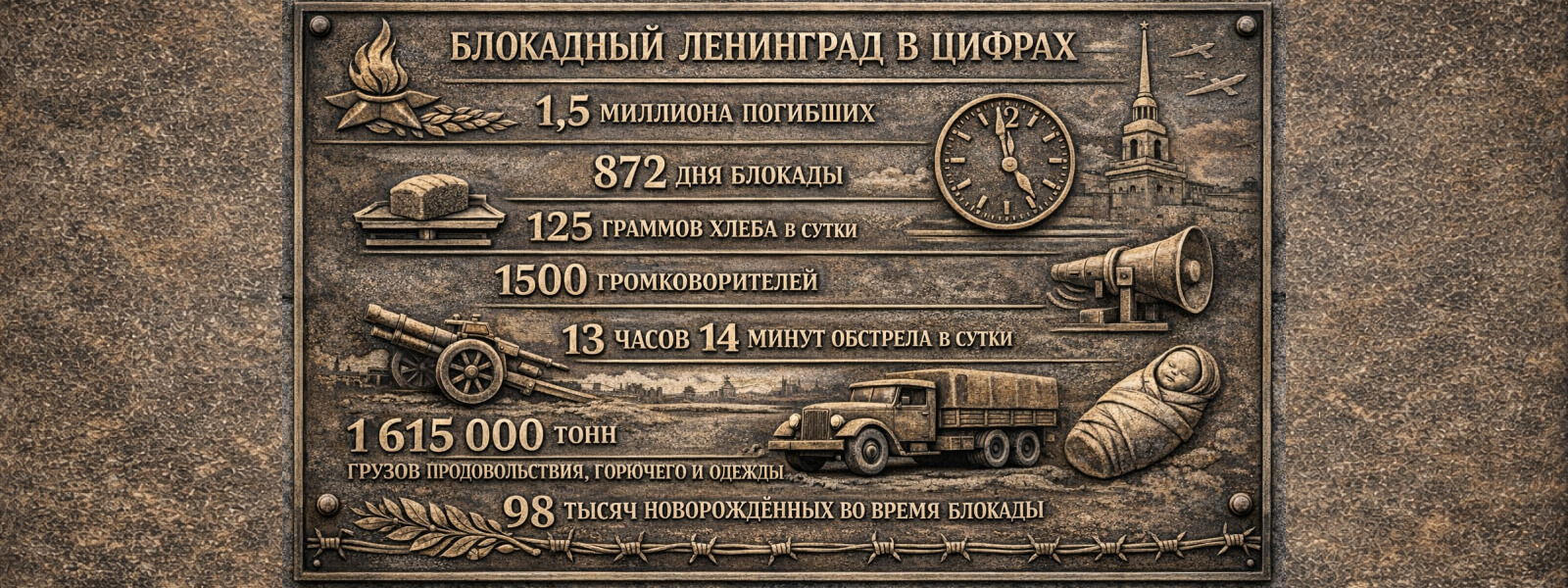
Residents of Leningrad learned of the blockade on September 8, 1941, when the enemy ring closed around the city after the capture of Shlisselburg. The city instantly bristled with barricades and pillboxes, and windows in homes began to be sealed with paper crosses so the glass wouldn't fly out from constant explosions. That evening, Leningraders truly felt for the first time what a massive bombing raid was like, as thousands of incendiaries and high-explosive bombs rained down on the city. In those minutes, no one yet believed that this "temporary" trap would last so long. How long? The siege of Leningrad would last 872 days—at that moment, people did not yet know this.
The essence of the siege: why was Leningrad not surrendered?
Many wonder: why was such suffering necessary, wouldn't it have been easier to surrender the city? The thing is, Hitler never intended to take Leningrad captive—his secret directives clearly stated: raze the city to the ground and exterminate the entire population. The city was the "cradle of the revolution," and it was to be completely destroyed. That is why Leningraders were defending not just their homes, but their people's right to exist.
Life during the siege: endless hunger, cold and new life
Morning in the city began not with coffee, but with the voice of the loudspeaker at 6:00, when people froze in the corridors, catching every word of the announcer about the situation at the front. The true pulse of Leningrad became the metronome: its fast rhythm meant alarm, the slow one gave a ghostly hope for a respite.
Source: siege survivors' rations
Survival turned into an endless run in circles, where every movement was aimed at not freezing and not starving to death. Imagine what it was like—sleeping for months without undressing, in coats, hats, and felt boots, piling mountains of rags on top of yourself, because the apartments were as freezing as the street. Water had to be crawled to the Neva to ice holes, where stairs turned into icy mountains, and many exhausted people fell asleep forever right next to their buckets.
The city managed to adapt: factories worked under shelling; scientists from the Institute of Plant Industry died of hunger right in their offices, guarding tons of unique seeds for future plantings and creating vegetable beds, without eating a single grain.
What people ate during the siege
People often wonder: how did Leningraders survive when there was absolutely nothing to eat? We answer: through incredible resourcefulness. Everything was used: people made soup from wood glue, ate leather belts, and even fried cutlets from coconut husks... The famous "125 siege grams" of bread were 50% cellulose, pine needles, and sawdust.
Later, huge vegetable beds were created on vacant lots, growing cabbage, potatoes, and beets. The most famous became the cabbage bed right by St. Isaac's Cathedral.
Children during the siege
Children in the first siege year began to look like little old men: they didn't cry or smile, because there was simply no strength for emotions. Many of them were left alone in icy apartments when their parents didn't return from work. Schoolchildren also had to work in public vegetable beds or factories, because free hands were needed. That's how abruptly, during the siege, the kids had to grow up, forever losing the fleeting moment of childhood…
How cats saved Leningrad during the siege
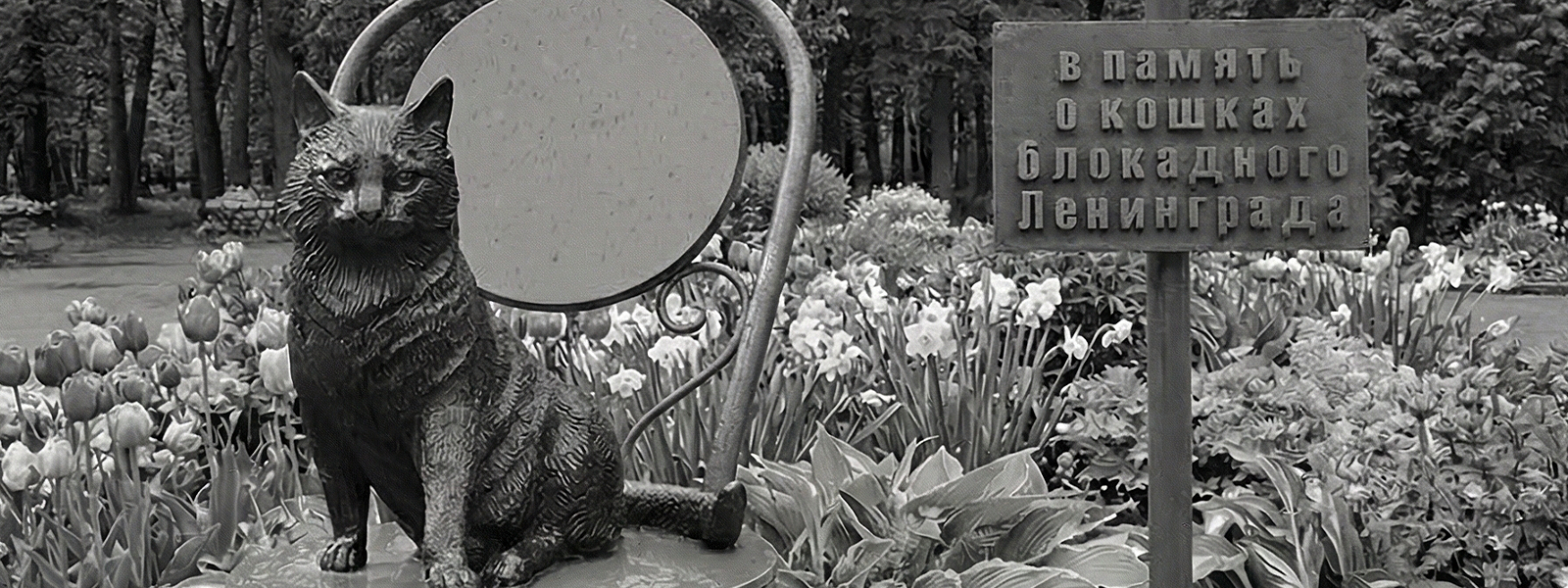
During the siege, the city was overrun by brazen rats that destroyed meager food supplies and even attacked emaciated people. To save the city, in 1943 a real "cat mobilization" was organized: four train cars of smoky rat-catchers were brought from Yaroslavl, followed by entire trains of cats from Siberia. This tailed landing force cleared the streets of rodents in a matter of days, and Leningraders are still so grateful to their saviors that they erected monuments to the cat Elisey and the cat Vasilisa on Malaya Sadovaya.
Source: figures and symbols of the siege
Lake Ladoga: the road of life
The only thread connecting the city with the world was Lake Ladoga. Along this "Road of Life," the most essential supplies were brought into the city so it could breathe and fight: food (flour, grains, sugar), fuel and combustibles (coal, mazut, firewood, peat, gasoline, and kerosene). In addition, weapons and ammunition were brought in to defend the city.
Interestingly, on return flights from Leningrad, people were evacuated and unique industrial equipment and valuable materials for the country's defense factories were transported out. At the same time, cables for electricity and a pipeline for fuel were laid along the bottom of the lake.
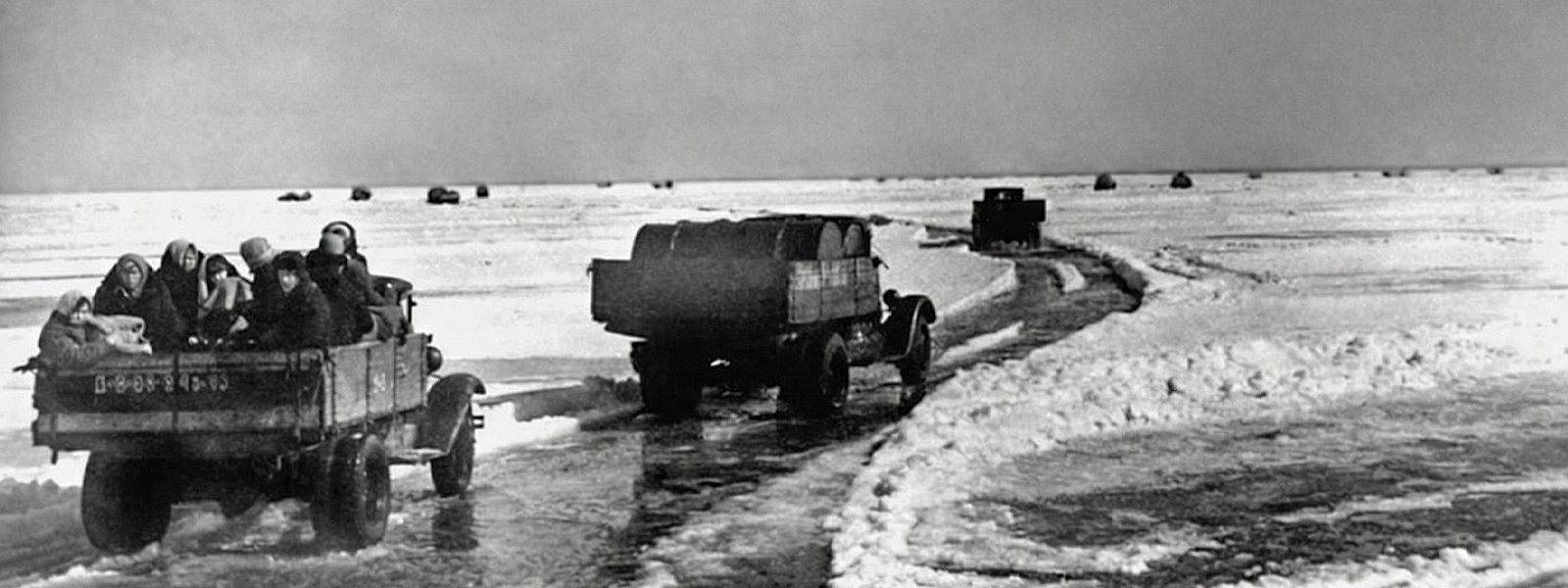
Drivers drove with their doors open so they could jump out if the vehicle started to go under the ice. The evacuation was a huge risk: sometimes trucks with children disappeared into ice holes right before the eyes of others. About one and a half million people were transported along this road – almost half of the city.
The breakthrough of the siege and freedom: how it happened
How long did this nightmare last? The siege lasted 872 days – that's almost two and a half years in the ring. What the whole city had awaited for 16 long months happened in January 1943 under the code name Operation Iskra, when the troops of two fronts finally met, cutting a narrow corridor only 8–11 kilometers wide through the siege ring.
Source: Operation Iskra (chronology and facts)
They say Leningraders were so starved for life that in just 17 days, along this reclaimed shore, they laid the railway 'Road of Victory,' along which trains with food and fuel immediately began to reach the city.
An amazing fact: already in the same 1943, right after the breakthrough, the confectionery factory began making 'Mishka na Severe' candies – imagine what a symbol of returning to normal life that was for children! People often ask how people took this event – when the radio announced the breakthrough, people cried with happiness and hugged right in the streets, because it was the first real victory over starvation. And by mid-February, normal wartime supply norms were introduced in Leningrad, and the city could finally breathe freely, although a whole year remained until the complete lifting of the siege.
Leningrad after the siege: return to life
After the final lifting of the siege, the city began to rebuild with some frantic energy, as if people had been saving up for a long time to quickly erase the traces of war. After the war, it was mainly women and yesterday's schoolgirls who had to rebuild the city. People, barely back on their feet, themselves went out to clear the streets of debris and demine the suburbs, and the restoration was led by architect Baranov, who literally reassembled the palaces of Peterhof and Pavlovsk from ashes…
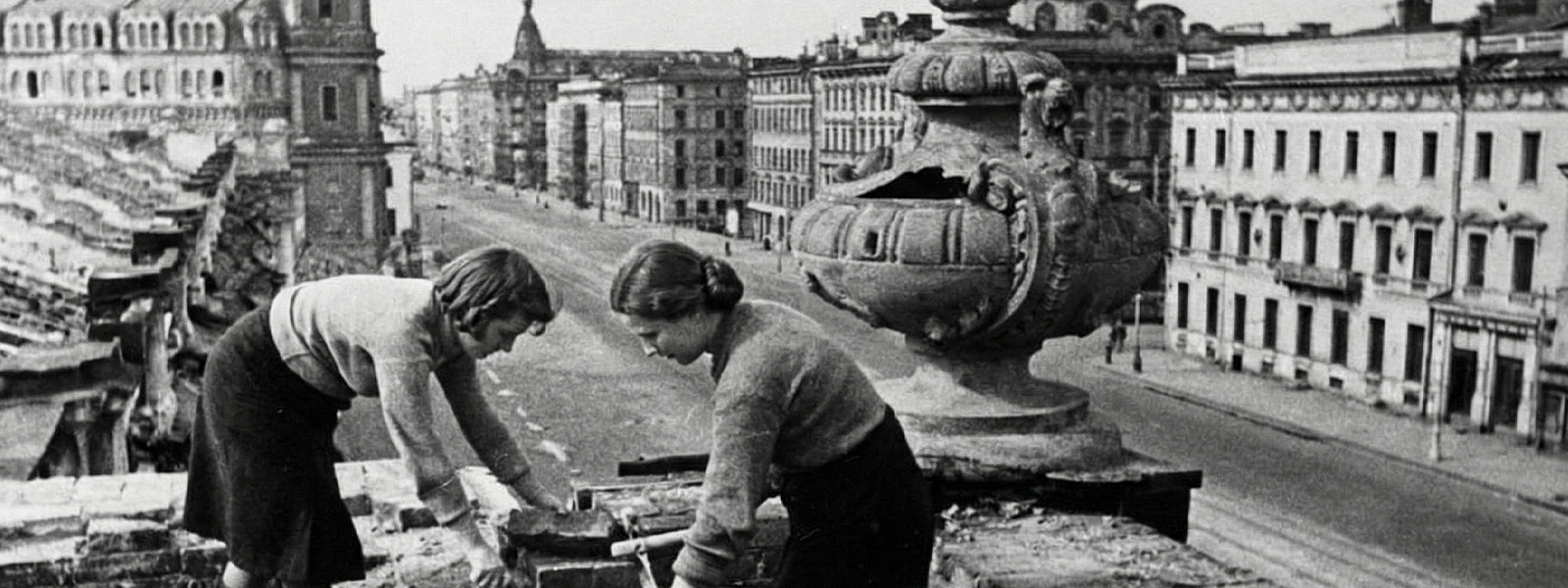
It's amazing that life returned even in small things: confectionery factories started making candies again, and water, heat, and light gradually returned to homes. The city was in such a hurry to come alive that wounds healed instantly, and only the memorial blue plaques about artillery shelling were later restored as a reminder that once every step here was a feat.
Memories of the siege
The most striking thing is that Leningraders could not get used to being full for many years and saved every crumb, because the siege memory went inside them like annual rings in a tree trunk. Some felt the 'taste of the siege' in their mouths for years and were afraid of the dark
Now, walking around Saint Petersburg, it's hard to believe that this city was once on the brink of disappearance. For every saved monument, street, and granite bend of the Neva, an inhuman price was paid – the lives of hundreds of thousands of patriots dying of hunger, who did not betray their Leningrad! We can enjoy this majestic city only because the siege survivors accomplished their sacrificial feat of love and endured where, by all laws of science, survival was simply impossible!
Tour of besieged Leningrad
The Siege of Leningrad is a story of how the human spirit proved stronger than steel and stone. If you want to truly feel this city, you need to walk its streets as a witness, and Leningrad Tour will help you do that!
You will visit St. Isaac's Square, where during the war there was a huge cabbage patch, the Piskarevskoye Memorial Cemetery, dedicated to the memory of all Leningraders and defenders of the city, learn the story of Tanya Savicheva and the fate of the most terrible and tragic diary in history, as well as who now lives in her house, and visit the Siege Church, which holds 8,000 named bricks in memory of those who died during the Siege of Leningrad.

Tour of besieged Leningrad
Go to the tour →








