


Author of materials about St. Petersburg, travel, excursions, and city routes.

Accredited guide for St. Petersburg, its suburbs and excursions for families with children.
A walk around St. Petersburg rarely goes without a visit to Palace Square, and not everyone knows that the most memorable building of the museum complex is the New Hermitage. The building with the Atlantes on Millionnaya Street became the first place in the country that was initially built specifically as a public art museum.
History of the Hermitage: from a closed collection to a public museum
It all started when the collection of Catherine II, gathered from all over Europe, no longer fit in the halls of the Small and Large Hermitages. In those days, access to art was a privilege. Ordinary people could only dream of visiting the Hermitage. Even Alexander Pushkin had to ask his acquaintances for help to get a pass to the halls.
The situation changed under Nicholas I. He initiated the construction of the New Hermitage after a trip to Munich. The emperor wanted to create a 'museum' in St. Petersburg that would rival the best European galleries. This was the first building in the Russian Empire specifically designed and built to house a public art museum. Construction began in 1842 and lasted ten years.
Architecture: the Atlantes and the emperor's personal control
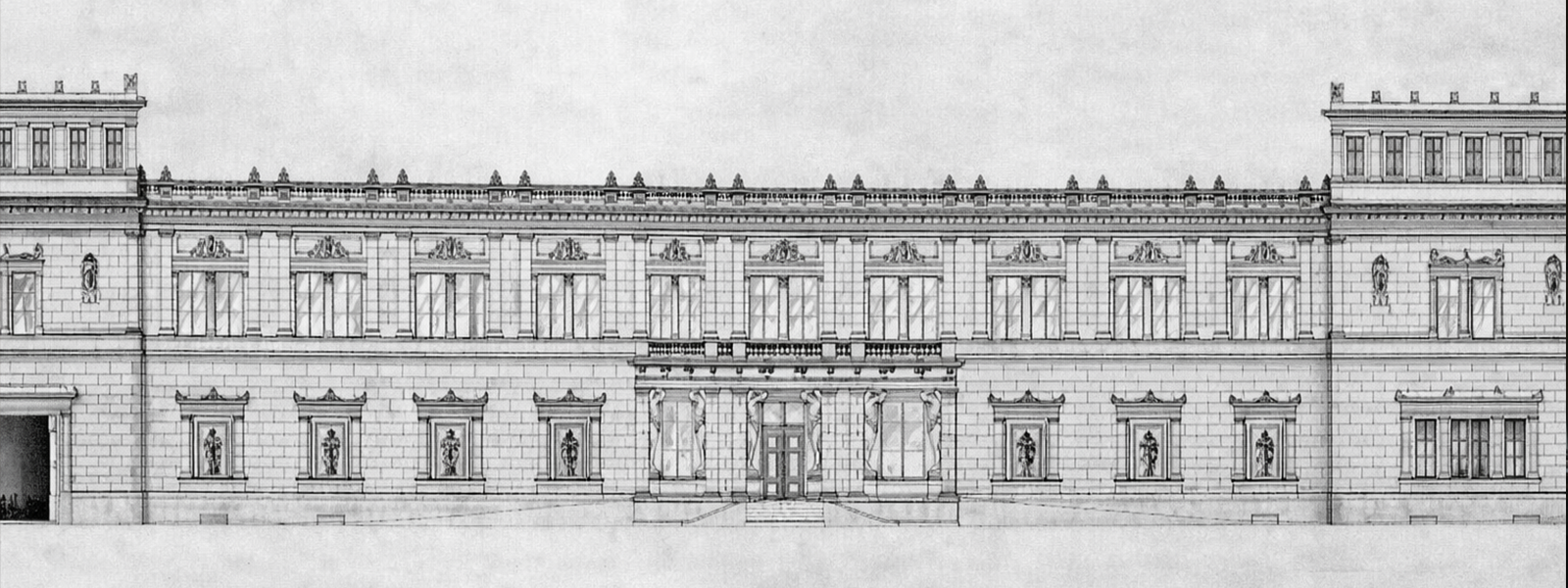
The building of the New Hermitage is easily recognized by its strict 'Neo-Grec' style and the abundance of sculptures on its facades. The walls are decorated with 28 statues of famous artists and masters from various eras – from Leonardo da Vinci to Rembrandt.
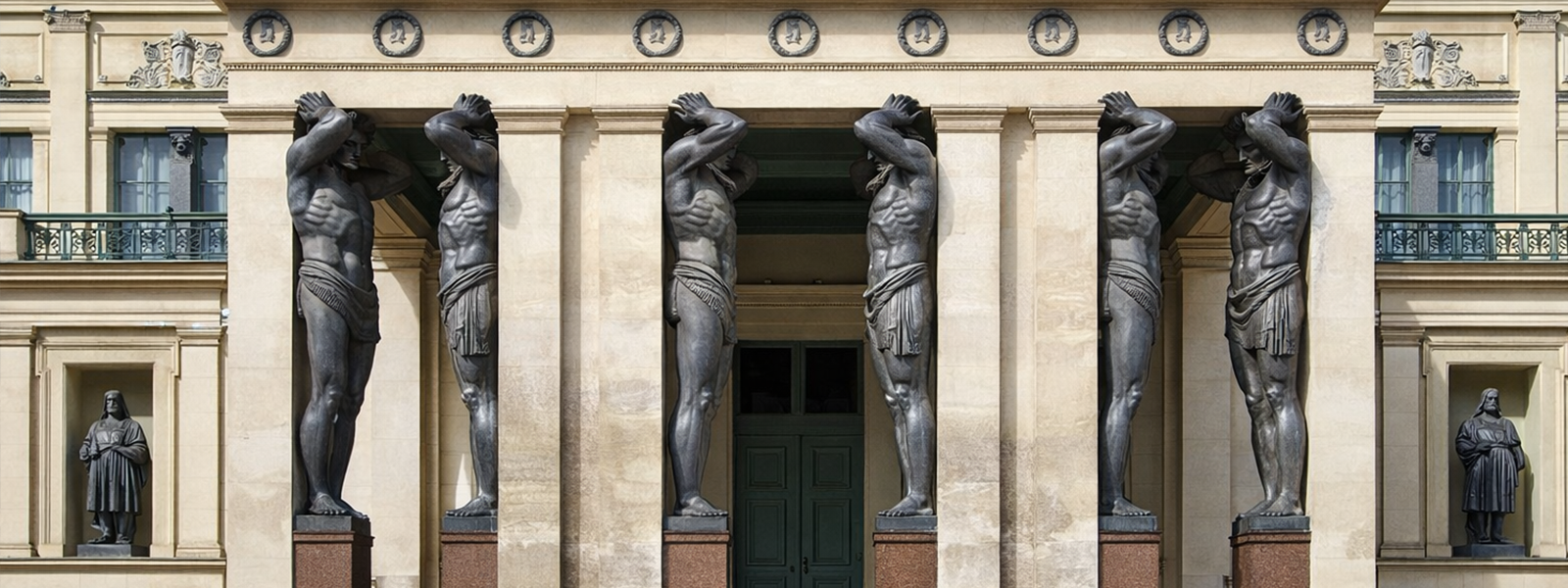
The main pride, of course, is the ten five-meter Atlantes made of gray granite. Their appearance was copied from ancient figures that adorned the Temple of Zeus in Sicily. These statues have become the main decoration of the building and remind visitors of the museum's close connection with the art of Ancient Greece and Rome.
Interesting fact: initially, figures of Egyptian pharaohs were planned to be installed in their place, but the architects chose the Atlantes to emphasize the antique spirit and classical beauty of the museum
There is a belief that if you rub a toe on an Atlantean's foot, any wish will come true – that's why the granite in these spots is polished to a shine by tourists. This place is a must-visit! Who knows, maybe your wish will come true too?
Halls of the New Hermitage: light and interiors
The uniqueness of the New Hermitage lies in the fact that the building is designed so that the interiors complement the exhibits. One of the main highlights are the 'Skylights' – huge halls on the second floor with glass ceilings. Thanks to this solution, paintings can be viewed in natural light, as the creators intended. Artificial marble, paintings, and mosaic floors were used for the decoration.
First floor: the world of antiquity and a 19-ton vase
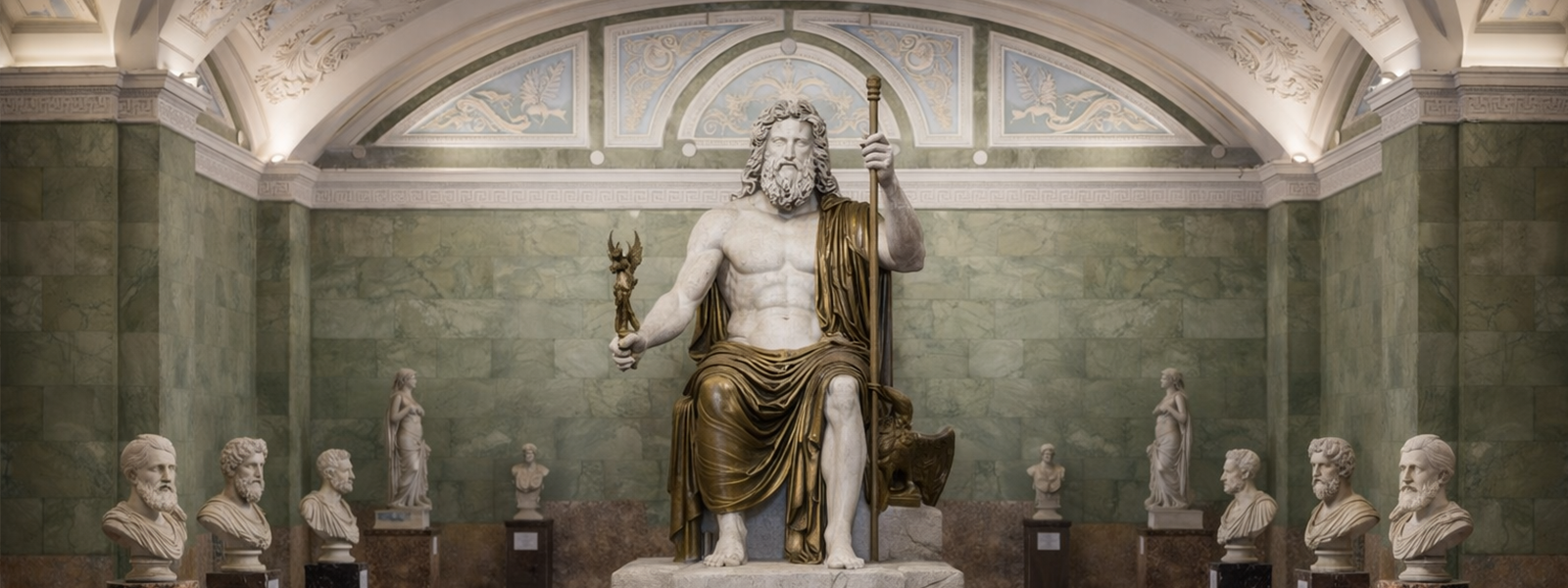
On the first floor, there are halls with antique statues, including the famous statue of Zeus, 5 meters tall, and ancient vases. The most unusual exhibit here is the Kolyvan Vase made of jasper, which weighs 19 tons and is 3 meters in size. It was installed in place even before the walls of the hall were erected, because otherwise it wouldn't fit through the doors. Also worth a visit is the Antique Courtyard, which resembles a garden in the house of a wealthy Roman.
Second floor: Italian masters and knightly steel
The halls display paintings by great masters such as Rembrandt and Raphael. It is here that the famous painting 'The Return of the Prodigal Son' hangs.
Be sure to visit the Knight's Hall, where four figures of horsemen in full armor stand right in the center of the hall, and a whole collection of armor and weapons from the 15th–17th centuries is also displayed. Here, legends of knightly nobility and fierce battles become tangible, complete silence reigns, and the cold gleam of armor fascinates and makes you carefully examine every detail before continuing your tour of the Hermitage.
What everyone should see
The New Hermitage has hundreds of unusual exhibits and paintings, and here is a list of what everyone must see:
- Michelangelo's Crouching Boy – the only authentic work by the great Italian in Russia.
- Two paintings by Raphael: 'Madonna Conestabile' and 'The Holy Family', one of which the master painted when he was very young, at 17.
- A helmet by Filippo Negroli in the Knight's Hall, forged from a single piece of steel. The technology of such forging was irretrievably lost back in the 16th century, and today no master in the world can replicate it.
- Showcase obelisks in the antiquity halls, created from drawings by Leo von Klenze himself (author of the New Hermitage building project).
The New Hermitage is worth visiting because it's very easy to feel like you're inside a grand museum without unnecessary pomp. Best of all – as a couple or in calm company, without rushing: enter from Millionnaya Street, first making a wish while standing next to the Atlantes, then stroll through the cool halls. Inside it smells of stone, old wood, marble, and iron. This is the scent of a real museum and priceless exhibits that anyone can see, just as Alexander Pushkin once did.
New Hermitage: answering questions
-
Where is the New Hermitage located?
The New Hermitage is located in St. Petersburg at 35 Millionnaya St., being part of the main museum complex on Palace Square -
What are the opening hours of the New Hermitage?
The museum is open on Saturday, Sunday, Tuesday, and Thursday from 10:30 to 18:00, on Wednesday and Friday – from 10:30 to 21:00; Monday is a day off. -
What is the style of the New Hermitage?
The building was erected in the Neo-Greek style (a variety of eclecticism or historicism), combining elements of ancient architecture, Renaissance, and Baroque. -
Who is the architect of the New Hermitage?
The building project was developed by the German architect Leo von Klenze, while the implementation of the idea and construction were supervised by Russian masters V. P. Stasov and N. E. Yefimov
Tour of the Hermitage
The New Hermitage is just one of the five buildings that make up the main complex of the State Hermitage today, and visiting it will be even more convenient as part of a tour with Leningrad Tour.
In addition to the Hermitage, the program includes visits to the Church of the Savior on Spilled Blood, the cruiser Aurora, the Peter and Paul Fortress, and St. Isaac's Square. You don't need to worry about extra expenses, as entrance tickets to the Hermitage are already included in the cost of the trip.

Tour of the Hermitage
Go to the tour →








