


Writes about St. Petersburg, its history, sights, museums and routes.

A guide to the history and architecture of Petersburg and its imperial suburbs.
New Holland is a unique urban leisure space in the center of Saint Petersburg.
In warm weather, couples stroll along the alleys, holding hands, sometimes stopping by the canal for kisses. Friends sit on the grass with blankets and coffee, families lay out small picnics, children run barefoot through the park. The air is fresh, with a light breeze. Some stop by street food pavilions for a bite, others just sit and look around, unhurried, without plans.
In winter the mood changes. An ice rink is flooded, music plays, and around you there's warm steam from cups of coffee, hot chocolate, tea, and mulled wine. People stand together, laugh, warm their hands, skate. In the coffee shops and inside the "Bottle" it's cozy and calm, you want to linger, wait out the frost, talk. Residents of Saint Petersburg, couples in love, families, and the creative crowd come here — everyone who needs a short break from the city bustle.
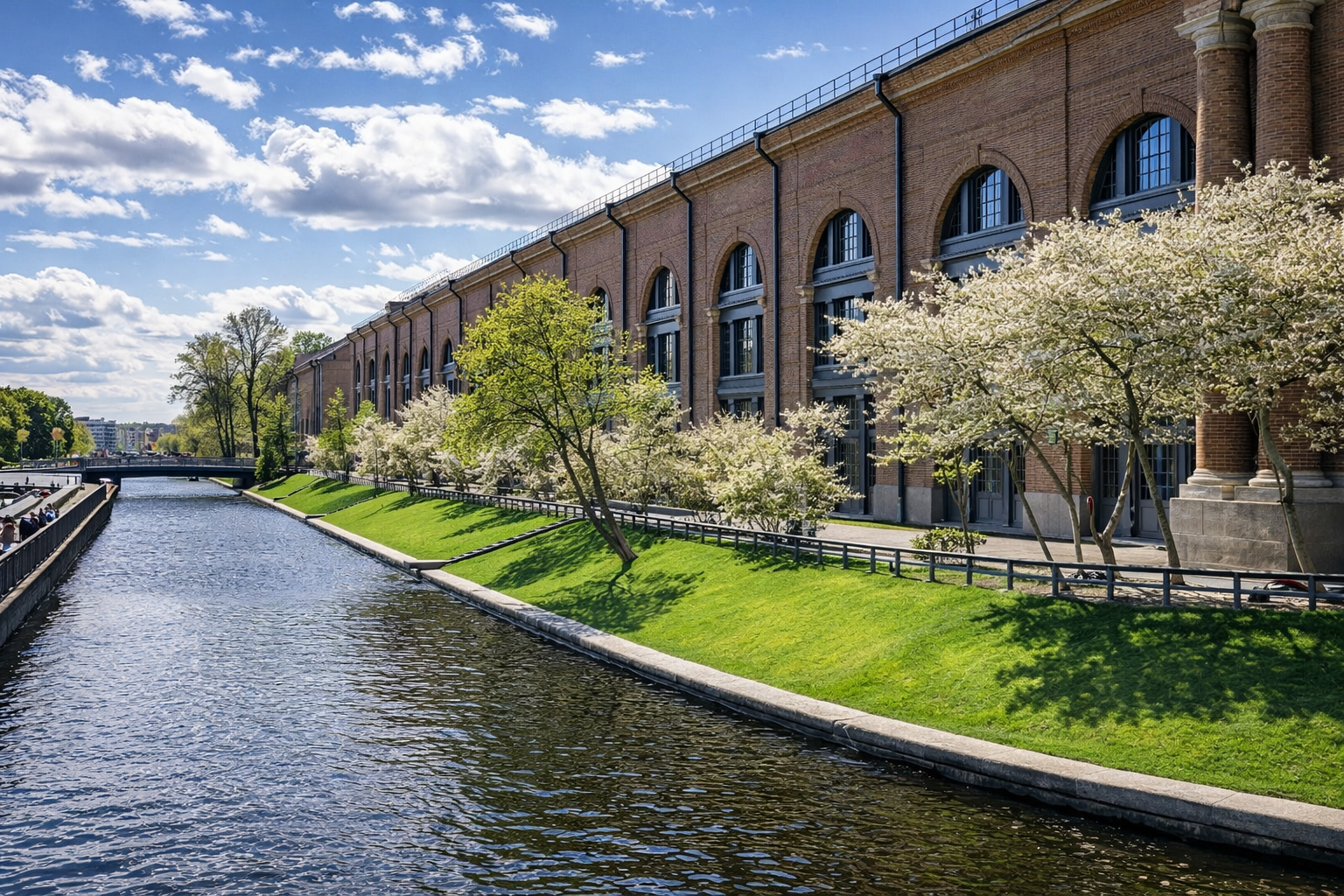
Warehouses, canals and the island's first buildings
The name "Holland" stuck to the island back in Peter the Great's time. The canals, drawbridges, warehouses, the proximity of water and the constant presence of Dutch shipbuilders formed an environment familiar to them here. The island, washed by the Moyka, the Admiralty and the Kryukov canals, resembled a European port familiar from the cities of the Netherlands, and in everyday speech it began to be called simply "Holland".
Over time the name gained a qualifier. For Peter I this place became a new embodiment of European experience in Russia. The island was conceived as part of Peter's grand project to create a modern state and fleet, where Western technologies and working principles were applied on new land. That is why the word "New" was gradually added to the name.
So "Holland" became "New Holland" — as a symbol of transferred and rethought experience.
The first buildings of New Holland were barns for storing ship timber. It was a strategically important place: materials for the fleet were near the water and under the control of the naval department. The climate quickly revealed the weak points of the wooden structures, and by the middle of the 18th century there was already a need for a complete rebuilding of the island.
Renovation projects began to be developed in the 1750s and evolved in stages. Architectural solutions were refined, supplemented and over time formed into a coherent system. Thus New Holland gradually acquired stone buildings, clear geometry and a recognizable appearance that is easily read even today.
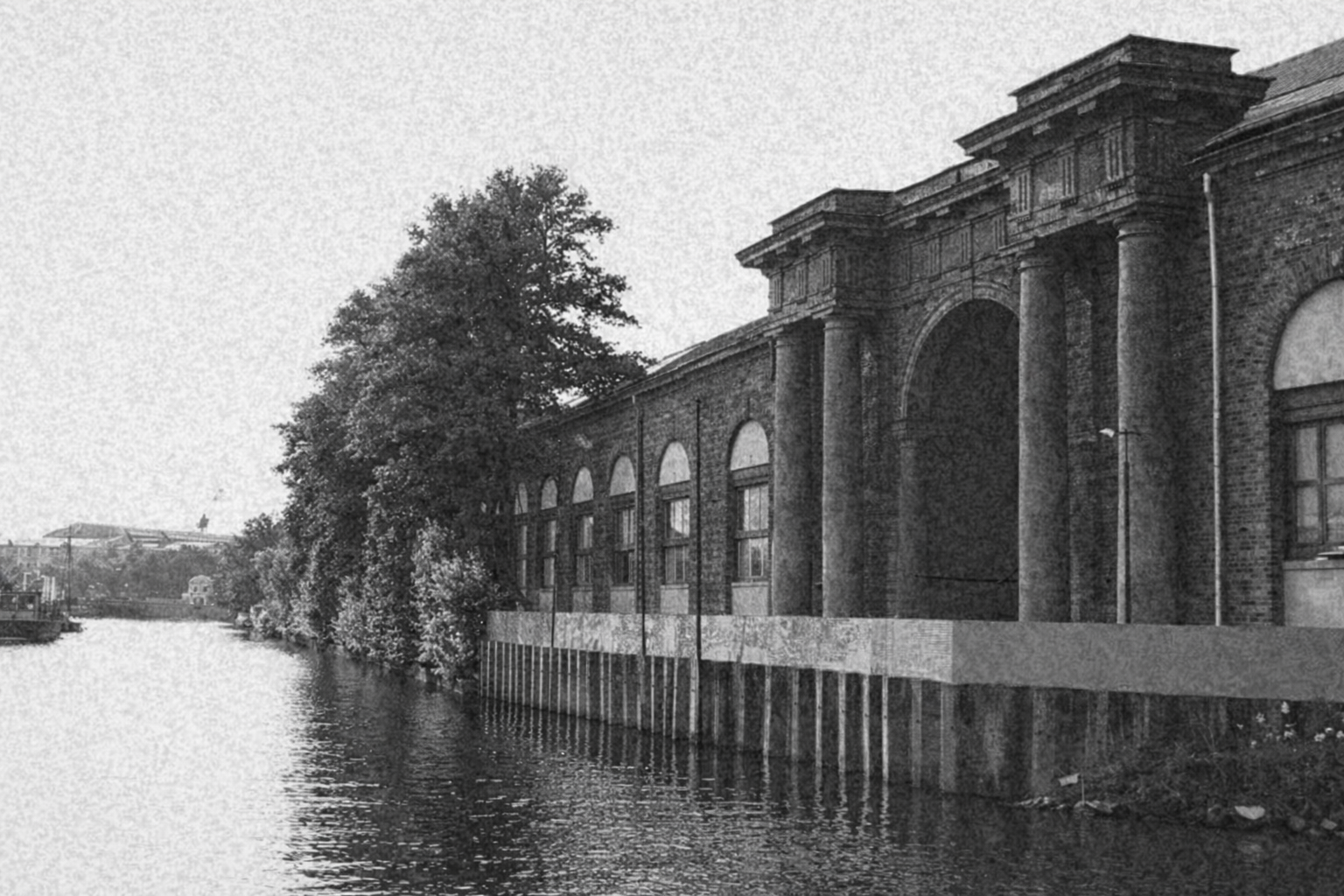
The "Bottle" and the naval prison
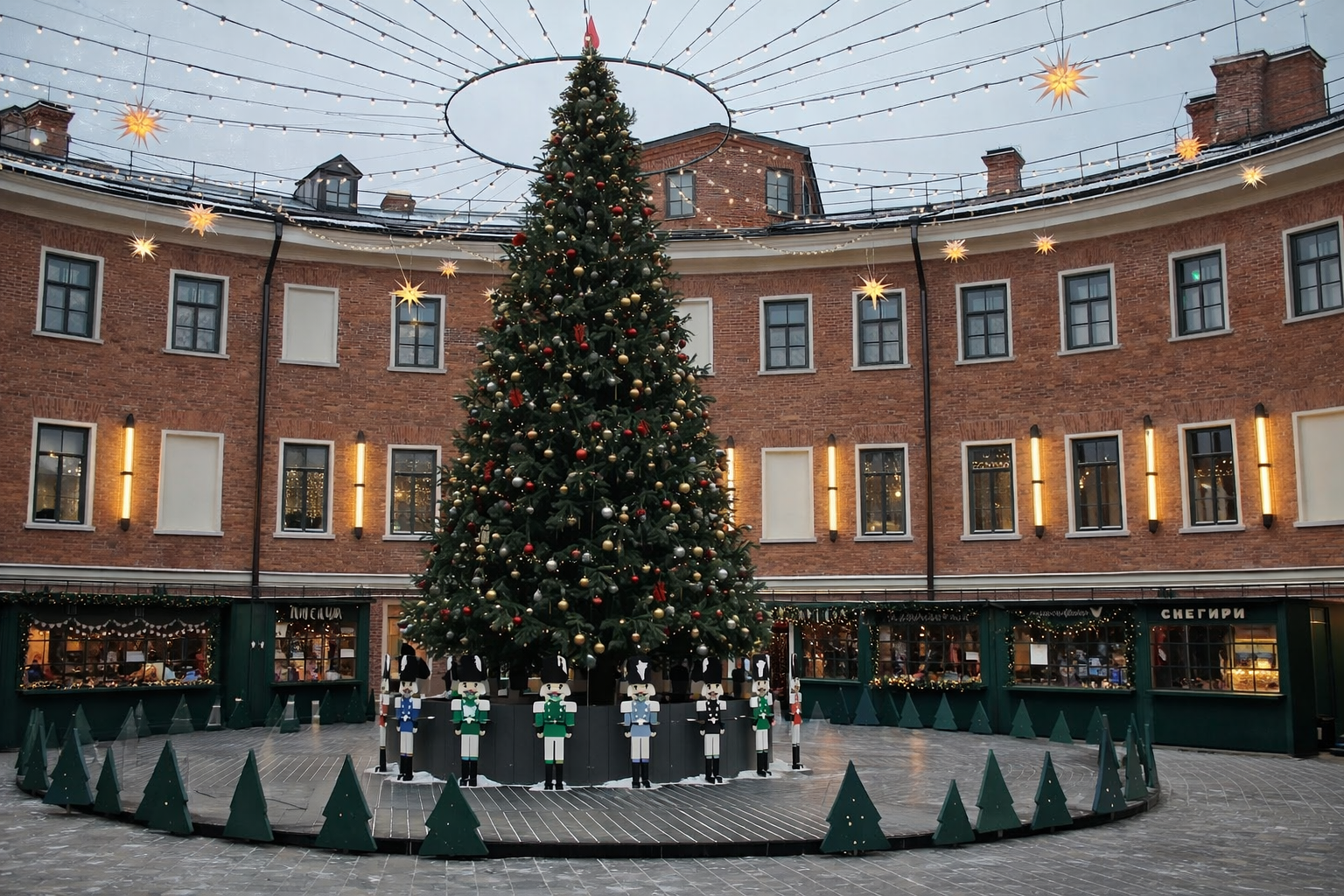
In the 1830s the island gained a new chapter — a naval prison was built here, and it immediately became one of the most unusual buildings in Petersburg. Its main feature was its shape. The round building looked so unusual that locals quickly gave it a name — "The Bottle". Simple, ironic and very Petersburg. The name turned out to be so apt that it outlived both the eras and the building's purposes.
The naval prison operated on the European principles of its time. The cells were intended mainly for sleeping; during the day the prisoners worked, learned trades, and received payment. Most often sailors ended up here — people with character and temperament. Over time the place became overgrown with city stories, and the expression "don't get into a bottle" spread beyond the island and firmly took root in colloquial speech.
Today the "Bottle" is a completely different story. Concerts, lectures and film screenings are held in the inner courtyard. On the ground floor there are cafes, restaurants and bars with cuisines from around the world — from Mexican to Israeli and Greek.
The second floor is occupied by shops and souvenir stalls. The third floor is dedicated to health, beauty and sports — with salons and studios.
Radio station and the turn of the 20th century
The beginning of the 20th century became an important stage of renewal for New Holland. The island's territory was gradually reinforced, buildings were put in order, and structures were made more reliable and durable. The space adapted to the new era while preserving its historical structure.
During this period, a radio station appeared on the territory of New Holland, providing communication with the Baltic and Black Sea fleets. It made the island a significant point of communication and emphasized its role in the country's technological development. It was from here that a message addressed to the fleet was transmitted in 1917, securing the island's special place in history.
Over time, New Holland received the status of a protected monument.
From a closed territory to an urban space
In the second half of the 20th century, New Holland gradually approached a stage of renewal and rethinking. As early as the 1970s, the idea emerged to develop the island as a cultural space, and over time this plan began to take real shape.
In 2011, New Holland opened to visitors, and residents of St. Petersburg and beyond could freely stroll through the territory that had long held a different status.
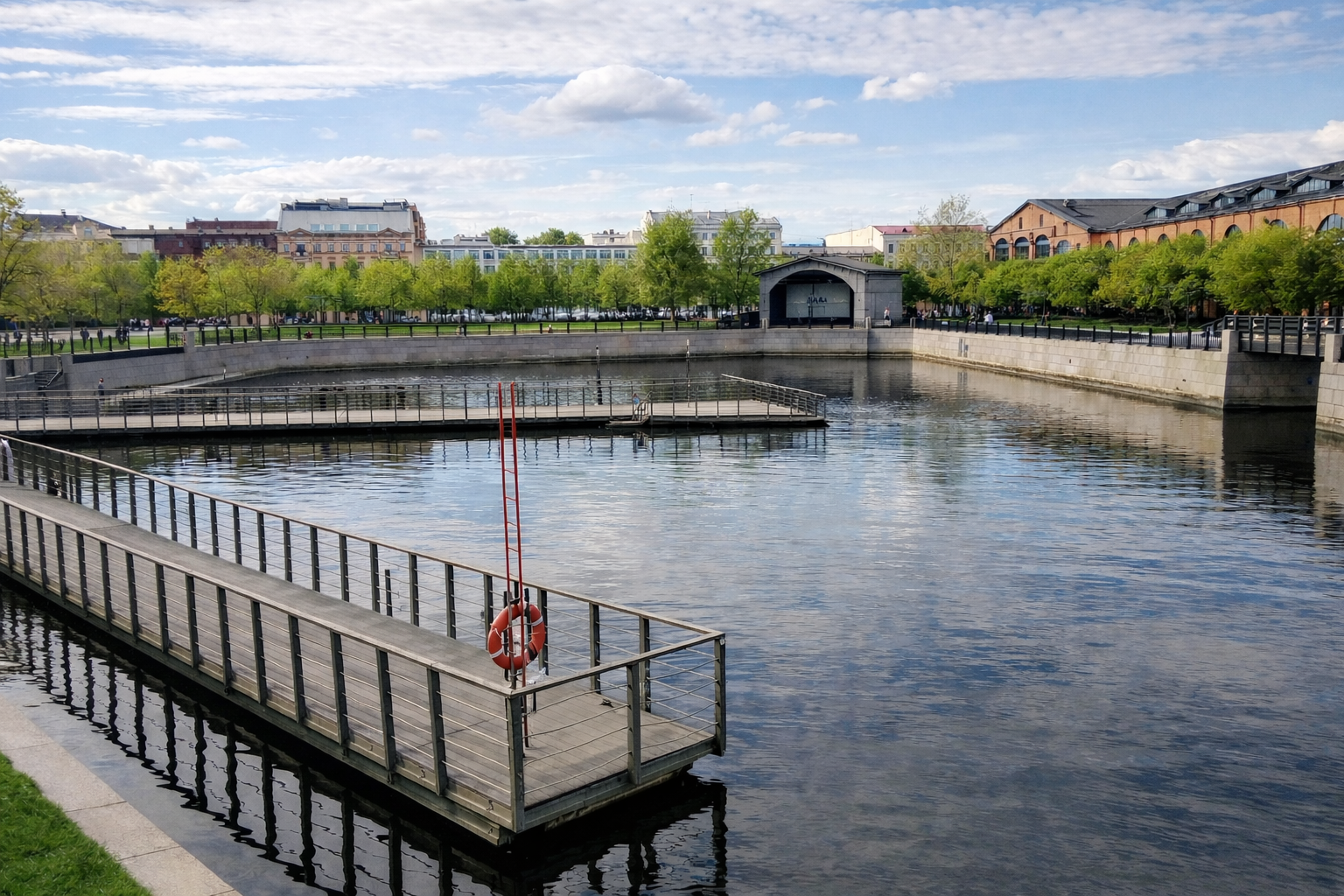
New Holland today
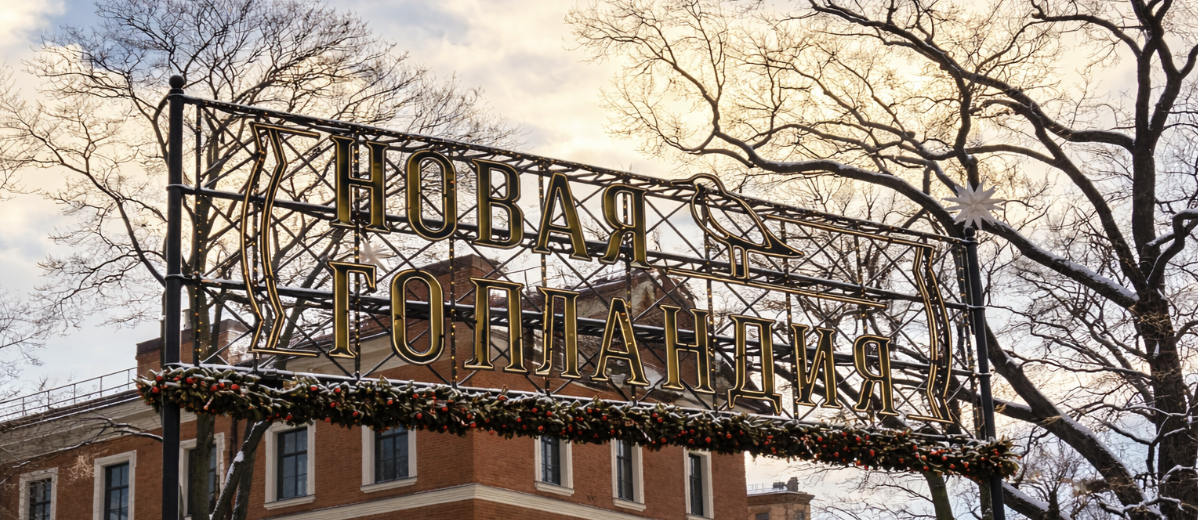
Upon entering New Holland, we first find ourselves at the Information Center Pavilion. It stands almost immediately after the entrance: here people pick up a map of the island, check what events are happening today, and confirm the schedule. Here we are also greeted by a large neon seagull — the symbol of the island. It subtly repeats further on: on manhole covers, lamps, and in the details of the environment.
The seagull was created by Moscow artist Dmitry Pantyushin in 2011. He came to St. Petersburg, went for a walk around the island, and at that moment a flock of seagulls circled low above him. It became clear then: no better symbol was needed for this place. The seagull turned out to be an accurate reflection of the island — connected to water, air, movement, and freedom.
The warm season
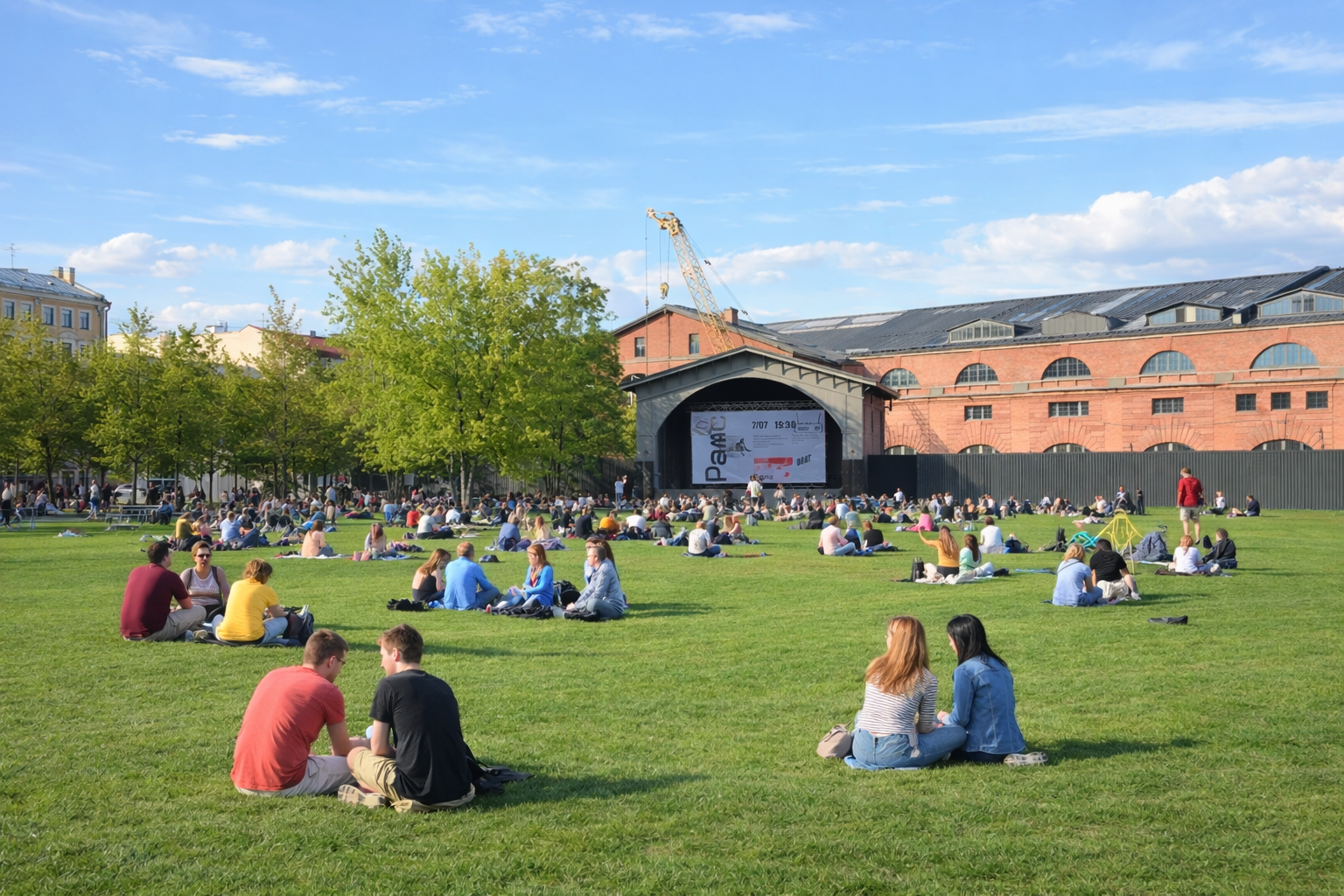
In the warm season, a large park area opens up. Grass underfoot, scattered loungers and chairs, people with coffee and books, conversations in low voices. Even on a weekday there are many visitors here: some lie on the grass, some sit in small groups, some simply pass through the park, staying longer than they planned. The space feels like a place for relaxation where there is no need to 'keep up' with anything.
It is always fresh here — thanks to the open space and proximity to water. A light breeze, air without stagnation or dust. Even on a hot day, it feels freer and cooler to breathe than in the city around.
Along the way, you come across a stage. In summer, concerts, theater performances, and open-air film screenings take place here. People gather gradually: some stop for a few minutes, others stay until the end of the program. By evening, it becomes especially lively here.
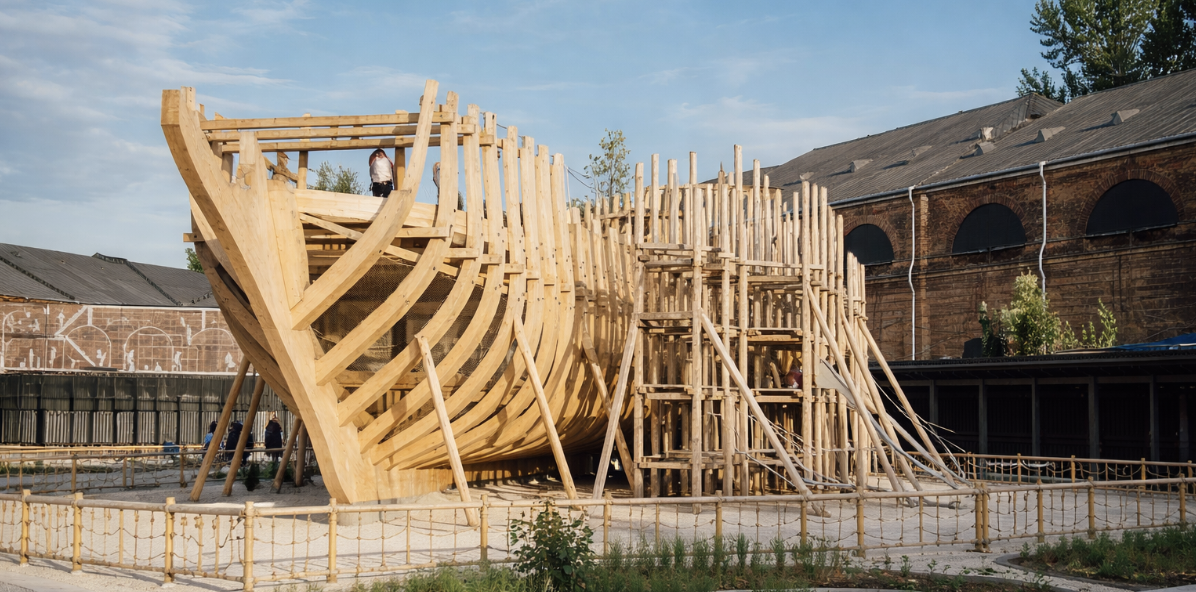
If you go further, the 'Frigate' children's playground catches your attention. It is a large structure shaped like a ship with ropes, passages, and decks. The playground is designed for active movement, and children spend a lot of time here. Nearby there is a place where adults can sit quietly and watch without interfering.
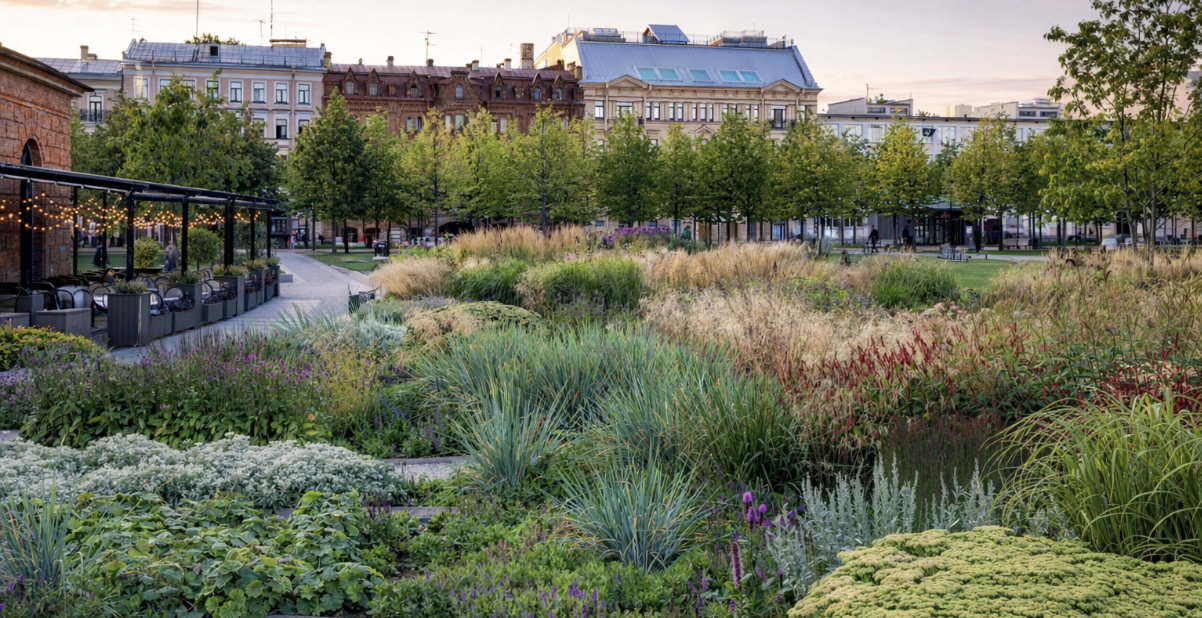
A separate part of the walk is the garden alley, which smoothly transitions into a shady one. It stretches along the former warehouse buildings and immediately feels cooler and more intimate. The vegetation changes with the seasons: in spring and summer the emphasis shifts to flowering plants, and closer to autumn, calm green and warm shades appear.
The tree crowns here are densely closed, sunlight passes through in soft patches, creating shade and a sense of seclusion. In hot weather, this is one of the most comfortable places on the island.
The alley is thought out in detail: drip irrigation under the plants, a neat path with large-format tiles along the edges and red gravel in the center, stone gutters for water drainage. The plants are selected so that the space remains alive and dense: maples, ornamental apple trees, serviceberry, shrubs, ferns, astilbes, and overgrown climbing hydrangea.
Inside there are small rest areas hidden away, where it's convenient to take shelter from the sun and sit with a book. Attention to detail — from the paving to the landscaping elements — creates the feeling of a well-kept, calm space where you want to linger.
Small kiosks operate throughout the territory. In warm weather, people get ice cream, drinks, and light street food here. Often this becomes part of a stroll — grab something and keep walking without changing the rhythm.
The cold season
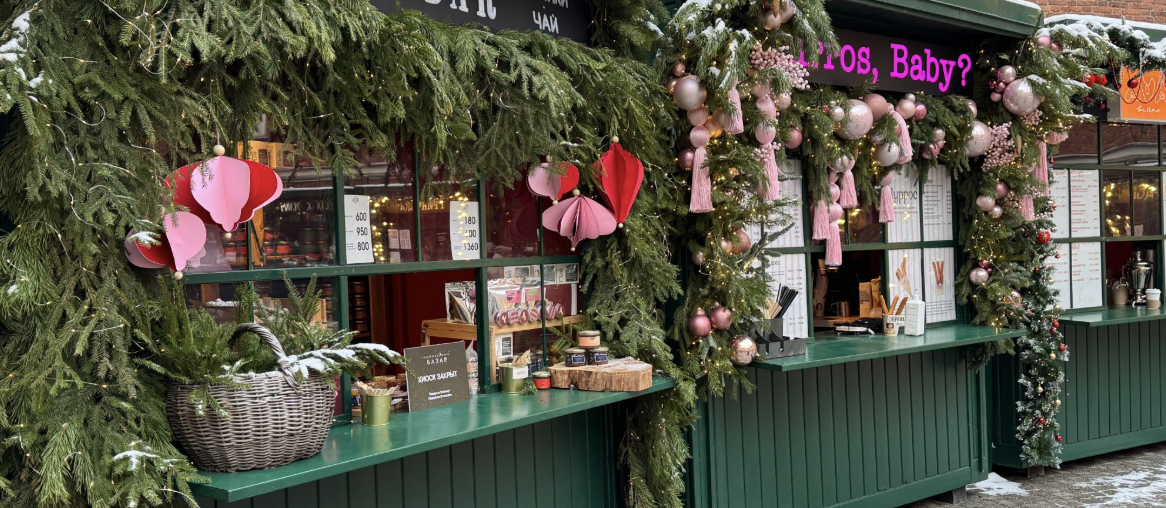
In the cold season, the island's format changes but doesn't lose its character. Hot snacks, pastries, and warm coffee appear — the kind that's pleasant to hold in your hands. Especially memorable are the trdelníks — warm, fragrant pastries with a crispy crust, sugar, cinnamon, and nuts. They're often eaten right on the go.
There are also souvenir shops. Here you can find vintage New Year decorations and items with the New Holland aesthetic — understated and discreet. For vinyl enthusiasts, there's a separate corner — with records of popular global Christmas hits.
In winter, an ice rink with natural ice, lights, and music opens on the lawn. Even those who don't step onto the ice linger nearby — to watch, walk around, and take a few photos. During this time, the Bottle building is especially busy: people come in to warm up, eat, and spend more time inside. On a cold day, it's easy to stay here for a long while.
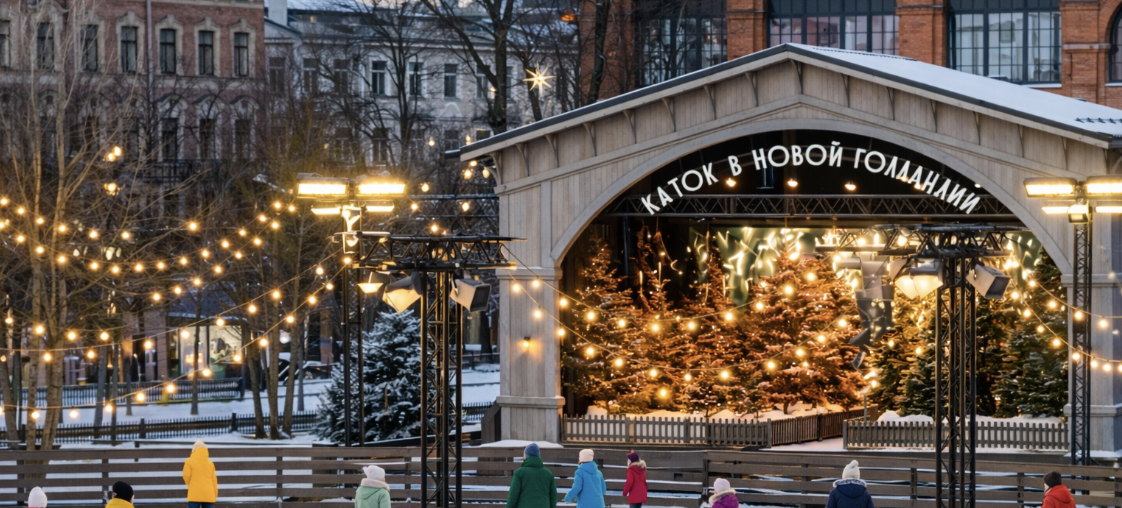
During the New Year period, a large Christmas tree is set up in the courtyard of the Bottle, and a festive market with food and gifts opens around it. The alleys are decorated with garlands and decorative elements, the ice rink keeps operating, and children's classes are held in the Pavilion. In the evening, there are many people strolling on the island — without fuss, but with a sense of celebration.
Despite its popularity, the island remains surprisingly quiet. The flow of people is distributed wisely: the paths are laid out so that the space doesn't feel cramped. Even on weekends, there's no sense of overcrowding. The exception is the ice rink in winter, which lives its own separate, more dynamic life.
New Holland sets the mood and helps you feel the character of St. Petersburg. It's convenient to continue getting to know the city on a sightseeing tour: cathedrals, embankments, the Hermitage, and key landmarks come together into a complete picture of the city.
The program includes Kazan and St. Isaac's Cathedrals, the Church of the Savior on Spilled Blood, panoramas of the Neva, the Hermitage, and the central streets. Such a route gives a comprehensive idea of St. Petersburg and helps you see the city as a whole.
Ready-made tours to St. Petersburg from «Ленинград-Тур»
Choose your travel format
On the «Ленинград-Тур» website you'll find tours to St. Petersburg for 2, 3, 4 and 5 days with accommodation, an excursion program and a guide. We'll help you find a route to match your dates and wishes.
- Programs for first trips and for those returning to St. Petersburg;
- Tours with suburbs, theaters and original routes;
- Options for families, couples, school and corporate groups.
The «Ленинград-Тур» team wishes you genuine enjoyment of St. Petersburg ❤️








