


Writes about St. Petersburg, its history, sights, museums and routes.

Accredited guide for St. Petersburg, its suburbs and excursions for families with children.
Monrepos Park in Vyborg: history, the "castle", walks and what to see
Monrepos Park is an atmospheric continuation of Vyborg. It is a historic estate with unique buildings woven into a landscape park, where cliffs, lakes and architecture come together into a single space. The park reveals a personal story and was created for reflection and contemplation — here you want to walk slowly, look at the water and switch off from the city bustle. MONREPOS — (from the French Mon Repos — my repose)
The history of Monrepos begins in the second half of the 18th century. By then Vyborg and the future territory of the park had already been taken by Peter I (in 1710) from the Swedish kingdom and accordingly were part of the Russian Empire. Until 1788 the territory of the future Monrepos park was used by commandants and officials of Vyborg, and in 1788 the estate was acquired by Ludwig Heinrich von Nicolay - president of the Imperial Academy of Sciences, scholar and poet. Heinrich acquired this very location because it combined various landscape forms — water bodies, hills and parks, and it was also here that his personal romantic story unfolded.
Nicolay conceived Monrepos as a place for reflection and solitude. The name Mon Repos translated as “my peace”, “my solitude” - and this idea can still be felt in the park today: nature here is not subordinated to geometry, but emphasized by paths, views and stopping points.
One of the interesting artifacts built by Heinrich became the white "Chapel" a symbol of solitary reflection, which later became a family tomb
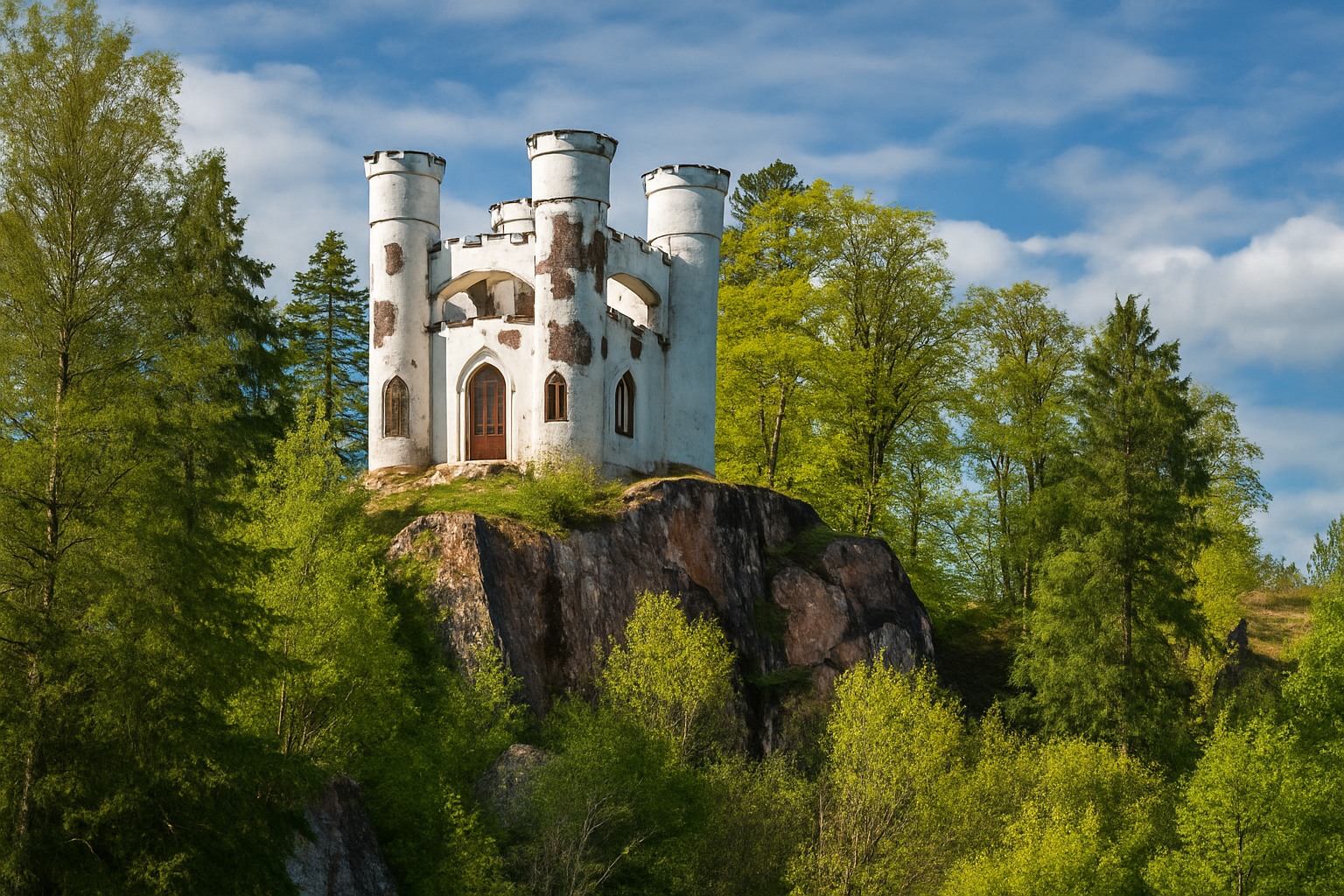
In the 19th century, Monrepos actively developed. New routes, bridges, pavilions, and viewing platforms appeared — all so that a walk would resemble a journey through different “scenes” of nature. At the same time, the main principle remained unchanged: not to break the landscape, but to fit architecture into it.
That is why Monrepos is perceived differently from formal parks like Peterhof. There is no feeling of an “exhibition” here: instead — rocks, boulders, water and paths that lead to beautiful views unexpectedly, without a pre- obvious logic.
Today Monrepos continues to be a place for walking, reflection and exploring history. Pavilions, bridges, sculptures and the ruins of the chapel have been restored or preserved in their authentic form. In recent years, the park has been carefully put in order, trying not to lose its character — quiet, northern, contemplative.
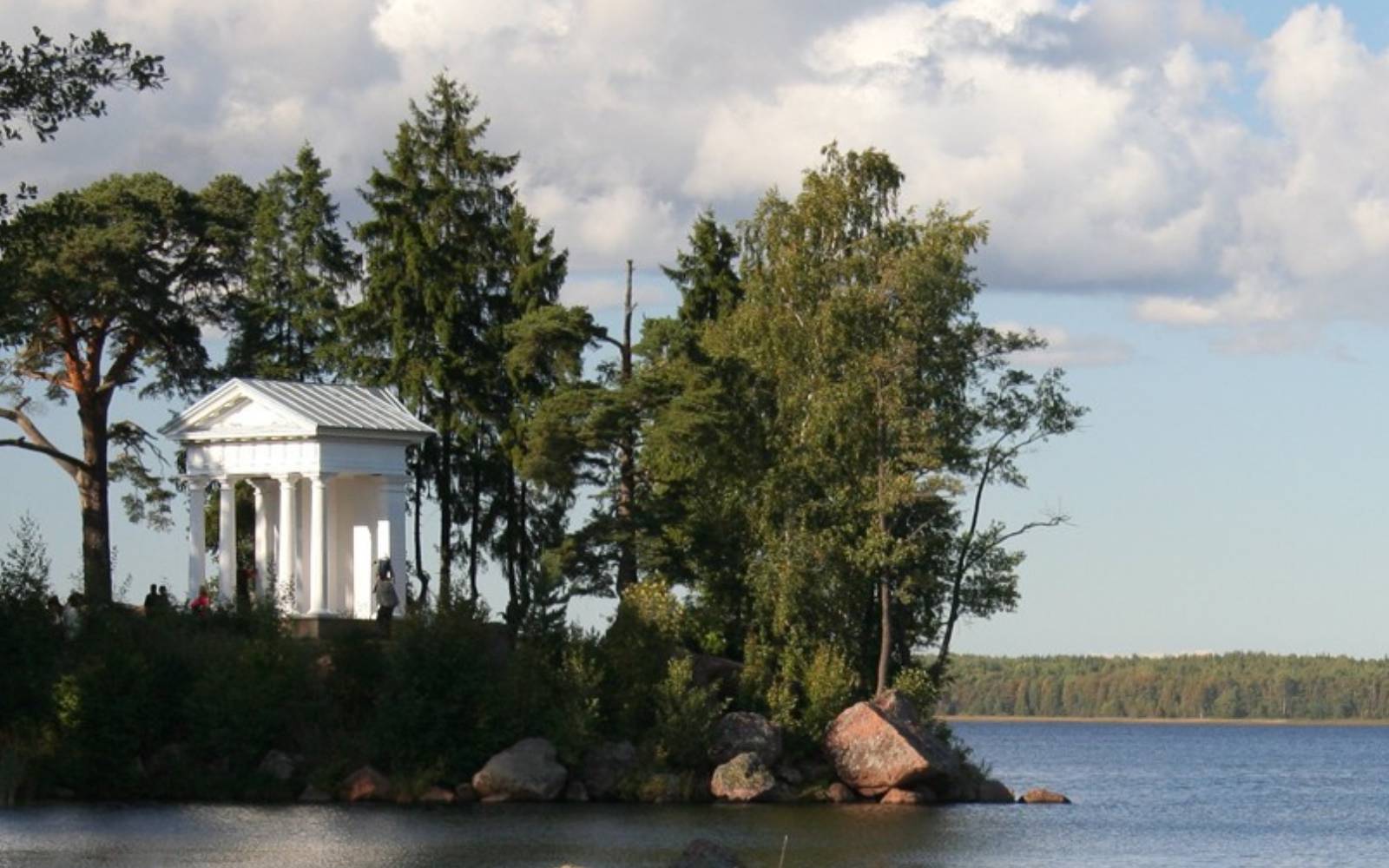
The park’s natural landscapes remain the basis of its beauty: rocks, lakes, rare plants and alleys create a unique atmosphere. Monrepos is especially valued because it is not “one photo spot,” but a full-fledged route where you can walk for hours.
It is also important how closely Monrepos is connected with Vyborg. It is effectively part of the city: from the center of Vyborg to the park — only a few kilometers. Therefore, a trip “to Vyborg” almost always includes a walk through Monrepos — without it, the city seems to remain unfinished.
Monrepos remains a symbol of the region’s cultural heritage and attracts the attention of historians, tourists and nature lovers — precisely for its rare combination: European estate history, northern landscape and the calm rhythm of a walk.
The best seasons to visit Monrepos are late spring, summer and early autumn, when nature is especially beautiful. At this time the park is at its most “alive”: greenery, water, long daylight hours and a comfortable pace for walks.
In winter, Monrepos is also impressive: snowy landscapes, frozen lakes and the contrast of rocks against a white background create a special, northern picture. Architectural elements look especially expressive in the cold season.
On the park’s territory, tourists and guests can see:
- picturesque rocks and lake shores;
- decorative bridges and pavilions of the 18th–19th centuries;
- rare plants and well-kept alleys;
- panoramic views of nature and water bodies;
- sculptures and ruins of historical buildings.
Monrepos is attractive to everyone who values history and nature:
- for lovers of scenic walks and photography;
- families with children who are interested in historical sites and nature;
- historians and architecture researchers;
- romantic couples — quiet corners for walks;
- tourists who appreciate the combination of nature and cultural heritage.
Walks and Tours
The park is open for independent walks and guided tours. Visitors can enjoy nature, explore architecture and learn the history of Monrepos — without haste and at a comfortable pace.
- Routes for walks and photography;
- Tours with historical stories;
- Cultural and themed events on the park grounds.

Tour to Vyborg and Monrepos Park
Tour to Vyborg and Monrepos Park →Monrepos is a place where nature and history create a unique atmosphere that is worth experiencing firsthand ❤️
If you are planning a trip to Vyborg, it is best to allow enough time so that you have at least a couple of hours for Monrepos. Usually it is the walk through the park that becomes the part of the journey people remember the longest.








