


Author of materials about St. Petersburg, travel, excursions, and city routes.

Peter and Paul Cathedral is a true symbol of the city, which everyone recognizes by that very golden spire with an angel. Its image can be found on candies, magnets, and even umbrellas in souvenir shops. This is the very heart of the fortress, where all of St. Petersburg began, and for a long time this building was the tallest in Russia.
Architecture
The most interesting thing is that Peter the Great didn't want to build an ordinary Russian church at all? He dreamed of something European and modern to show everyone Russia's power in the Baltic. In the end, architect Domenico Trezzini created a building that looks more like a ship: a rectangular hull and a bell tower like a mast. It was built in two stages: first a small wooden church was erected, then right around it, without stopping services, stone walls began to rise.
Interior of Peter and Paul Cathedral
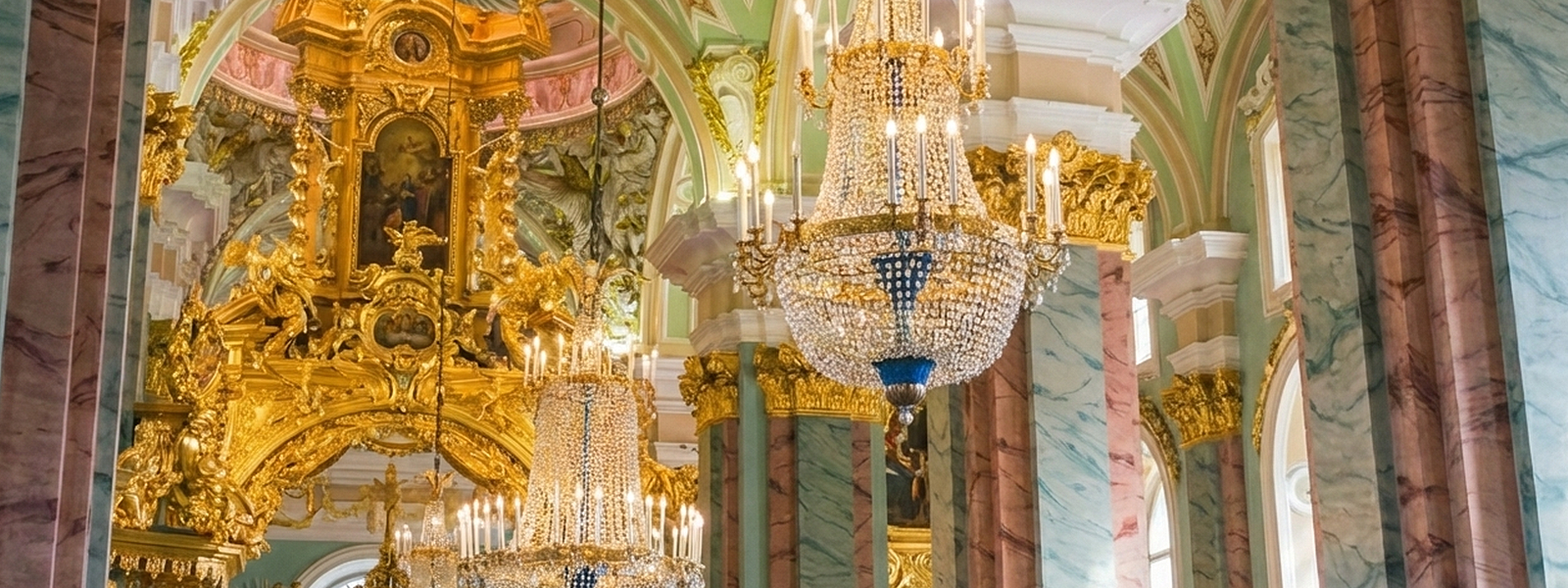
The interior is luxurious and looks more like a throne room in a palace than a church. There is gold, stucco molding and huge crystal chandeliers everywhere (by the way, one of them still has the original 18th-century glass!). And here's an interesting fact: the huge columns that look like expensive marble are actually just ordinary painting 'imitation marble'.
Also on the walls hang copies of captured banners – for centuries the cathedral was a monument to Russian military glory.
Bell tower of Peter and Paul Cathedral
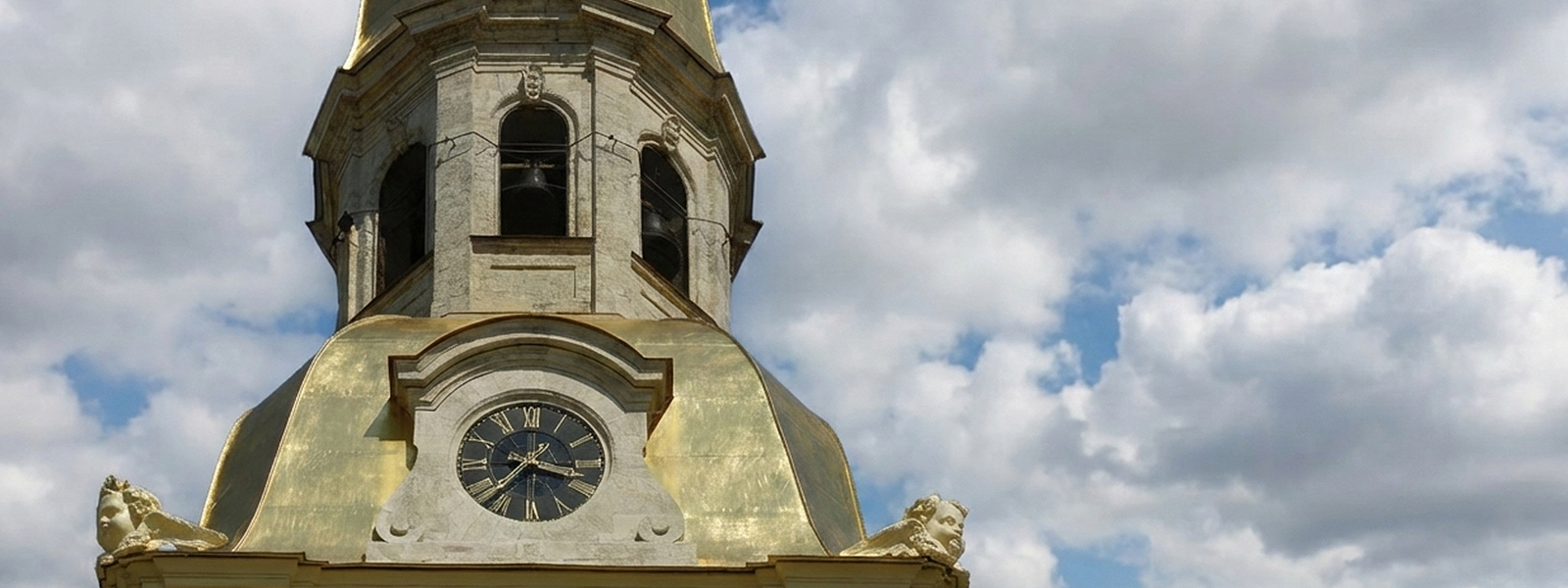
Peter the Great ordered the construction of the cathedral to begin with the bell tower, since in the early 18th century it served as an observation point from which the approach of the enemy could be spotted in time. And its height is 122.5 meters. On the spire is a weathervane angel weighing a whole 250 kg. A heroic story is connected with it: once master Pyotr Telushkin, without any scaffolding, using only ropes, climbed to the very top to repair the cross. Now there is a carillon – a unique instrument of 103 bells, on which real concerts are played.
Iconostasis
Have you ever seen an iconostasis in the shape of a triumphal arch? In St. Peter and Paul Cathedral it is exactly like that, created in honor of the victory in the Great Northern War. It is a giant carved structure of oak and linden, covered with pure gold. Interestingly, the names of the saints on the icons were not chosen by chance – they correspond to the names of the emperors buried here.
Imperial tomb
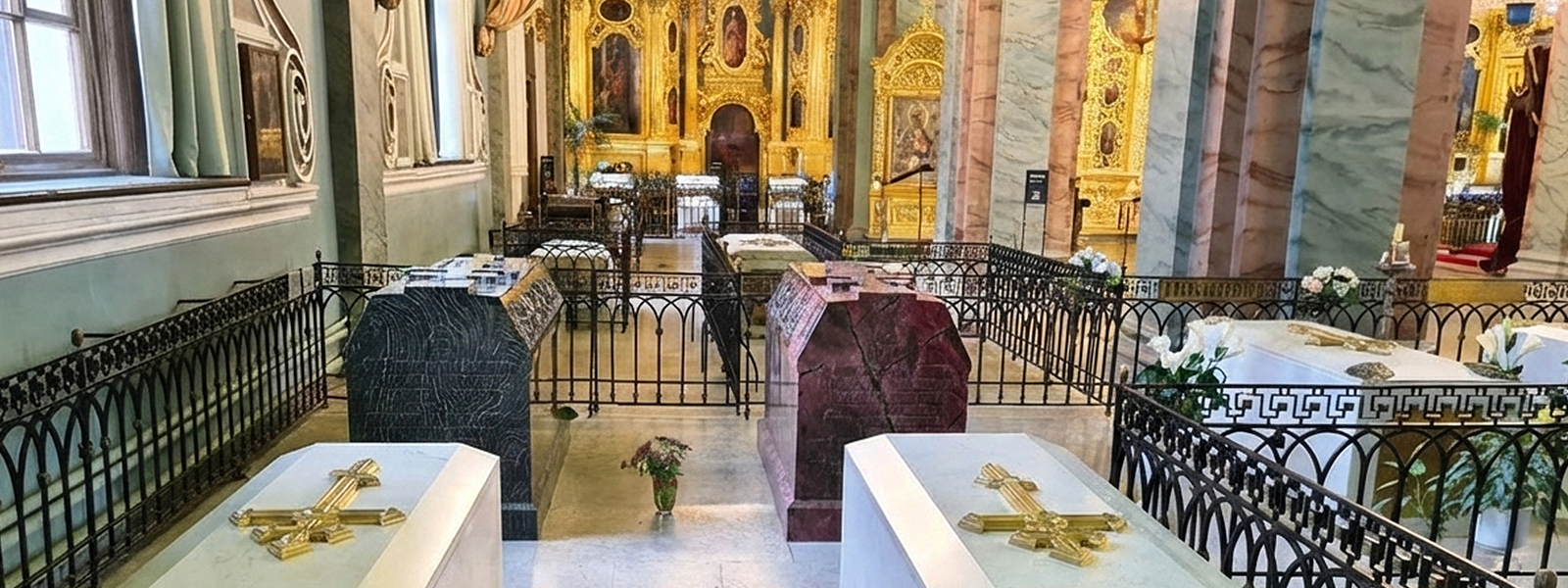
The most mystical place is the tomb. Almost all Russian tsars are buried here, starting with Peter the Great himself. Almost all sarcophagi are made of white marble, and there are two exceptions that immediately catch the eye: the tombs of Alexander II and his wife. They are made of solid monoliths of green jasper and pink rhodonite – they were carved for a whole 18 years. In 1998, the remains of Nicholas II and his family were buried here as well, in the Catherine Chapel.
Peter and Paul Cathedral: answering questions
-
How to get to St. Peter and Paul Cathedral?
You can walk to the cathedral in 10–15 minutes from the nearest metro station 'Gorkovskaya'. Near the Peter and Paul Fortress also stop bus No. 46, trams No. 6 and 40, as well as minibuses No. 46, 76, 183 and 223. -
When was St. Peter and Paul Cathedral built?
The construction of the stone cathedral was carried out from 1712 to 1733. Before that, on its site stood a temporary wooden church, erected in 1703–1704. -
Opening hours of St. Peter and Paul Cathedral
The visiting schedule depends on the day of the week: Monday, Thursday, Friday: 10:00–18:00; Tuesday: 10:00–17:00; Saturday: 10:00–17:45; Sunday: 11:00–18:00; Wednesday: closed. -
Who is the architect of St. Peter and Paul Cathedral?
The architect of St. Peter and Paul Cathedral is Domenico Trezzini.
Excursion to St. Peter and Paul Cathedral
Embark on an exciting journey through three centuries of St. Petersburg – from the very founding of the city by Peter the Great to its status as the cultural capital together with Leningrad Tour!
A comfortable bus will take you along the main avenues and embankments, and specially organized stops will allow you to take photos at the most majestic monuments. The key point of the route will be the Peter and Paul Fortress with its cathedral, imperial tomb and the spirit of the Petrine era.

Excursion to the Peter and Paul Fortress
Go to the tour →








