


Writes about St. Petersburg, its history, attractions, museums and routes.

Historian and guide to Peterhof, Oranienbaum and St. Petersburg architecture.
Peterhof: what it is, how to get there, how the park works and why you want to return
Peterhof is a palace and park ensemble in St. Petersburg that combines palaces, the Lower Park, the Upper Garden, fountains and pavilions on the shore of the Gulf of Finland. Tourists often wonder what Peterhof is, how to get to Peterhof, how the park works and whether it is worth visiting Peterhof in winter. In this article, we explore the history of Peterhof, the layout of the ensemble, walking routes and the main impressions that await you at any time of year.
What Peterhof is
Peterhof is a palace and park ensemble on the shore of the Gulf of Finland, one of the most famous landmarks of St. Petersburg. Peterhof is an entire architectural complex: the Upper Garden, the Lower Park, the Grand Peterhof Palace, pavilions, cascades, and the famous fountain system.
Peterhof is a historic district of St. Petersburg and at the same time a museum-reserve. In Soviet times, the town was called Petrodvorets, but later its historic name was restored. So both names refer to the same place.
The name "Peterhof" itself comes from a Dutch-German combination that can be translated as "Peter's court" or "the court of Peter the Great." So the question of what Peterhof means is directly tied to the name of Peter 1 and his personal vision of creating a ceremonial seaside residence.
History of Peterhof
The history of Peterhof begins in the early 18th century, when Peter 1 conceived of creating a ceremonial country imperial residence with access to the sea. After Russia's victory in the Great Northern War and gaining access to the Baltic, Peterhof became an important political and symbolic project of the new empire.
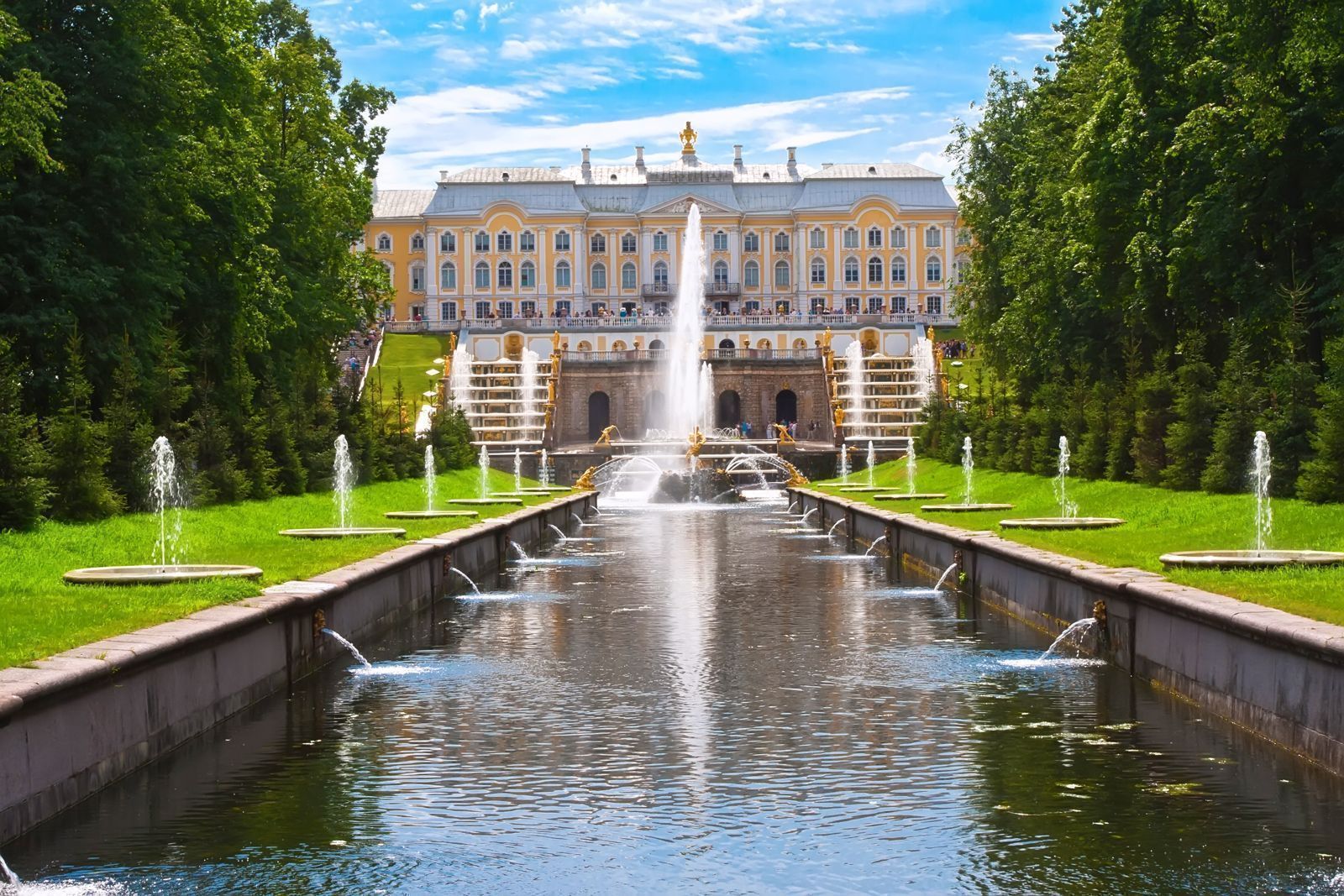
The ensemble was created as a place one could arrive at by water. The Sea Canal connected the Gulf of Finland with the palace and served as a ceremonial entrance. That is why the history of Peterhof's parks and palaces here is inseparable from the maritime theme: water, perspective, axial composition, and the view of the gulf were part of a single scenario of impression.
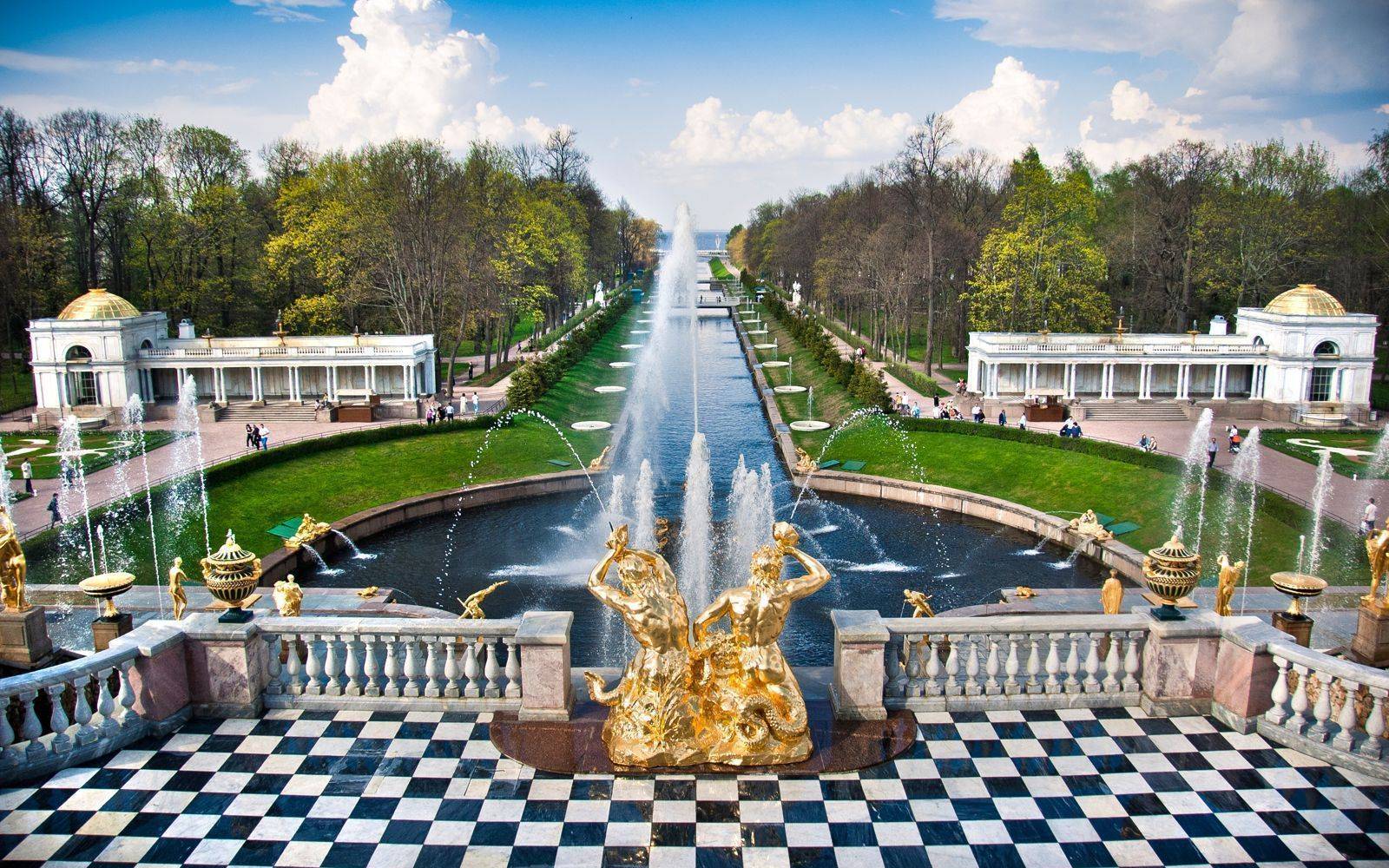
The fountain system had both decorative and state significance: it symbolizes wealth, engineering thought, and Russia's new status as a maritime power. Thus Peterhof entered history both as a residence and as an artistic manifesto of the era of Peter 1.
War and restoration of Peterhof
During the Great Patriotic War, Peterhof was heavily destroyed. Palaces, parks, fountains, and pavilions were damaged, and many elements of the ensemble were destroyed or lost.
After the war, a large-scale restoration of Peterhof began. It was literally reassembled from archival photographs, drawings, old descriptions, and surviving fragments of decor. That is why today's Peterhof is not only a memory of the imperial era, but also the result of the enormous work of restorers, artists, and engineers.
Where Peterhof is located
Peterhof is located on the southern shore of the Gulf of Finland, in the suburbs of St. Petersburg.
Address: St. Petersburg, Peterhof, Razvodnaya Street, 2.
Coordinates: 59.8833, 29.9000.
How Peterhof is laid out
Peterhof is designed as a complex ensemble, where every part contributes to the overall impression. It includes the Upper Garden, the Lower Park, palaces, pavilions, alleys, cascades, and dozens of fountains.
The central axis runs from the Grand Peterhof Palace through the Grand Cascade to the Sea Canal and the Gulf of Finland. That is why the question "how is Peterhof arranged" is better understood not as a list of objects, but as a single composition: first, the strict Upper Garden gathers you, then the palace opens up, and after it — the cascade, the park, and the sea perspective.
How the fountains of Peterhof work
One of the main features of Peterhof is that many fountains operate without pumps. Water flows by gravity due to the difference in elevation and a specially designed engineering system.
Upper Garden
The Upper Garden is the strict and geometric part of the ensemble, a kind of prologue to all of Peterhof. Here symmetry, straight alleys, parterres, and a sense of order are important.
The Neptune Fountain sets the maritime theme that runs through the entire ensemble. The Upper Garden prepares the viewer for the main impression — the exit to the palace and cascades.
Grand Peterhof Palace
Grand Peterhof Palace is located on a natural terrace and connects the Upper Garden with the Lower Park. It was conceived not as an ordinary house, but as the main architectural center of the ensemble.
Inside the palace, the state rooms and interiors create a sense of scale and power. It is here that you especially clearly understand that Peterhof was built as a place for presenting the empire.

The Grand Cascade and Samson: the meaning of victory in water
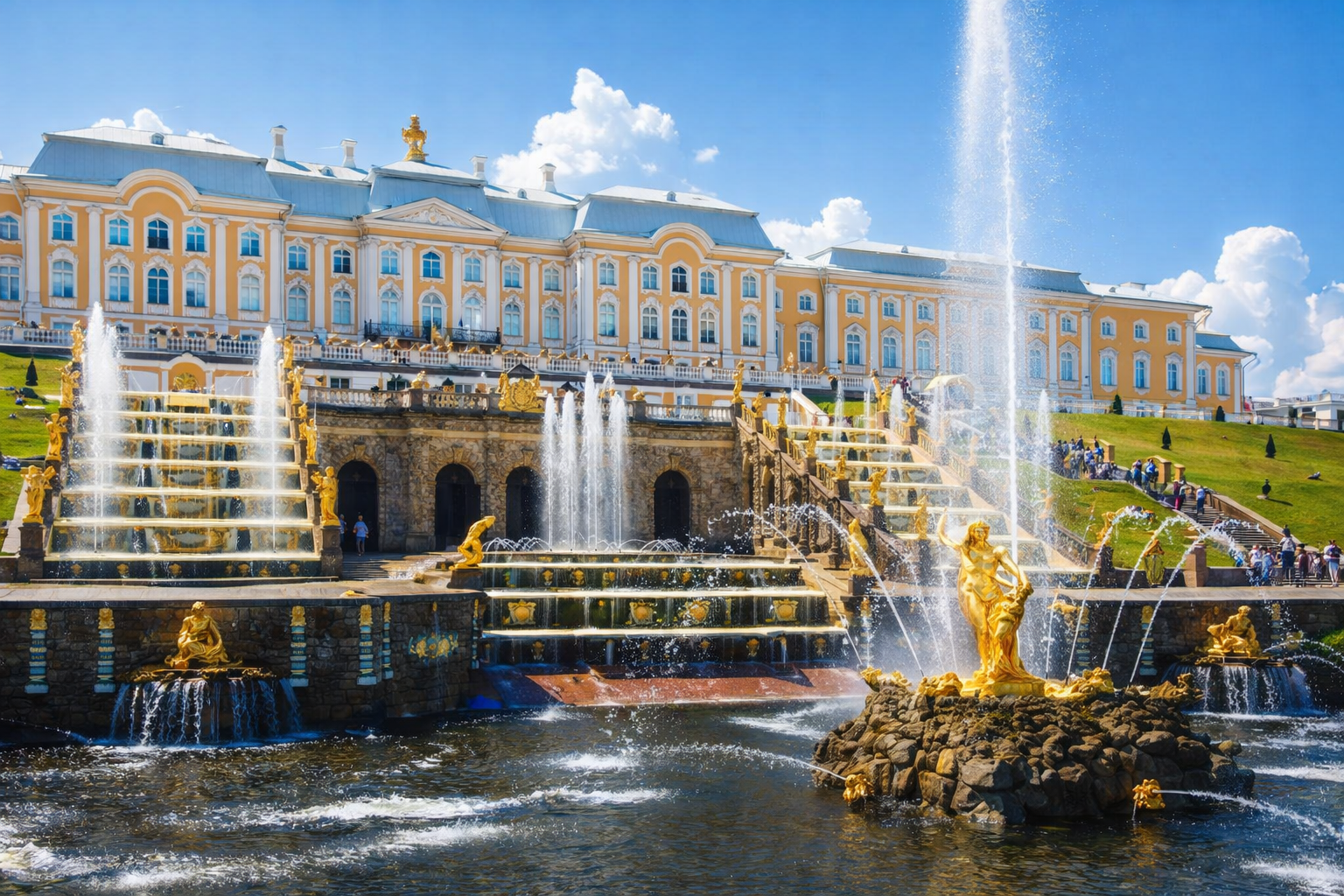
The Grand Cascade is the culmination of Peterhof. It strikes you with everything at once: the movement of water, the gleam of gold, the scale, and the sound. This is a triumphal composition, where water plays the role of a salute, and stone — the role of a pedestal of history.
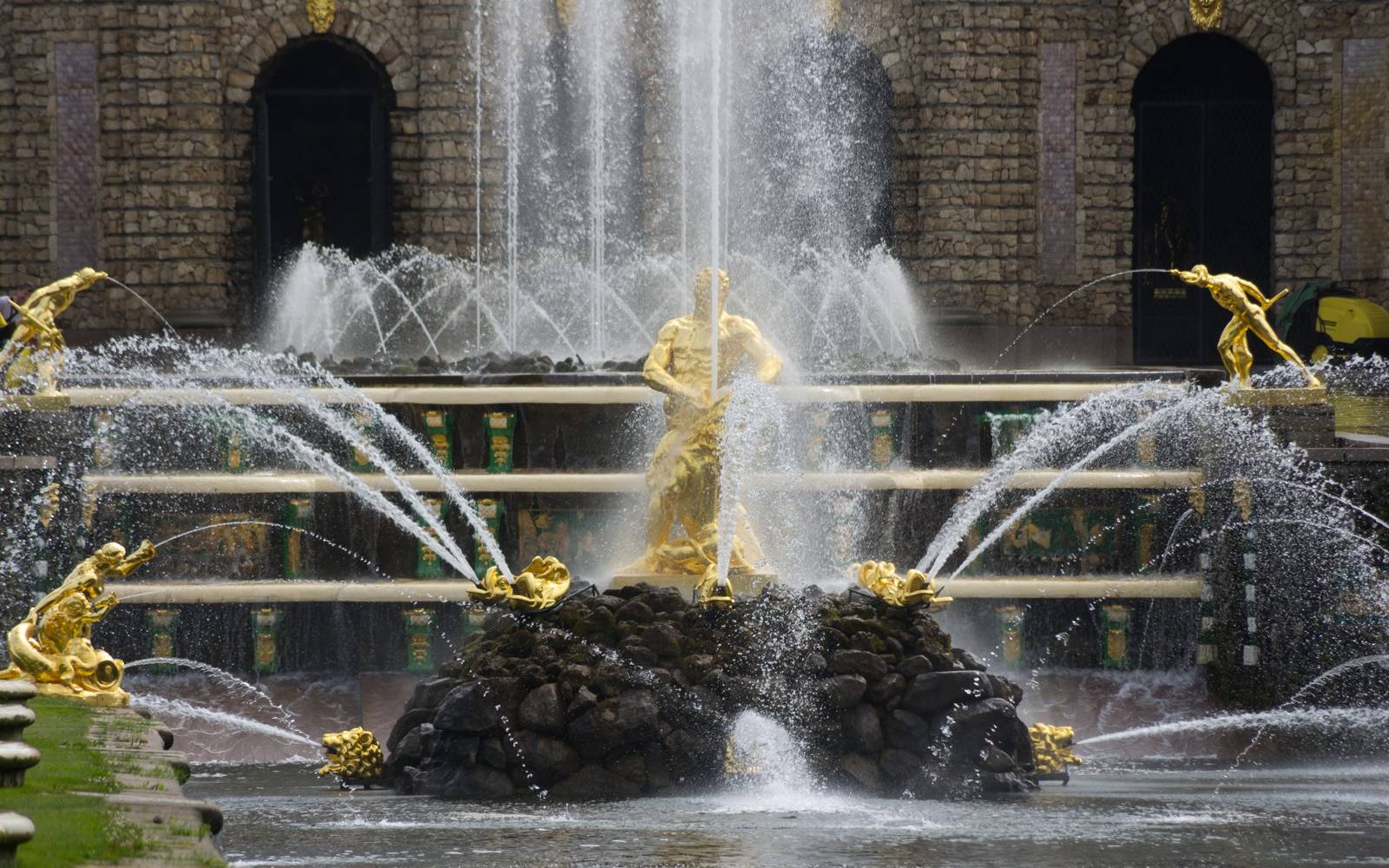
In the center is the sculpture "Samson Tearing Open the Lion's Mouth" — a symbol of Russia's victory in the Great Northern War. Here history turns into feeling: even if a person does not remember dates, they still feel the power of this place.
The Lower Park: zones, locations, philosophy of a stroll
The Lower Park is the main walking area in Peterhof. Here are fountains, alleys, pavilions, views of the gulf, and many of the most recognizable spots of the ensemble.
If the Upper Garden prepares you for the encounter with the residence, then the Lower Park already provides a full emotional experience: from the solemn Grand Cascade to the quiet distant alleys and intimate corners by the water.
The Grand Cascade, the Samson Canal, and the perspective to the gulf. Here Peterhof reveals itself as a state manifesto.
The Gulf of Finland, pavilions, and the air of the sea. Here Peterhof is already perceived as a personal experience, not only as a ceremonial residence.
Tour to the Fountains of the Lower Park
Tour to the Fountains of the Lower Park →Trick Fountains
The trick fountains in Peterhof are one of the liveliest and most beloved parts of the walk. They suddenly turn on, douse visitors with water, and turn a serious palace ensemble into a space of play.
- "Umbrella" — a circular water curtain you can hide inside.
- "Oak Tree" — jets of water from hidden holes and branches.
- "Fir Trees" and other trick fountains — part of an old amusement invented back in Peter the Great's era.
If you're traveling with children, set aside separate time for the trick fountains. This is where Peterhof works especially well as a place of joy, not just as an open-air museum.
Palaces of Peterhof
Peterhof is home to several palaces and pavilions. The main one is the Grand Peterhof Palace, which dominates the entire composition of the ensemble.
You should also see Monplaisir — Peter the Great's favorite palace by the water, Marly — an intimate palace with an atmosphere of quiet and seclusion, and the Hermitage Pavilion, created for private receptions.
Peterhof by Seasons
In summer, Peterhof unfolds through the movement of water, the gold of sculptures, and the greenery of the park. This is the time of maximum "wow" effect.
In autumn, the park becomes especially picturesque: soft light, foliage, and a calmer rhythm let you better see the structure of the ensemble.
In winter, Peterhof looks different: the fountains don't run, but the axes, terraces, lines, and architecture become more noticeable. For many, this is the best way to see the design of the ensemble.
In spring, Peterhof gradually comes to life. This is when you especially feel the anticipation of the fountain season and the return of movement to the park.
Is Peterhof worth visiting in winter? Yes, if you care not only about the water but also about the architecture of the ensemble itself. Is Peterhof open in winter — yes, the museum sites and grounds are accessible depending on the season and schedule, but it's best to check the hours before your trip.
Tours to Peterhof — Choose Your Format

Self-Guided Routes Around Peterhof
4–5 hours
- Upper Garden — 30–45 minutes
- Panorama by the palace — 15–20 minutes
- The Grand Cascade and Samson — 30–40 minutes
- Lower Park: key alleys and spots — 2–2.5 hours
- Trick fountains — 30–60 minutes
Total: maximum impressions without overload.
7–9 hours
- Upper Garden — 40 minutes
- The Grand Palace — 60–90 minutes
- The Cascade and Samson — 40 minutes
- Lower Park: pavilions and far areas — 4–5 hours
- Finale by the gulf — 30–45 minutes
Total: Peterhof as a full journey into the era.
3–4 hours
- Upper Garden — 15–20 minutes
- Samson and the Grand Cascade — 25–35 minutes
- Joke fountains — 60–90 minutes
- Walk to the gulf and relax — 40–60 minutes
Total: children's delight and the main impression of Peterhof.
Frequently Asked Questions About Peterhof
What was Peterhof called before?
During the Soviet period, Peterhof was officially called Petrodvorets. Later the historical name Peterhof was restored.
How was Peterhof built?
Peterhof was built in the early 18th century on the idea of Peter 1 as a ceremonial seaside residence. The ensemble was created in stages: palaces, park, Sea Canal, cascades and fountains came together into a single composition.
How to get to Peterhof?
You can get to Peterhof by hydrofoil, commuter train, bus or minibus from Saint Petersburg. The fastest option is by water, the most affordable is by public transport.
How was Peterhof restored?
After the war, Peterhof was restored using archival materials, photographs, drawings and surviving fragments. It was a large-scale restoration effort that continues today.
How did they live in Peterhof?
Peterhof was not an ordinary residential town, but an imperial residence. Receptions, walks, the court's summer holidays and diplomatic meetings took place here, and some pavilions served for intimate and private life.
Why is Peterhof called that?
The name “Peterhof” is translated as “Peter's court.” It is connected with the name of Peter 1 and his idea to create his own seaside residence by the Gulf of Finland.
How does Peterhof work?
Peterhof operates on a seasonal schedule: visiting hours for the parks, palaces and fountains change throughout the year. Before your trip, it is best to check the current opening hours for the day of your visit.
When was Peterhof built?
Peterhof began to be created in the early 18th century under Peter 1. The main work on forming the ensemble unfolded in the 1710s and 1720s.
How is Peterhof laid out?
Peterhof is laid out as a single palace-and-park ensemble: the Upper Garden, the Grand Palace, the Grand Cascade, the Lower Park, pavilions and the fountain system are connected by a common axis and logic of movement.








