


Writes about St. Petersburg, its history, sights, museums and routes.

Historian and guide for Peterhof, Oranienbaum, and St. Petersburg architecture.
Secrets of the Grand Peterhof Palace: mysteries, history, and legends of the Russian Versailles
The Grand Peterhof Palace is the main architectural dominant of the Peterhof ensemble and one of the most famous imperial residences in Russia. Many tourists wonder: what is the palace in Peterhof called? — it is the Grand Peterhof Palace, the central building of the complex.
Today the Peterhof Palace in Saint Petersburg is open as a museum and attracts thousands of guests every year. Visitors come to see the Grand Peterhof Palace inside, walk through the state rooms and learn how this unique residence was created.
The Peterhof Palace is a museum open for visits all year round. Even in winter, a walk through its halls turns into a real journey through time.
How the Grand Peterhof Palace came to be
The history of the Peterhof Palace begins in 1714 — this year is considered the founding date of the residence by decree of Peter I.
The Grand Peterhof Palace in Saint Petersburg is located on the shore of the Gulf of Finland and is connected to the Lower Park, where the famous fountains are located. The coast of the Gulf of Finland was chosen not by chance — Peterhof was meant to emphasize Russia's status as a maritime power.
Initially the palace looked more modest. Then it was called the Upper (Hill) Chambers and served as a place for rest and receptions. However, in the 18th century a large-scale reconstruction began.
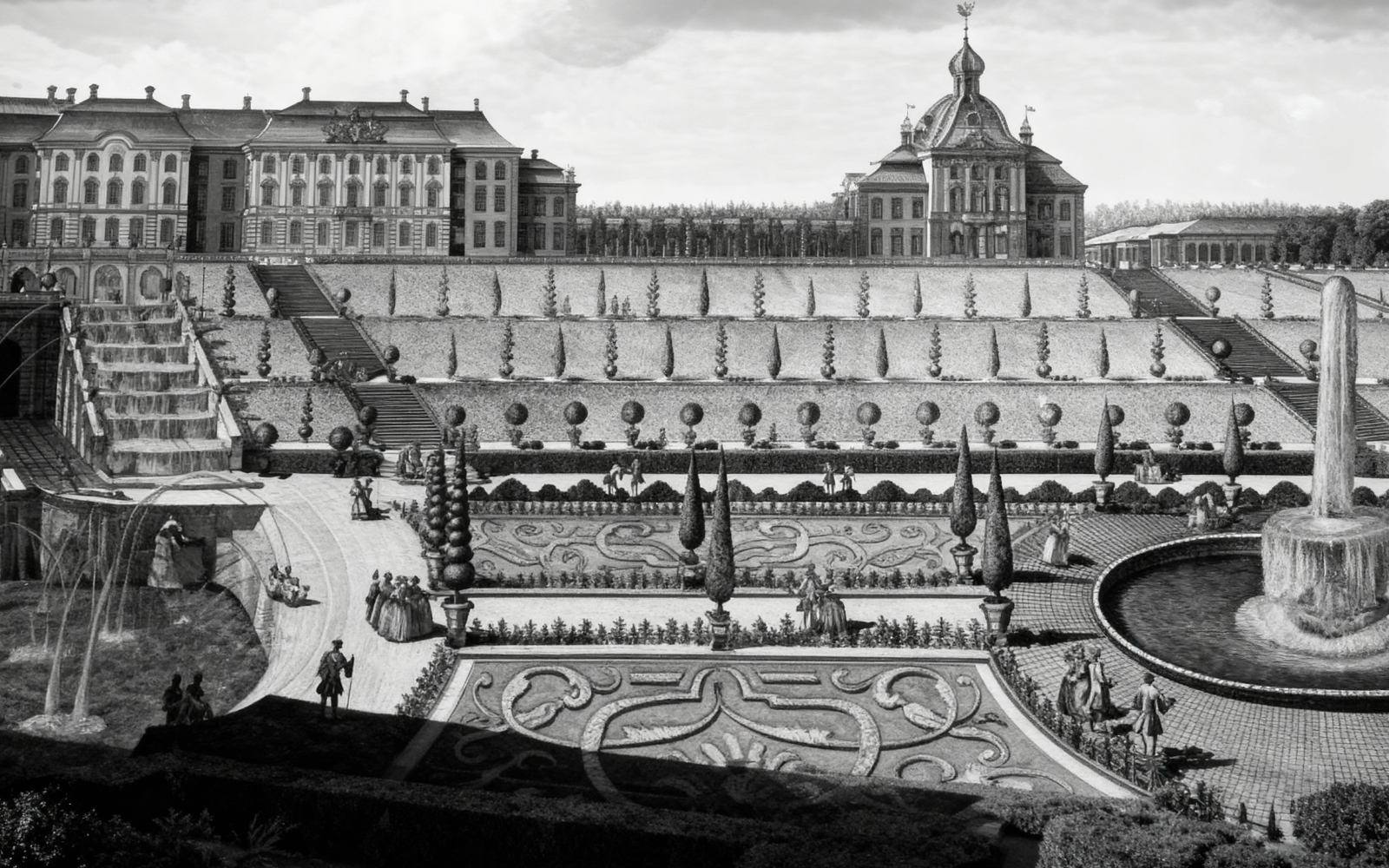
Decisive changes occurred under Elizabeth Petrovna. The architect of the Grand Peterhof Palace was Bartolomeo Rastrelli — it was he who turned Peterhof into the "Russian Versailles". In the mid-18th century, a third floor, side wings, long galleries and luxurious halls appeared.
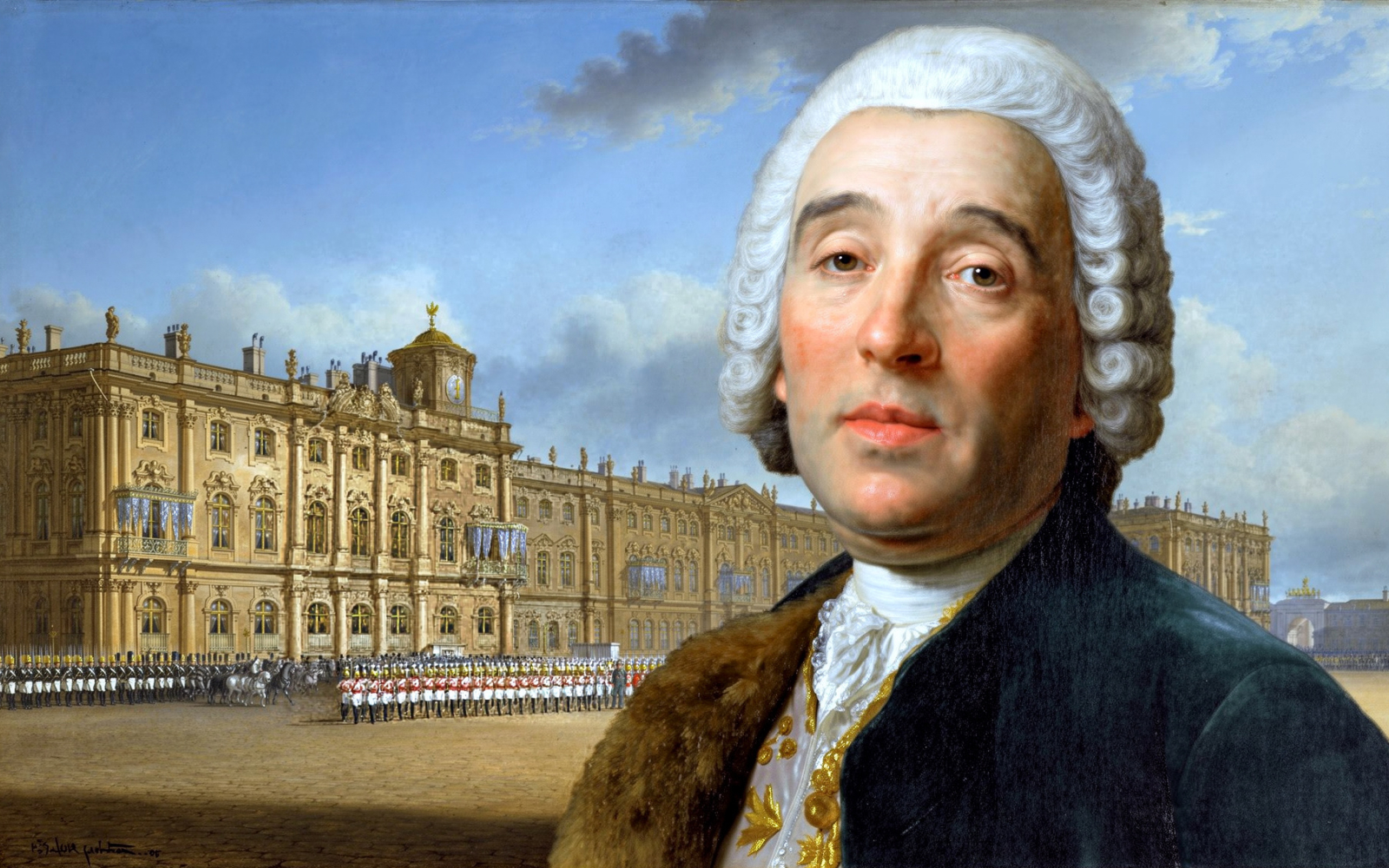
Later Catherine II introduced elements of classicism, and under Nicholas I the eastern wing was rebuilt for his daughter Olga — this is how the Olga half came to be. After the revolution the palace became a museum, and after the war it was restored almost from scratch as a result of large-scale restoration. This is how the modern architecture of the Grand Peterhof Palace was formed.
Inside the Grand Peterhof Palace
The Grand Peterhof Palace inside impresses with its luxury and scale. The interiors are designed in the baroque style with an abundance of gilding, mirrors and decorative elements.
Visitors can see the Grand Peterhof Palace inside during a tour: state rooms, enfilades and historical rooms where the life of the imperial court took place are opened.
Especially impressive are spaces such as the throne room, the grand staircase and the picture hall — they are the ones that create the image for which the Grand Peterhof Palace inside is valued.
Inside the Grand Peterhof Palace there are more than 30 halls, each of which has its own purpose and unique decoration.
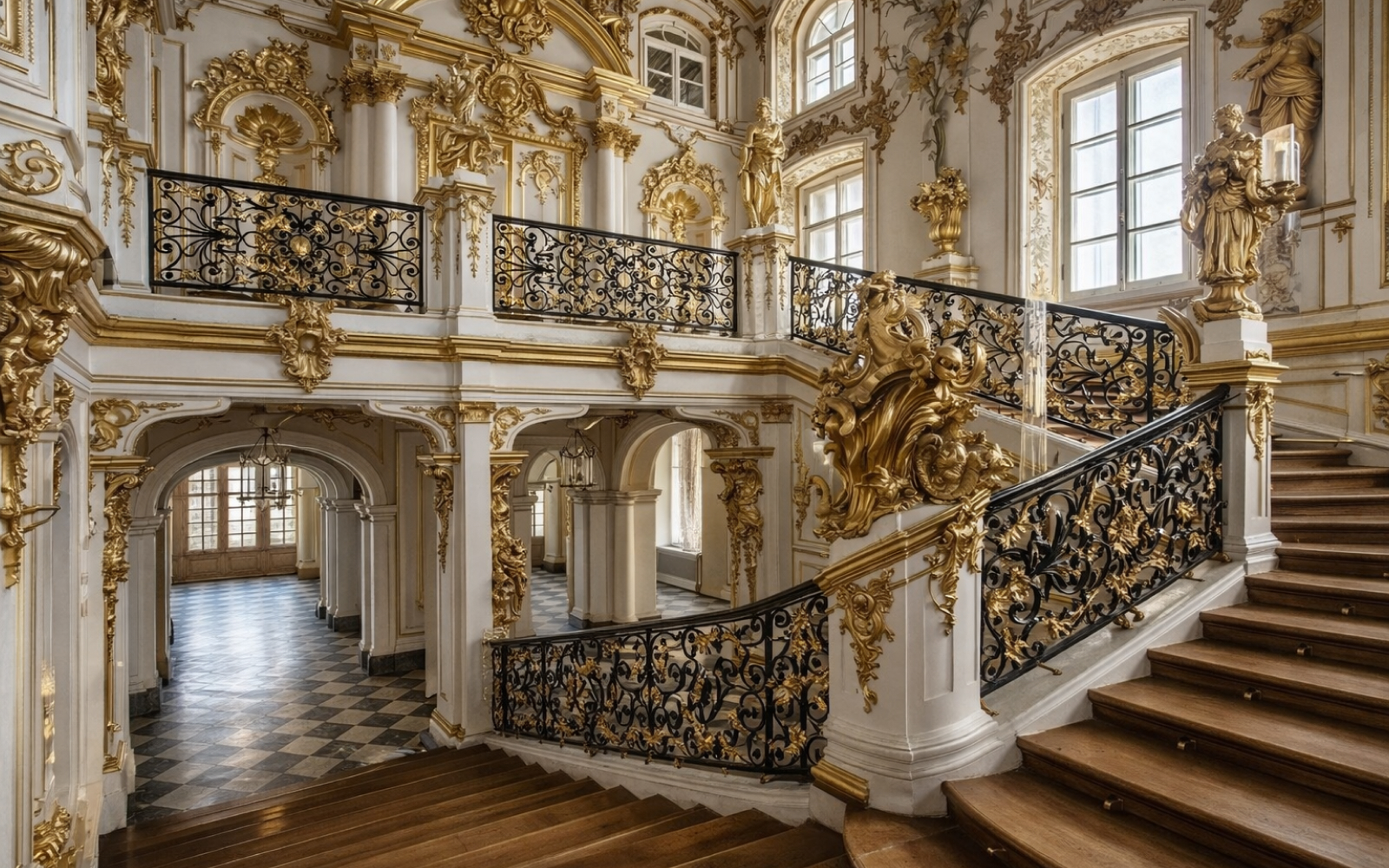
The Grand Staircase
The Grand Staircase creates the first impression of the palace — it is the ceremonial entrance to the state part. The space is filled with light, decorative elements and sculptures emphasize the baroque character of the interior.
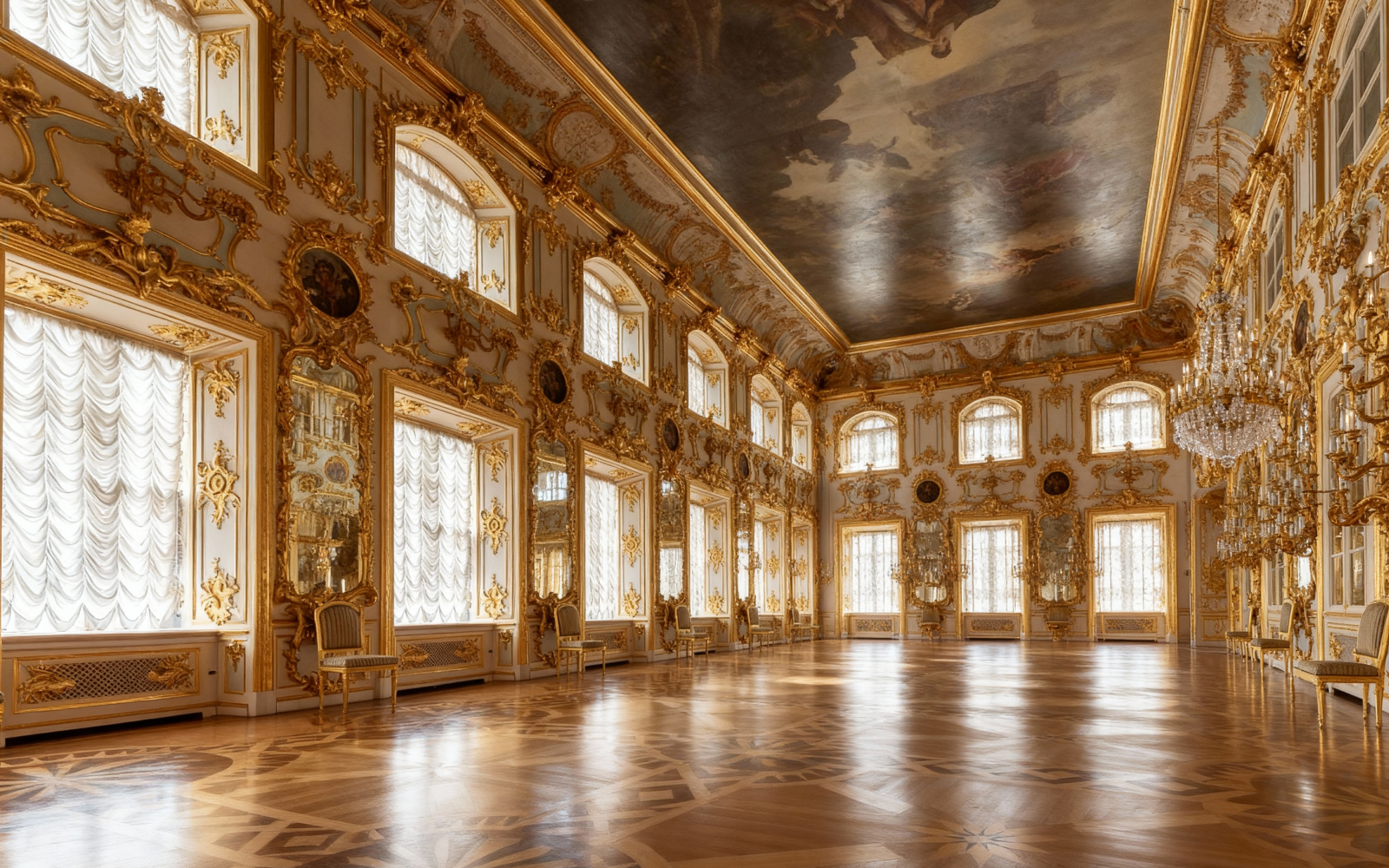
The Ballroom
The Ballroom is considered one of the most spectacular halls of the palace, intended for balls and official receptions. Mirrors, gilded decor and chandeliers visually expand the space.
The Chesme Hall
The hall is dedicated to the victory of the Russian fleet in the Battle of Chesma in 1770. The interior is decorated with battle paintings and naval symbols.
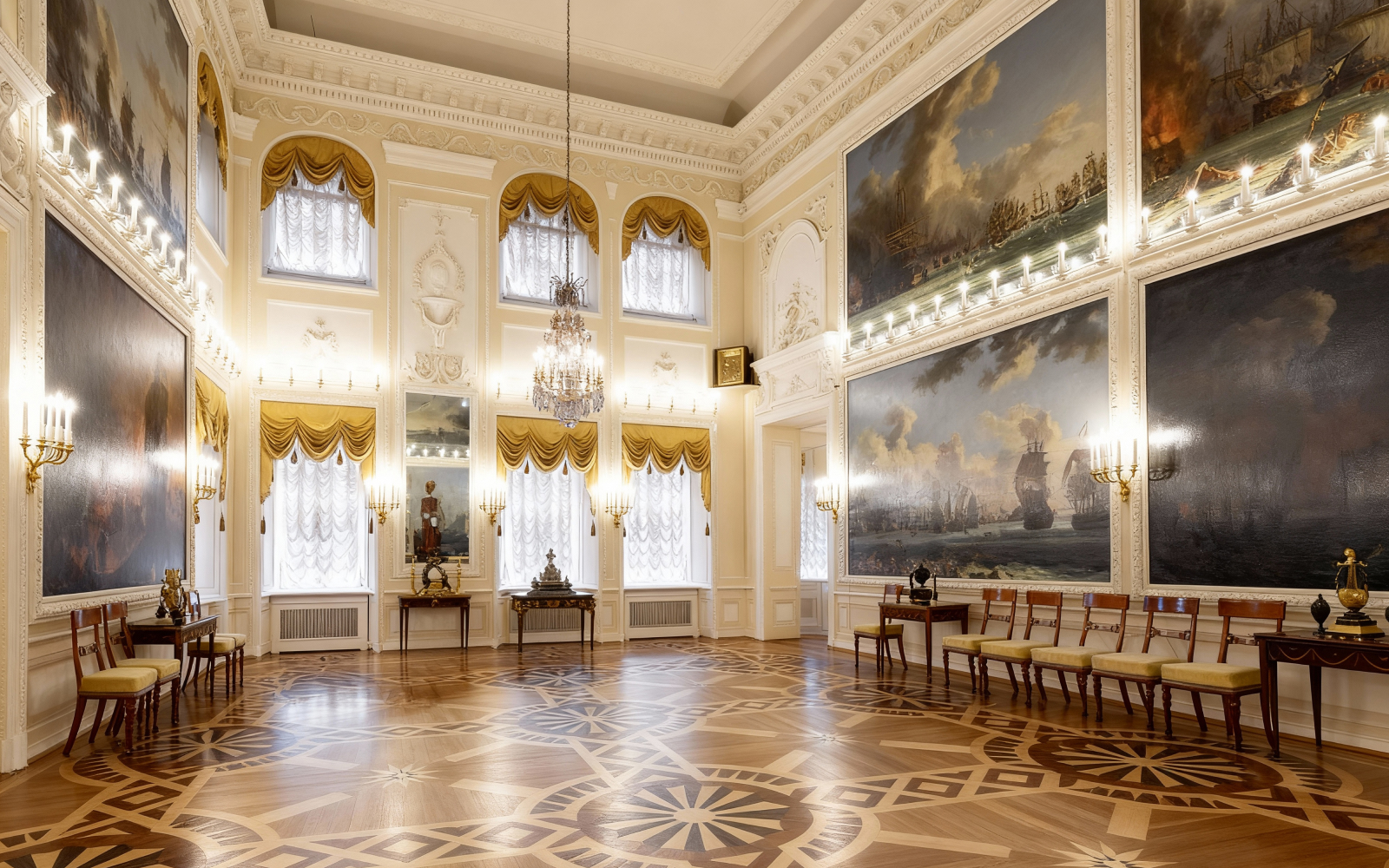
The Grand Throne Hall
The Grand Throne Hall became the central space of the palace for state ceremonies. The austere and solemn interior emphasizes the official status of the hall.
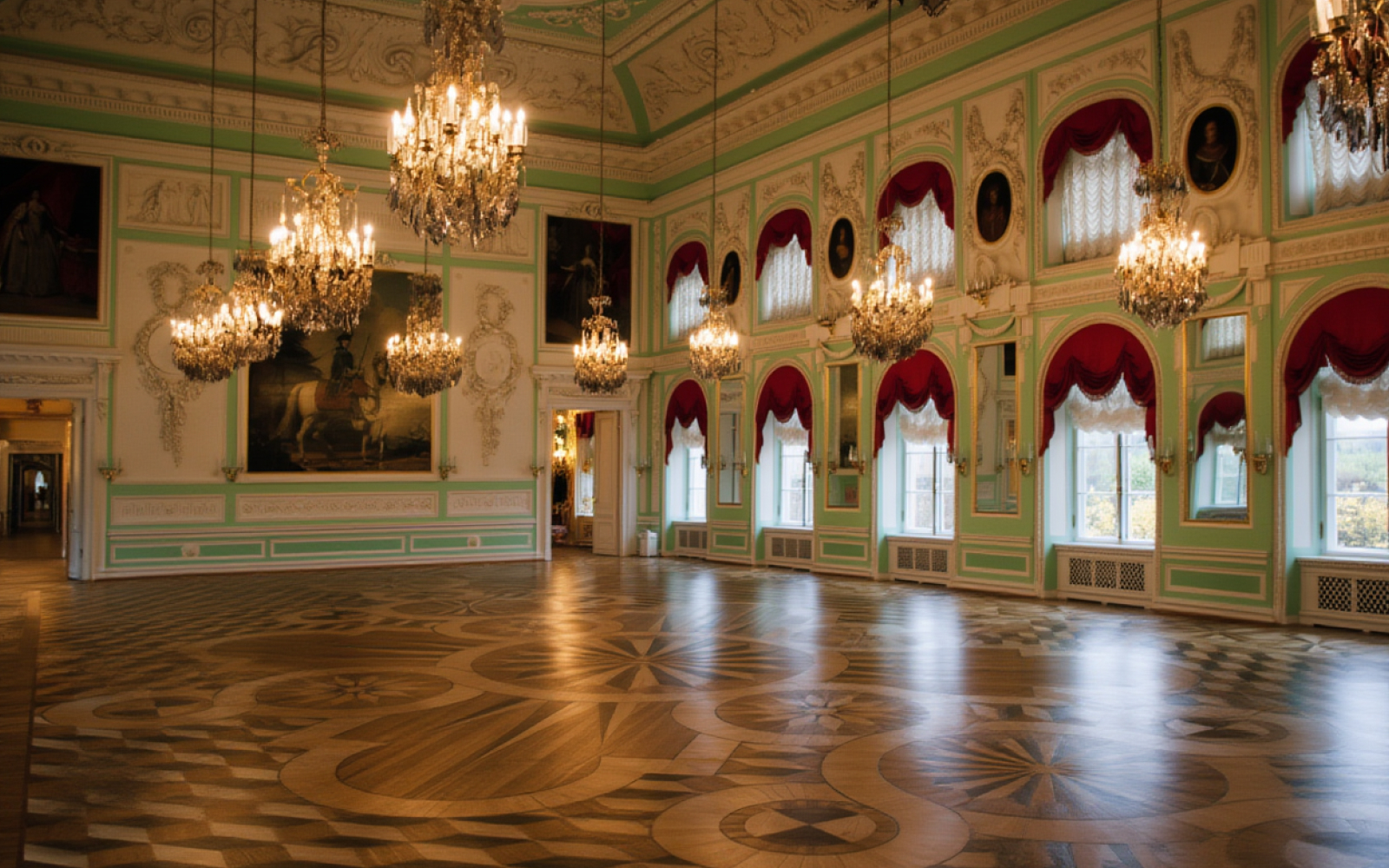
The White Dining Room
An intimate hall for receptions and meals. Here one can distinguish dozens of shades of white, and the main accent is a huge table with part of the Wedgwood service — earthenware, not porcelain, as it might seem.
The Picture Hall
A central gallery with 18th-century portraits. Female figures in national costumes emphasize the continuity of the Romanov dynasty and the legitimacy of Catherine II's power.
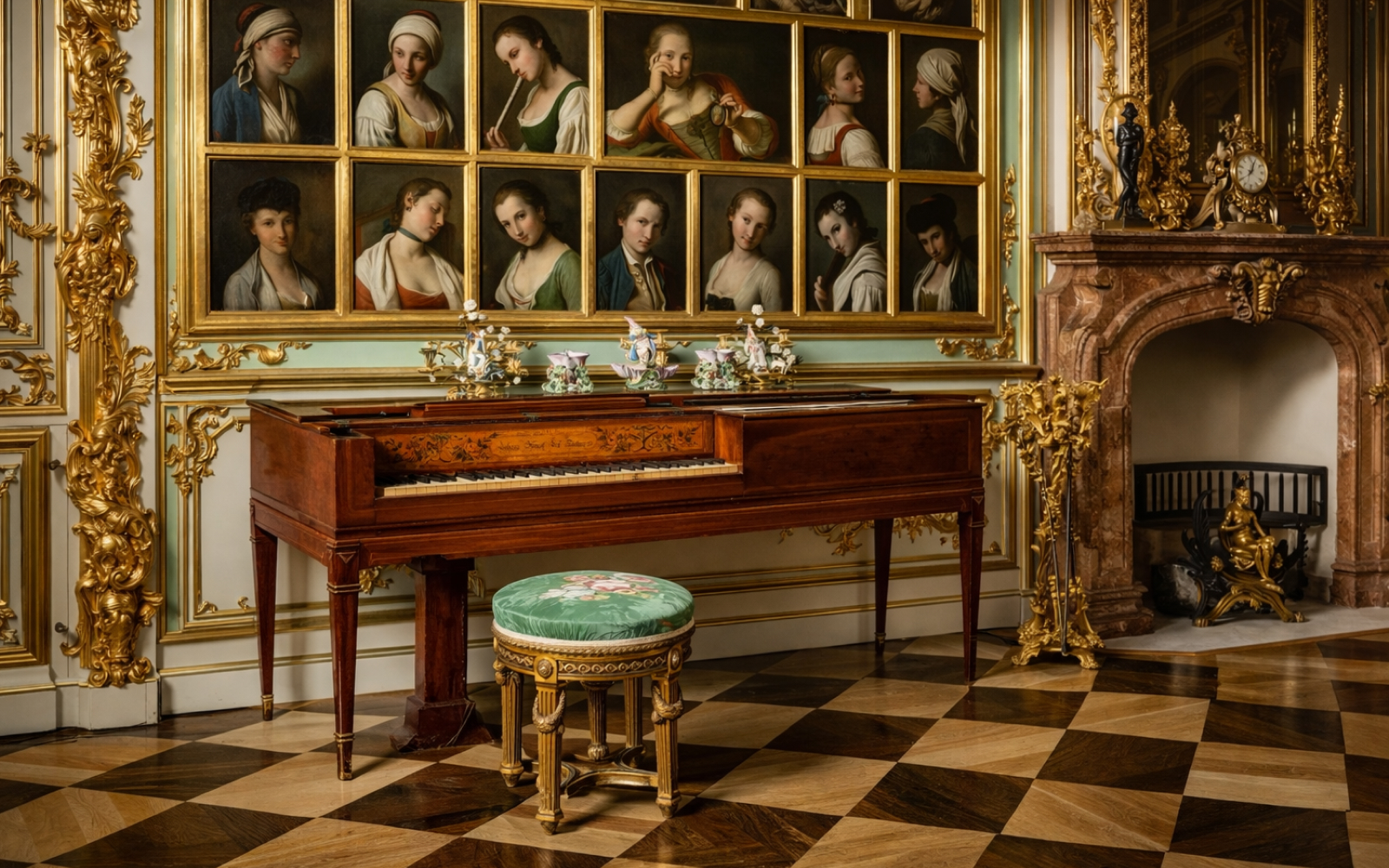
The Partridge Drawing Room
A small cozy hall with a unique fragment of silk wallpaper ordered by Catherine in France. It was precisely from this surviving sample that the interior was restored.
Peterhof and its secrets
The Legend of the Deal with Darkness
According to one legend, Peter I made a deal with dark forces to build the palace and fountains. Hence the stories of nighttime sounds and a "restless" atmosphere.
The Grand Cascade as an Encrypted Message
Samson, the lion and the water symbolize the victory over Sweden. It is said that Peter personally supervised the symbolism of the cascade.
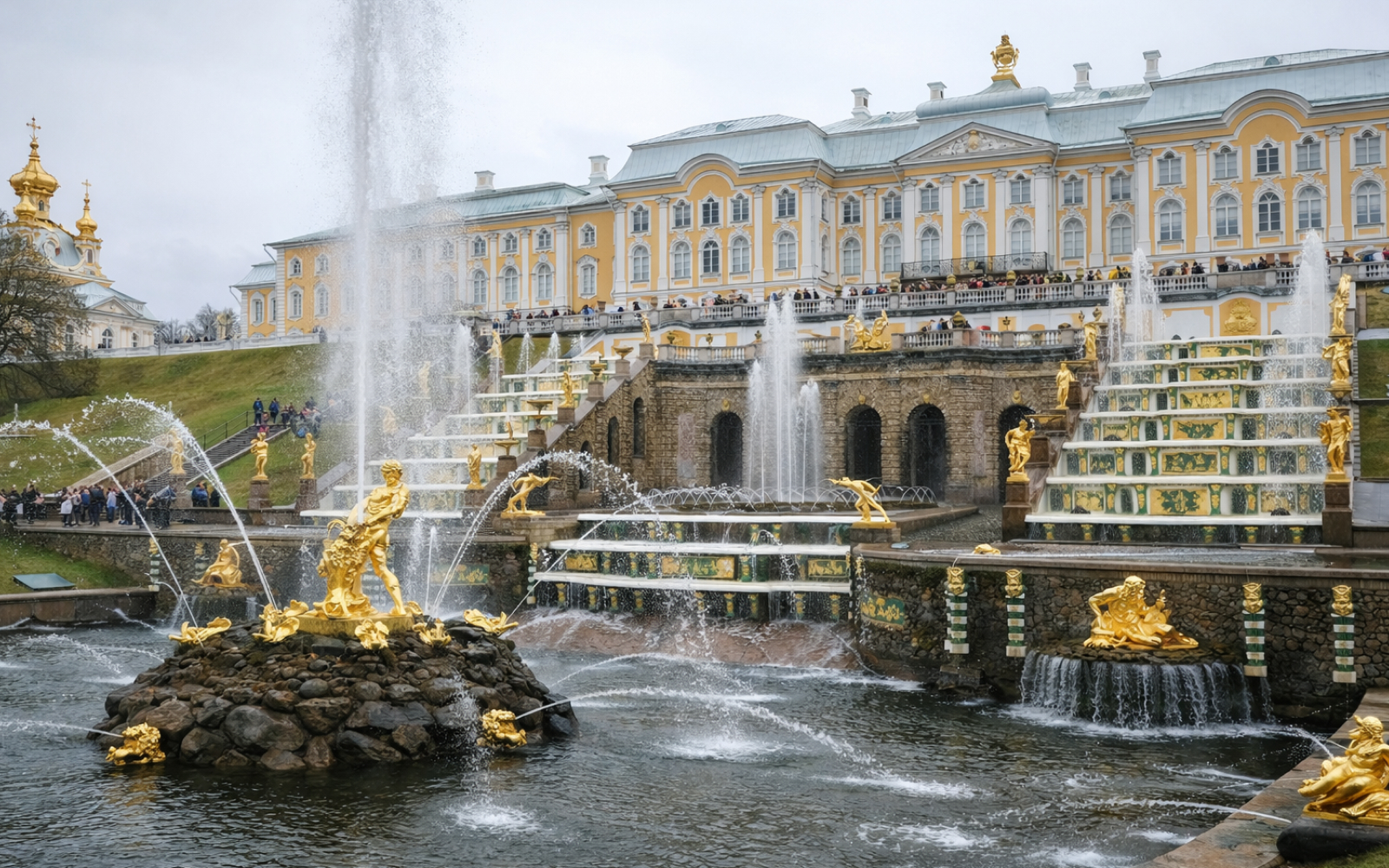
The Ghost of Alexandria
In the Alexandria Park, Empress Alexandra Feodorovna is still remembered. According to legend, her ghost sometimes returns to the Cottage Palace — to check that everything is in its place.
Where the Grand Peterhof Palace is located and how to get there
The Grand Peterhof Palace is located at: St. Petersburg, Peterhof, Razvodnaya Street, 2. This is where the main palace of the famous palace and park ensemble is located, facing the Lower Park and the Grand Cascade.
You can get to the Grand Peterhof Palace from the center of St. Petersburg by hydrofoil, bus, commuter train, or as part of an organized tour. The most convenient option is a tour with transfer, when you don't need to plan the route separately, buy tickets, and navigate on site.
Coordinates of the Grand Peterhof Palace: 59°53′04″ N 29°54′31″ E
Tour of the Grand Peterhof Palace
The Grand Peterhof Palace is a true symbol of the imperial era. Today the Grand Peterhof Palace remains one of the main attractions of the region and a must-see item on the itinerary for tourists.
Visiting the Grand Peterhof Palace allows you to see the luxurious interiors and better understand the history of Russia. If after reading the article you feel like seeing Peterhof with your own eyes, we have prepared a convenient travel option. The tour to Peterhof starts right from the center of St. Petersburg — on a modern, comfortable bus.
A professional guide will tell the history of the palace, share the vision of Peter 1, the construction of Peterhof, and the life of the imperial residence.
Upon arrival, the tour will begin "The Grand Peterhof Palace: State Rooms, Imperial Interiors and Palace Secrets". You will be able to walk through the halls, feel the atmosphere of the imperial court, and learn the secrets kept by the walls of the palace.
This is the best way to fully experience the grandeur of Peterhof and immerse yourself in its history without haste and fuss.
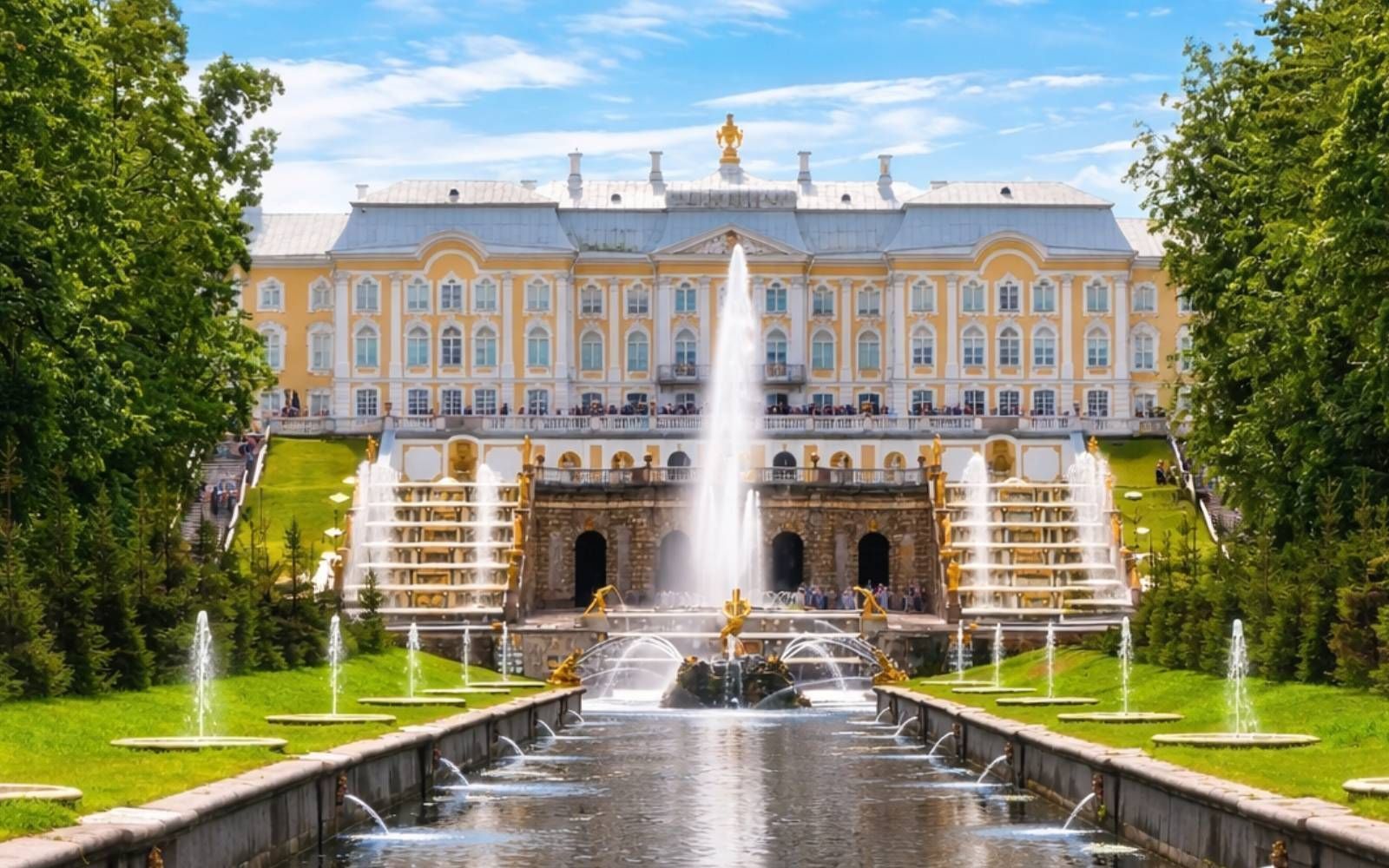
Tour of the Grand Peterhof Palace
Go to the tour →Frequently asked questions about the Grand Peterhof Palace
Who built the palace in Peterhof?
Construction began by decree of Peter 1 in 1714. Later, the Grand Peterhof Palace was rebuilt by the architect Bartolomeo Rastrelli, who gave it a luxurious Baroque appearance.
In what year was the Peterhof Palace built?
Peterhof Palace: the year of foundation is 1714. That is when the construction of the first residence began, which was later significantly expanded and rebuilt.
In what style was the Peterhof Palace built?
The modern appearance of the palace is executed in the style of Russian Baroque. The style of the Grand Peterhof Palace combines luxury, symmetry, gilding, and grand state spaces.
What halls are there in the Grand Peterhof Palace?
During the visit, the main halls of the Grand Peterhof Palace are open: the Grand Staircase, the Ballroom, the Chesme Hall, the Grand Throne Hall, the White Dining Room, the Picture Hall.
How many halls are there in the Peterhof Palace?
In total, the Grand Peterhof Palace has more than 30 halls, each of which has its own purpose and unique decoration.
What to see inside the Grand Peterhof Palace?
Visitors can see inside the Grand Peterhof Palace the state rooms, enfilades, historical interiors, and decorative art objects of the 18th-19th centuries.
Who lived in the Peterhof Palace?
At various times, Russian emperors and members of their families lived here: Peter I, Elizabeth Petrovna, Catherine II, and other representatives of the Romanov dynasty.








