


Writes about St. Petersburg, its history, sights, museums and routes.

Museum guide to art, culture and St. Petersburg of the 18th–19th centuries.
The drawbridges of St. Petersburg attract hundreds of thousands of tourists every year. Even before the bridges are raised, people are already gathering on the embankments — taking the best places by the water, taking photos, shooting videos, watching how the lights of the city are reflected in the Neva.
The view from the water is especially impressive: bridge spans rise above the river, while motor ships and boats move around — it creates a sense of a grand event and a real nighttime spectacle.
How drawbridges historically appeared
Peter I dreamed of a city modeled after Amsterdam, where canals are full-fledged roads and almost everyone has a boat. But the technical capabilities of the 18th century long did not allow easy construction of reliable crossings over the wide and turbulent Neva. Therefore, the first bridges existed as a temporary solution dictated by necessity.
The first crossings were pontoon bridges: the bridge lay on logs and pontoons directly on the water. One of these bridges, known as St. Isaac's, served for almost 200 years.
Pontoon bridges could appear in places of busy roads, but they served poorly: ice, floods and wind destroyed the structures, and repairs required time and resources.
In the mid-19th century, bridges with movable spans began to appear, allowing ships to pass along the Neva. The first permanent bridge with a draw span was the Blagoveshchensky Bridge (also Nikolaevsky, later — Lieutenant Schmidt Bridge). This is where the 'classic' history of St. Petersburg's drawbridges begins.
The main drawbridges of Saint Petersburg
Palace Bridge
The most recognizable bridge in the city, connecting the center with Vasilyevsky Island. Its opening against the backdrop of the Hermitage and the Spit of Vasilyevsky Island has become a calling card of St. Petersburg.
The name is connected with the proximity of the Winter Palace: the crossing literally leads from the main imperial residence to the opposite bank of the Neva.
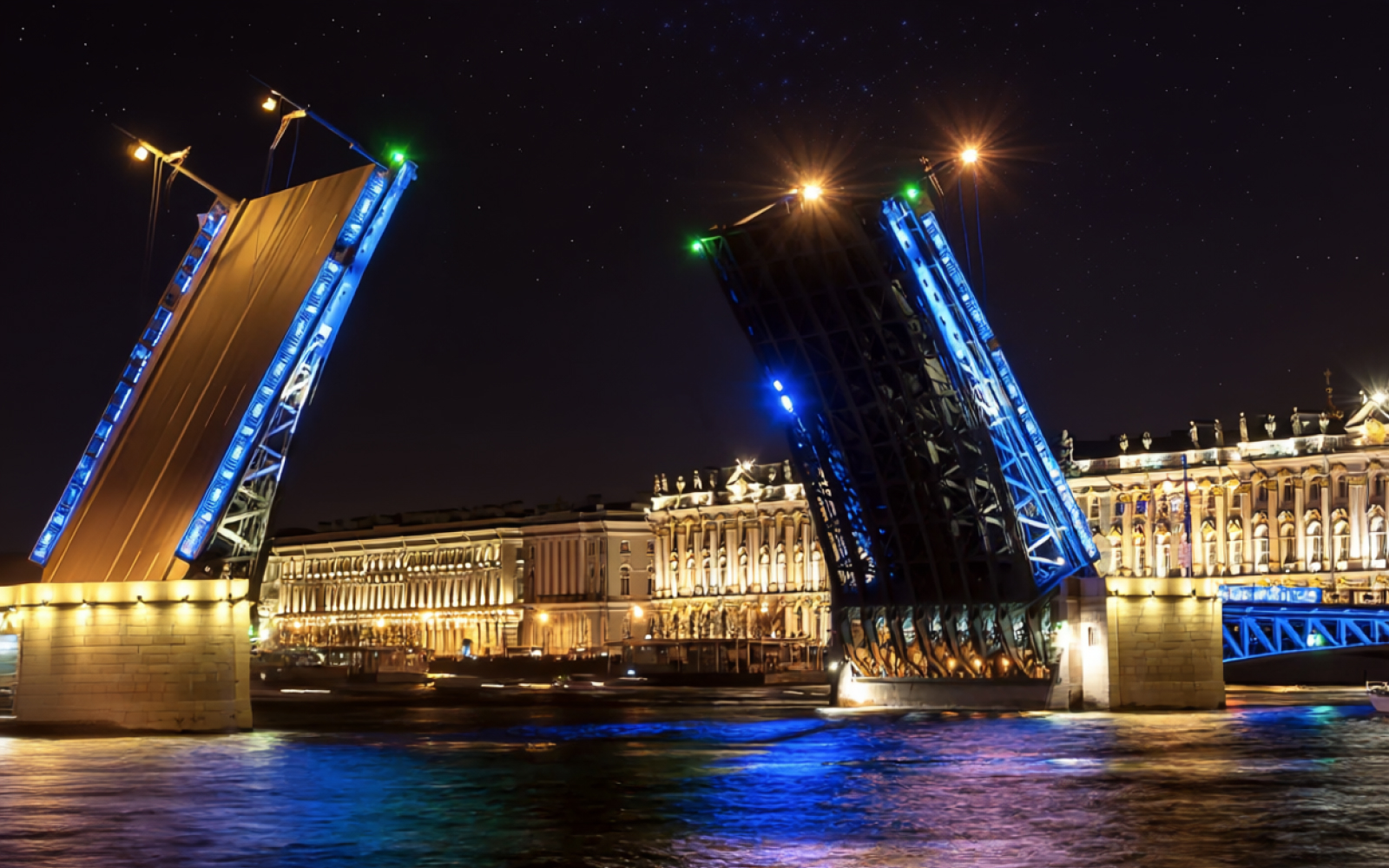
Construction of the current crossing began in 1911 and was completed on December 23, 1916. Before that, a pontoon bridge was located here, which was moved to different points of the Neva depending on the city's needs.
Initially, the project envisioned rich decor, but it was simplified: World War I required metal for the front. Therefore, the railings were temporarily made of wood, and the bridge gradually acquired its final appearance in the 20th century.
Trinity Bridge
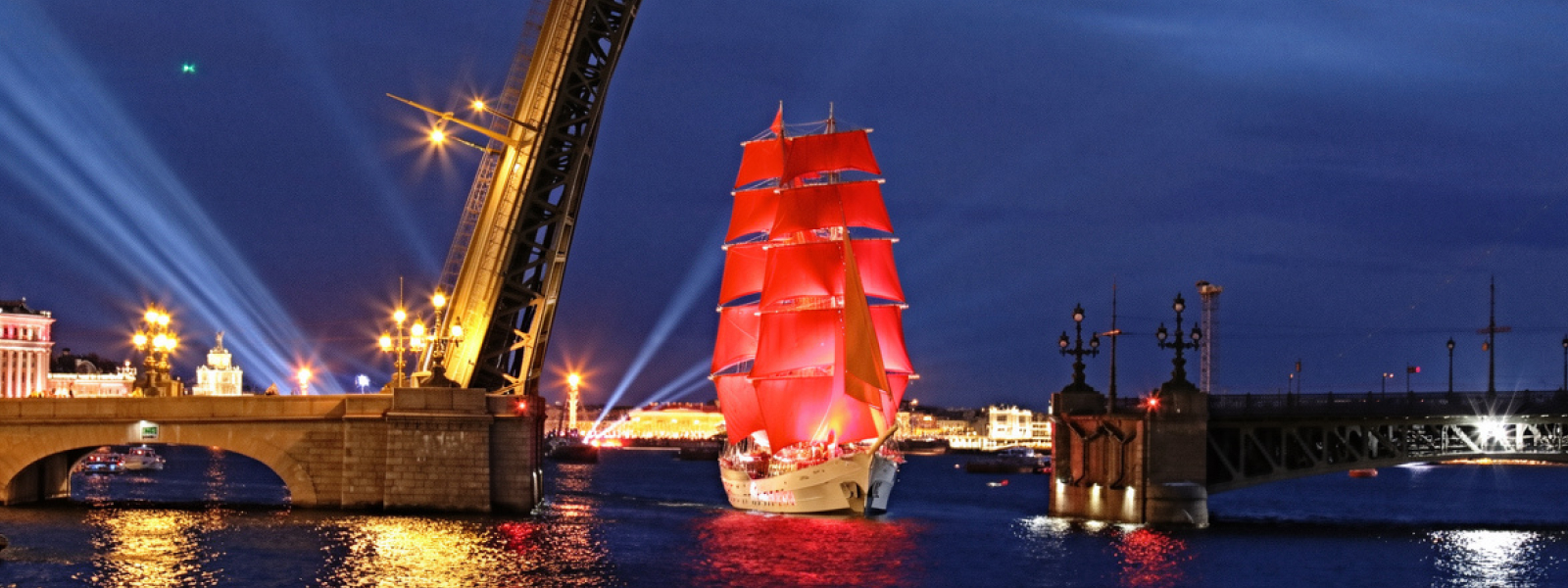
Trinity Bridge became the third permanent drawbridge across the Neva after Blagoveshchensky and Liteyny. Its appearance became possible by the end of the 19th century, when engineering solutions had grown to such projects.
The bridge is named after Trinity Square, near which the Trinity Church was located. It connected the Mars Field area with the Petrograd Side and gave the city one of the most beautiful views of the Peter and Paul Fortress.
Blagoveshchensky Bridge
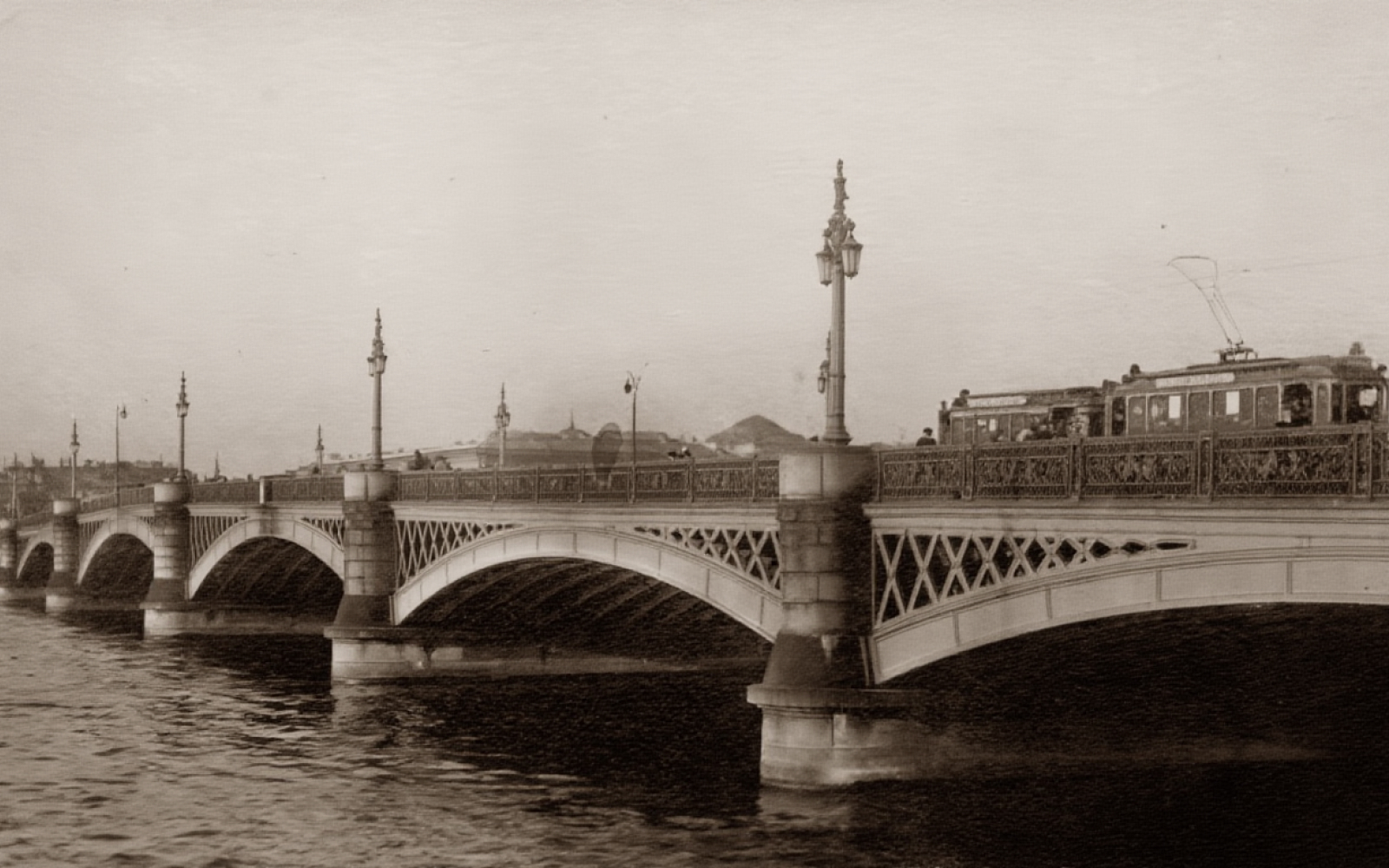
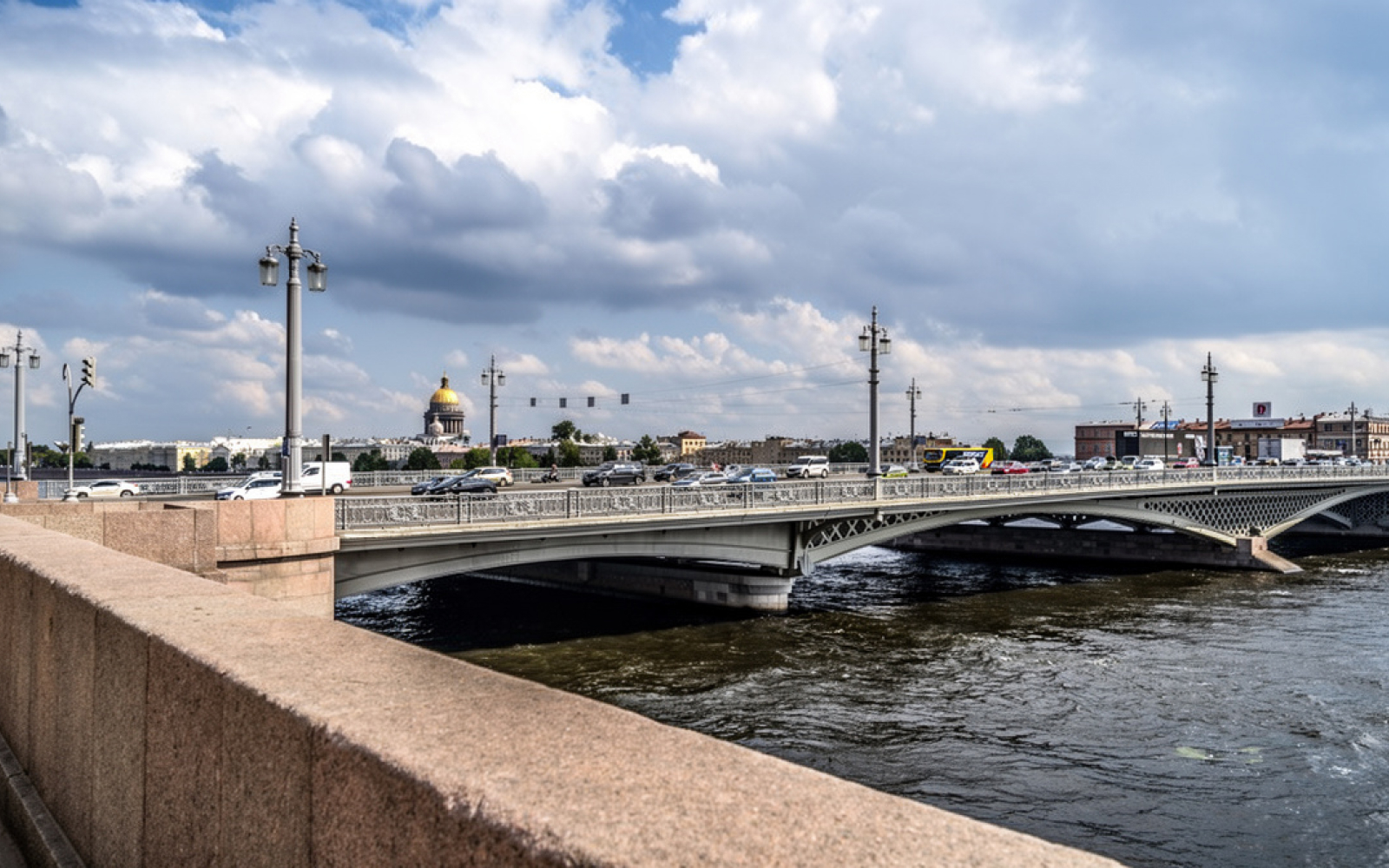
Blagoveshchensky Bridge — the first permanent bridge across the Neva. Before its appearance, the banks were connected only by temporary pontoon crossings, which were dismantled for the winter and which hindered navigation. Construction was completed in 1850 — for its time it was an engineering breakthrough.
Liteyny Bridge
The Liteyny Bridge is one of the symbols of northern St. Petersburg and the second permanent drawbridge on the Neva. It got its name from the Liteyny Dvor — a historical production facility connected with metal and artillery.
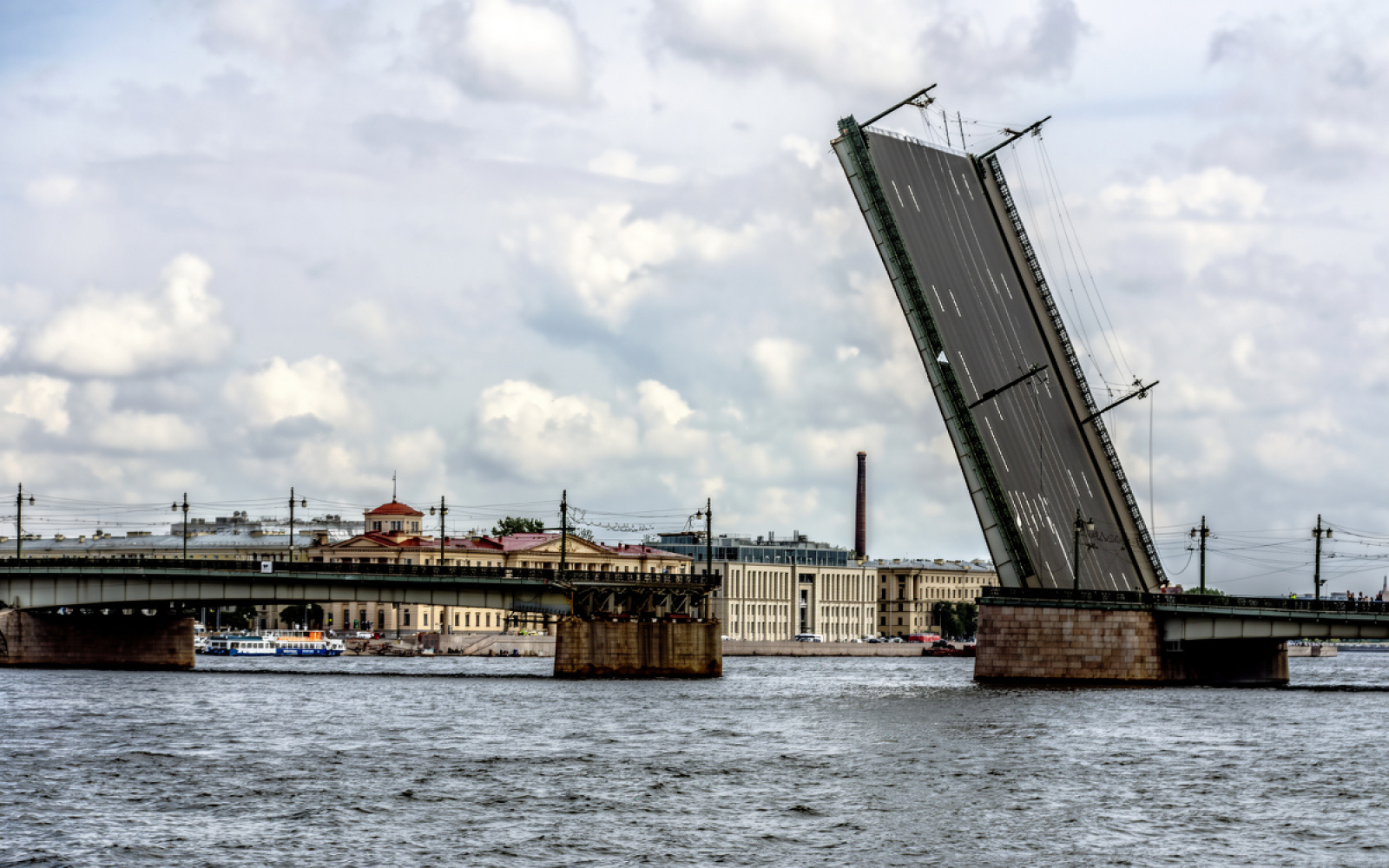
The drawbridge opening here happens quickly and looks especially spectacular due to the width of the Neva at this spot. The bridge connects the city center with the Vyborg Side.
Bridge drawbridge schedule
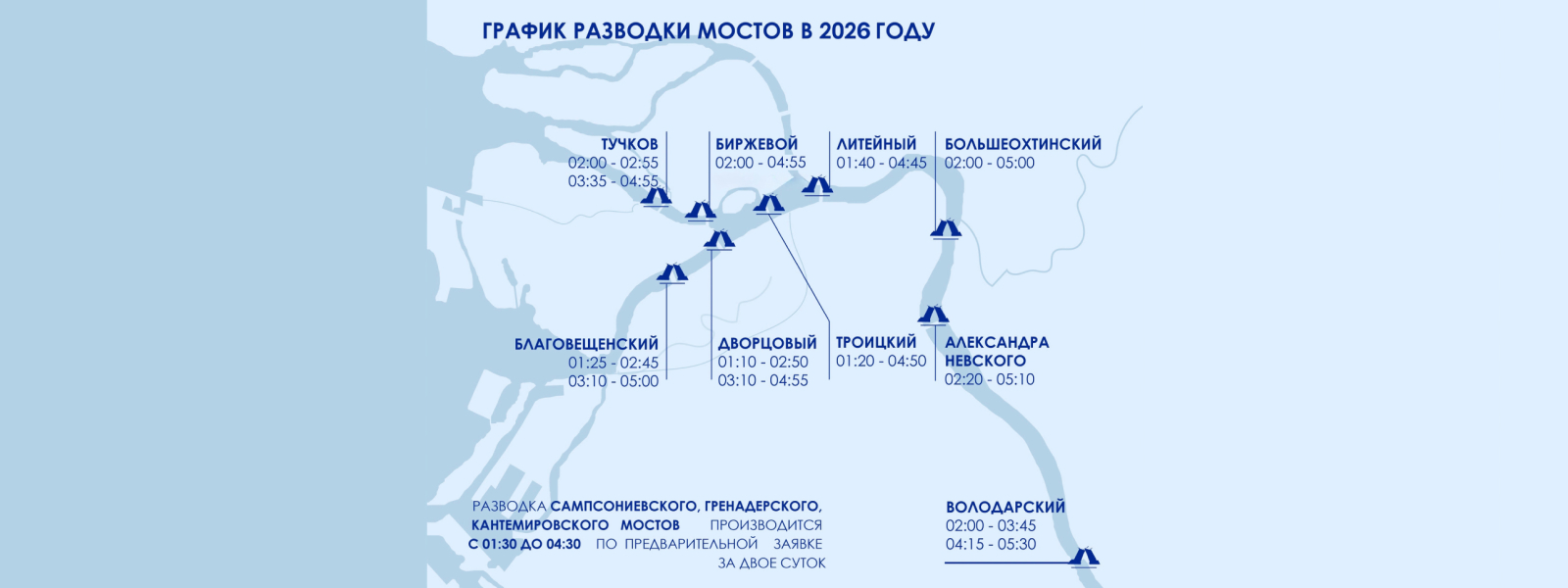
The navigation season in St. Petersburg is tied to bridge openings and usually lasts from April to November. Bridges are opened at night (approximately from 1:00 to 5:00) to minimize the impact on city traffic.
The schedule may be adjusted due to weather conditions, water levels, changes in navigation, and city events.
In this article you are using the 2026 schedule — it illustrates the typical logic of bridge openings. Before your trip, it is better to check the latest changes in official sources.

Boat trips in St. Petersburg
Boat trips in St. Petersburg→St. Petersburg bridge openings from the water at night
Everyone should see the drawbridges of St. Petersburg at least once — and, as practice shows, once is usually not enough. The night city, the lights of the embankments, the movement of boats, and the slowly rising spans create an atmosphere that is hard to put into words.
After the impressive spectacle on the water, you can continue getting to know the city with a sightseeing tour of the main attractions: Kazan Cathedral, the Church of the Savior on Spilled Blood, St. Isaac's Cathedral, the panorama of the Spit of Vasilyevsky Island, the Peter and Paul Fortress, and, of course, the Hermitage.
During the tour you will hear stories about the founding of St. Petersburg, its architects, and the events that influenced the course of Russian history. And afterward there will be time for a walk on your own — stop by a cafe, stroll along your favorite streets, or visit museums and creative spaces.
This format lets you see the city without rushing, combining vivid impressions, lively stories, and the atmosphere of nighttime Petersburg.








