


Author of materials about St. Petersburg, travel, excursions, and city routes.
Museum guide to art, culture and St. Petersburg of the 18th–19th centuries.
The Small Hermitage is one of the most secluded and cozy corners of St. Petersburg, preserving the atmosphere of Catherine II's private life, which became a link between the Winter Palace and the other buildings of the museum complex.
History of the Small Hermitage: solitude for the empress
The Winter Palace seemed uncomfortable and gloomy for the empress to live in. Just two years after her coronation, in 1764, she ordered the construction of something "for herself" – a place where she could take a break from state affairs in a close circle.
The name "Hermitage" (from French – a place of seclusion) appeared because of her private evenings, which were called "small hermitages". There were performances, games and dinners, and everything was so secret that even servants were not allowed in. For this, they came up with rising tables: they were set on the first floor and lifted into the hall through a sliding parquet. So the conversations at dinner remained strictly between their own!
Architecture: two pavilions and the "favorites' wing"
The project was implemented by two masters: Jean-Baptiste Vallin de la Mothe and Yuri Felten. The building consists of two pavilions connected by galleries at the second-floor level.
The Northern Pavilion faces the Palace Embankment. Its facade is decorated with a portico with six columns and marble statues of the goddesses Flora and Pomona.
The Southern Pavilion faces Millionnaya Street. Interestingly, people called it the "Favourite's Wing", as it was here at various times that the main favourites lived – Grigory Orlov and Grigory Potemkin.
What's inside: comfort for the chosen few
The interior of the Small Hermitage has always been particularly comfortable, so members of the imperial family often chose it for living. For example, the apartments of Tsesarevich Nicholas Alexandrovich, the son of Alexander, were located here.
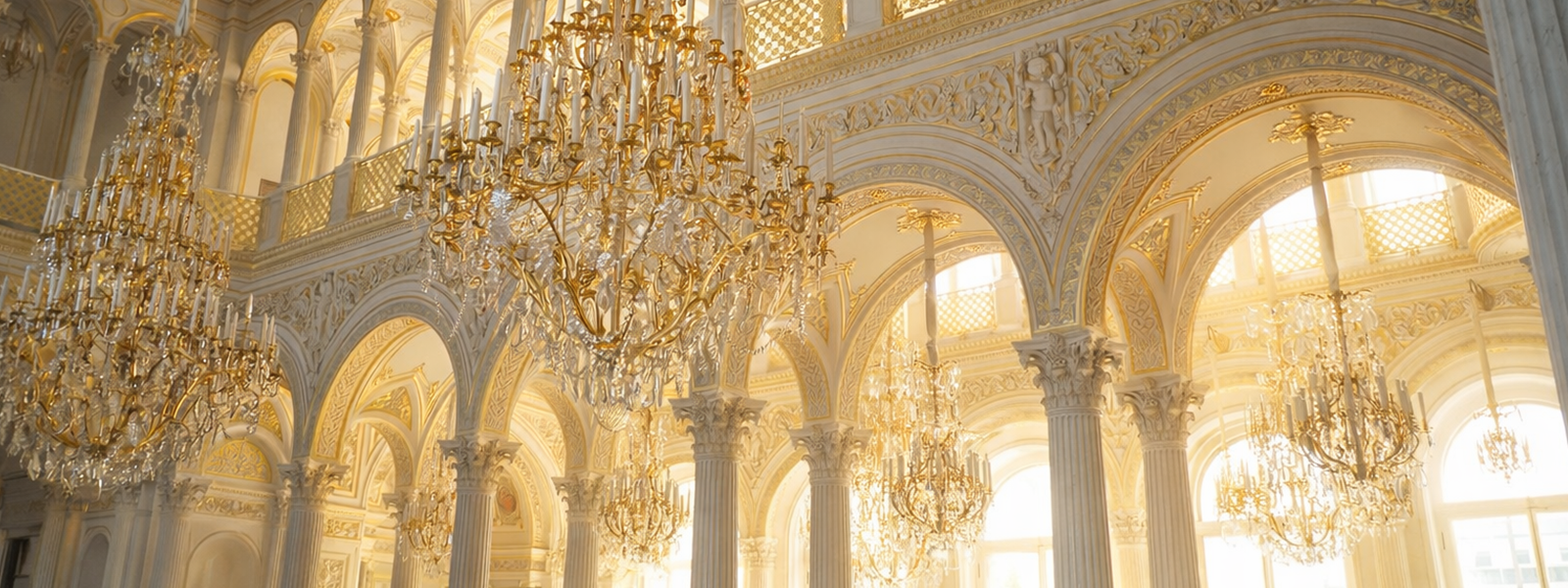
The main pearl of the interior is the Pavilion Hall, created by architect Stackenschneider in the 1850s. Its design combines antique and oriental motifs: snow-white marble, a gilded grille, crystal chandeliers and four fountains reminiscent of the Bakhchisaray "Fountain of Tears". On the floor of the hall you can see a copy of an ancient Roman mosaic, the original of which is kept in the Vatican.
Hanging Garden: an engineering marvel
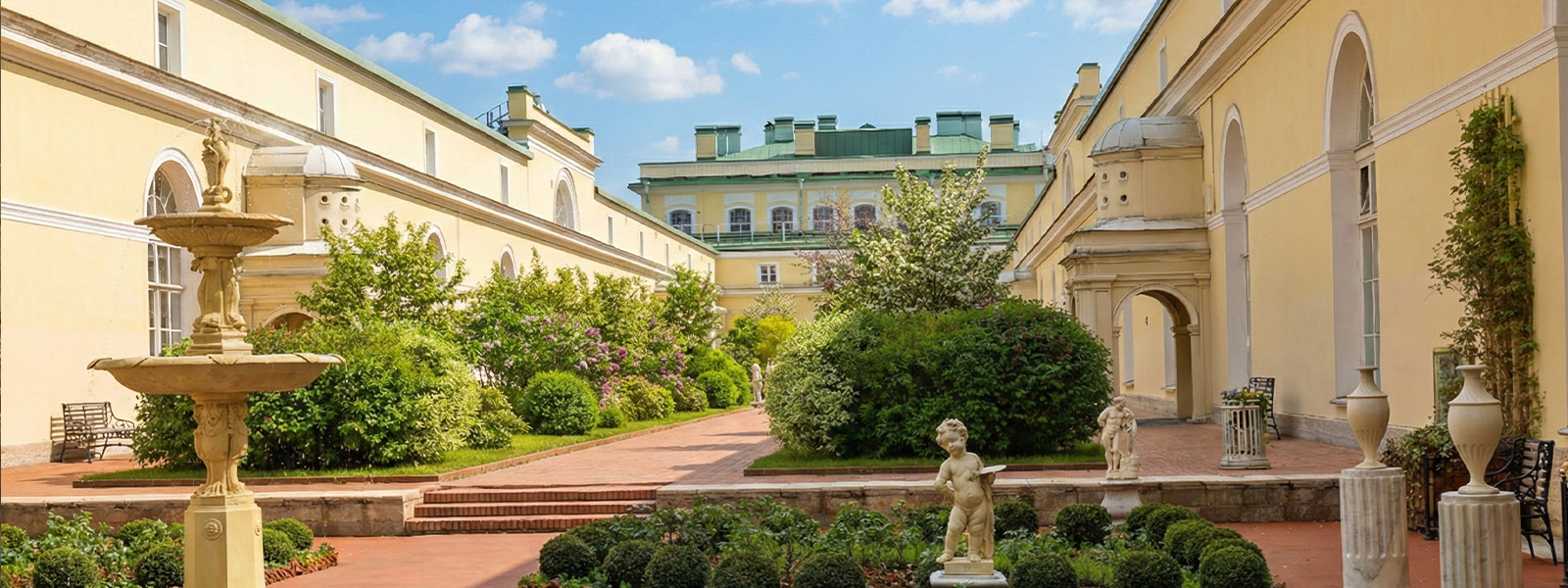
Between the pavilions is the Hanging Garden – a unique structure laid out at the second-floor level. In the 18th century, wood warehouses were located beneath it, and later – a riding hall and stables. The uniqueness of the garden lay in its heating system: warm air from the stoves passed through special channels under the floor, thanks to which plants here bloomed earlier than in all of St. Petersburg. Today, roses and tulips are planted in the garden, and copies of antique statues are installed.
The Peacock Clock: a living attraction
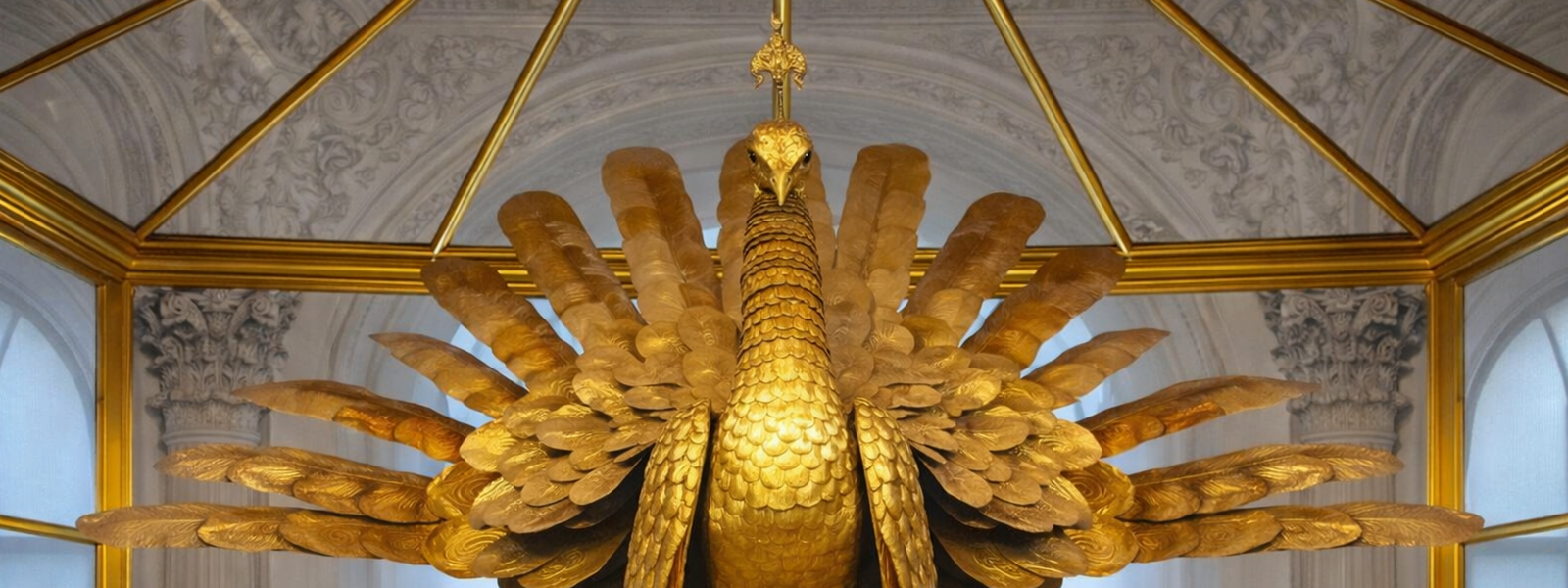
If you came to the Small Hermitage and did not see the "Peacock" clock, consider that you were not there. It is a huge gilded 18th-century automaton that still works! It was bought by Potemkin for Catherine II. Once a week the mechanical zoo comes to life: the owl turns its head, the peacock spreads its luxurious tail, the rooster crows. The time is read on the cap of the largest mushroom, where numbers run in a slot, and a tiny grasshopper is responsible for the seconds.
The Small Hermitage became the cradle of the museum collection, because it was here that Catherine II began to place the first acquired paintings. It is the coziest of the Hermitages. It is worth visiting at least once, to see with your own eyes the wondrous clock and its inhabitants, to walk through the chambers of Catherine II's favourites, to surrender to the beauty of crystal chandeliers, to feel like a personally invited guest of the empress herself!
The Small Hermitage: answering questions
-
Where is the Small Hermitage located?
Palace Embankment, 36 (also faces Millionnaya Street), between the Winter Palace and the Large (Old) and New Hermitages. The nearest metro station is "Admiralteyskaya". -
Small Hermitage opening hours
Wednesday, Thursday, Sunday – from 11:00 to 18:00. Tuesday, Friday, Saturday – from 11:00 to 20:00. On Mondays the Small Hermitage is closed. -
Who built the Small Hermitage?
The main architects were Yuri Felten (the Southern Pavilion) and Jean-Baptiste Vallin de la Mothe (the Northern Pavilion). -
What to see in the Small Hermitage?
15th-century Netherlandish art, including the rarest diptych by Robert Campin, "The Trinity. Madonna and Child by the Fireplace"; major collections of 17th–18th-century Dutch and Flemish painting; halls dedicated to the applied arts of medieval Europe.
Tour of the Hermitage
If you want to see the Hermitage in full, its main staircase, learn the history of the Hermitage cats and see the main exhibitions and paintings, then a tour from Leningrad Tour is for you!
In addition to the New Hermitage, the program includes visits to the Church of the Savior on Spilled Blood, the cruiser Aurora, the Peter and Paul Fortress and St. Isaac's Square. You don't need to worry about extra expenses, as entrance tickets to the Hermitage are already included in the price of the trip.

Tour of the Hermitage
Go to the tour →








