


Writes about St. Petersburg, its history, sights, museums and routes.

Historian and guide for Peterhof, Oranienbaum, and St. Petersburg architecture.
Peterhof's fountains without pumps
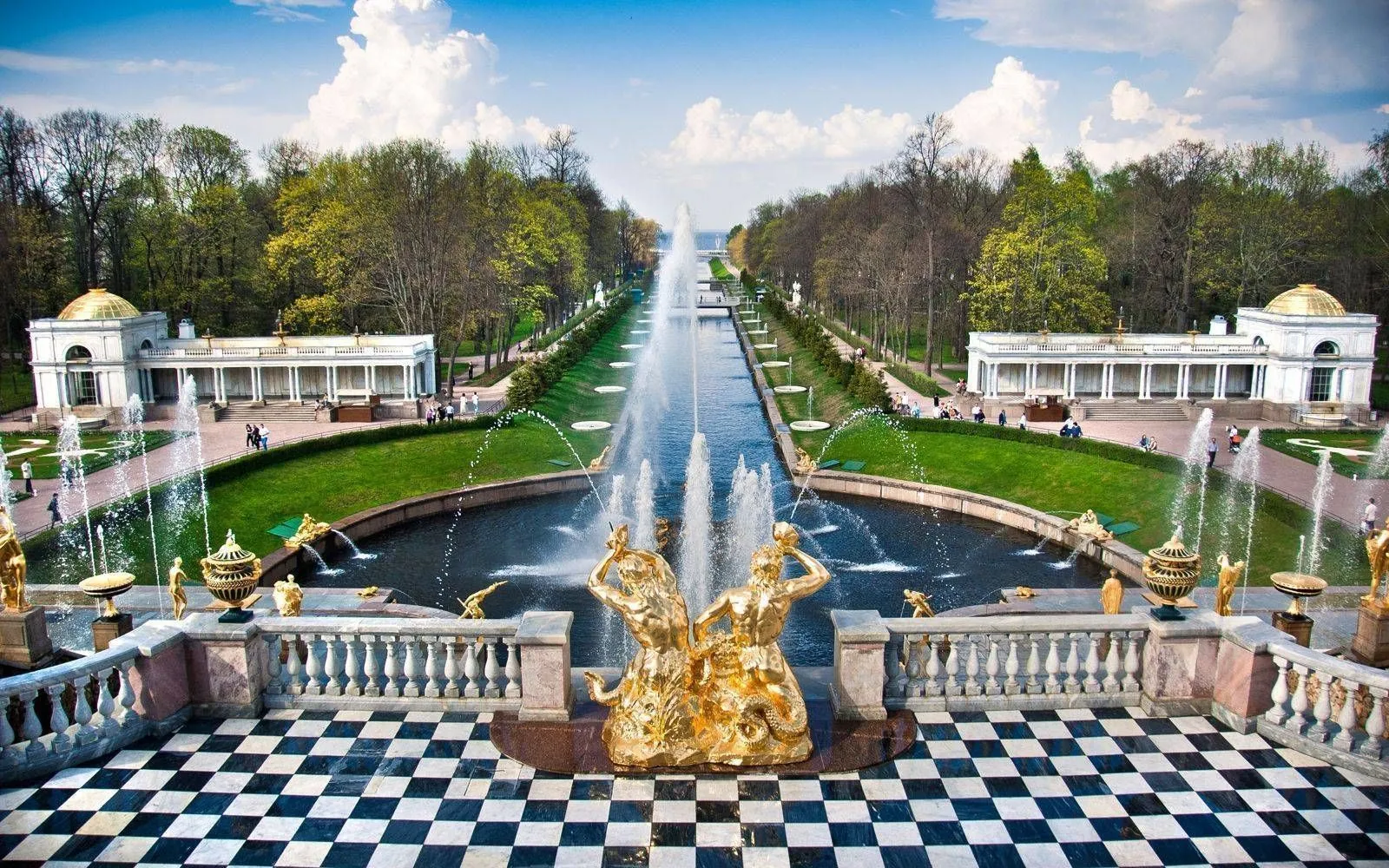
One of the main mysteries of the palace and park ensemble is that Peterhof's fountains work without pumps The most "invisible" magic of Peterhof lies in the fact that the water spectacle relies on terrain and precise engineering: the elevation difference creates pressure, reservoirs maintain stability, sluices and canals control the flow, and then the water travels along "branches" to cascades, grottoes, and trick fountains.
In most ensembles, water is supplied by pumps. At Peterhof everything is arranged differently: the terrain, the height difference and thoughtful engineering create pressure without external pumping. That is why the viewer sees only the result — jets, cascades and the sparkle of water.
Show the text ASCII diagram
Ижорская возвышенность (Ропша)
  родники / ручьи
        │
        ▼
Пруды-накопители (водный запас)
        │  регулировка уровня/расхода
        ▼
Каналы + дамбы + шлюзы + переливы
        │
        ▼
Водоводы / трубы (магистраль, создаётся напор)
        │
        ▼
Распределение:
   ├─► Большой каскад → гроты → Самсон → Морской канал
   ├─► Боковые каскады и фонтаны Нижнего парка
   └─► Шутихи и локальные чаши
When tourists first learn that the fountains of Peterhof operate without pumps have been running for several centuries, it seems almost impossible. But that is exactly what makes the ensemble unique. Engineers of the 18th century created a system that does not require constant mechanical pumping of water: the flow moves along a natural slope, and the whole system relies on the difference in elevation and precise water distribution.
A huge role in the operation of the ensemble is played by the Peterhof canals. They direct the flow and help regulate the supply of water to individual cascades and basins. That is why the water supply system of the Peterhof fountains is considered one of the most thoughtfully designed historical systems in Europe. If in ordinary city complexes fountains depend on pumping stations, the St. Petersburg fountains of Peterhof impress because the main effect is created by gravity and engineering logic.
Now the fountains of Peterhof operate as before, without the use of pumps or electricity. Every year a ceremonial opening of the fountains is held here. We have described in detail how the season will begin and how the fountain opening celebration in 2026 will take place in our article.
Tour to Peterhof with fountains
Go to the tour →Frequently asked questions about the fountains of Peterhof
How many fountains are there in Peterhof?
The Peterhof Museum-Reserve contains about 150 fountains and several large cascades. That is why the fountain system of Peterhof is considered one of the largest and most famous in the world.
How do the fountains of Peterhof work without pumps?
The fountains of Peterhof work without pumps thanks to a natural difference in elevation. Water collects in springs and storage ponds, passes through canals, sluices and conduits, after which, under natural pressure, it reaches the cascades and basins.
What is the oldest fountain in Peterhof?
The oldest fountain in Peterhof is considered to be the Sheaf, which is located in the Monplaisir Garden and is the central element of the palace and park ensemble.
How did the fountains in Peterhof work without electricity?
Before the advent of modern technologies, the fountains worked on the same principle as today: water flowed by gravity from natural sources through reservoirs, the canals of Peterhof, sluices and pipes. This is how the water supply system was arranged, independent of electricity.
When did the fountains appear in Peterhof?
The first fountains appeared in the first quarter of the 18th century simultaneously with the formation of the palace and park complex.
Who invented the fountains in Peterhof?
Peter I is considered the ideological inspirer of the ensemble. It was he who conceived the residence with a grandiose water system, and architects, engineers and hydraulic specialists brought this idea to life.








