


Author of materials about St. Petersburg, travel, tours and city routes.

A gift to a favorite, the epicenter of political intrigue, Masonic secrets – it's all about the Tauride Palace. It was this once luxurious palace that faced the storm of revolution.
History of the Tauride Palace: a gift to a favorite and huge debts
It all started when Prince Grigory Potemkin, the favorite of Catherine II, decided that living in the Winter Palace was no longer «convenient» for him. He wanted his own palazzo that would rival the imperial one in splendor. And so in 1783 construction began.
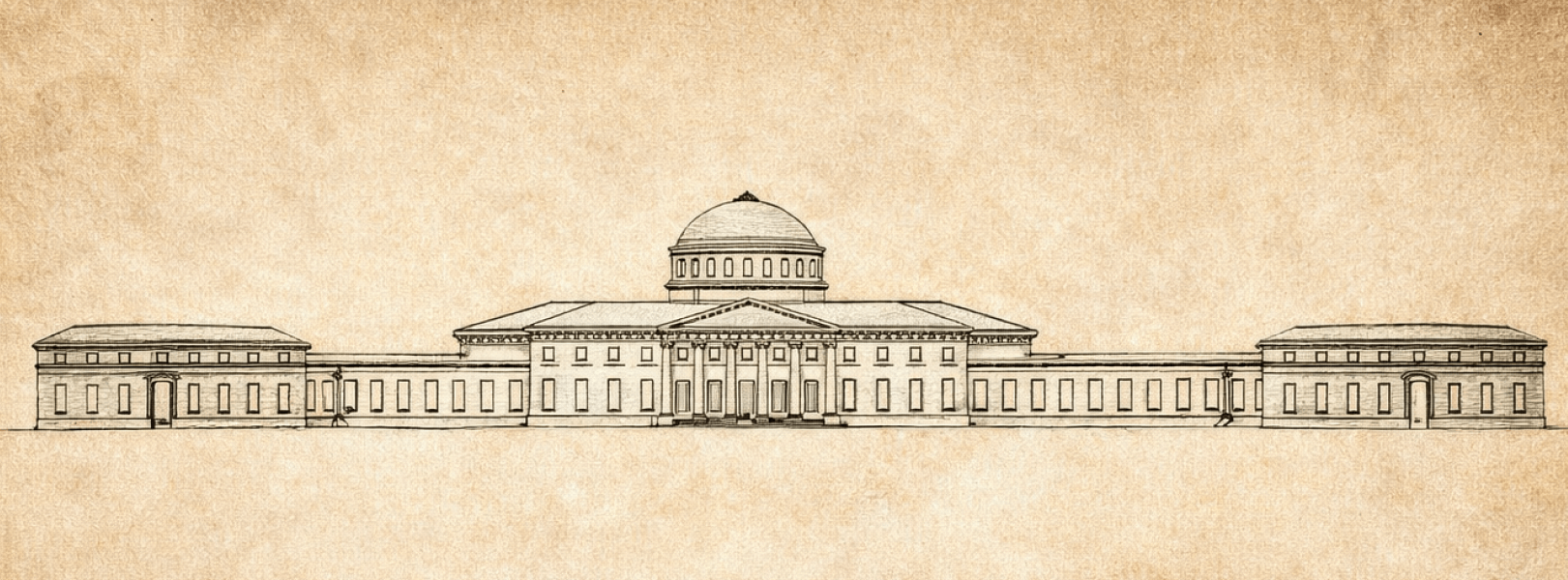
Initially this place was simply called the «Horse Guards House», because it stood in the settlement of the regiment where Potemkin began his career.
Catherine II spent as much as 460,000 rubles in gold on this palace! She even bought the palace twice: first from Potemkin himself, when he got entangled in debts, then from his heirs. The palace received the name "Tauride" after the prince's death, in honor of his title for the annexation of Crimea (Taurida).
The Tauride Palace in 1917: revolution and rallies
In 1917, the exquisite halls were filled with a very different public. The palace became a true "cradle of the revolution." Here, the Provisional Committee of the State Duma and the Petrograd Soviet of Workers' Deputies were crammed together at the same time.
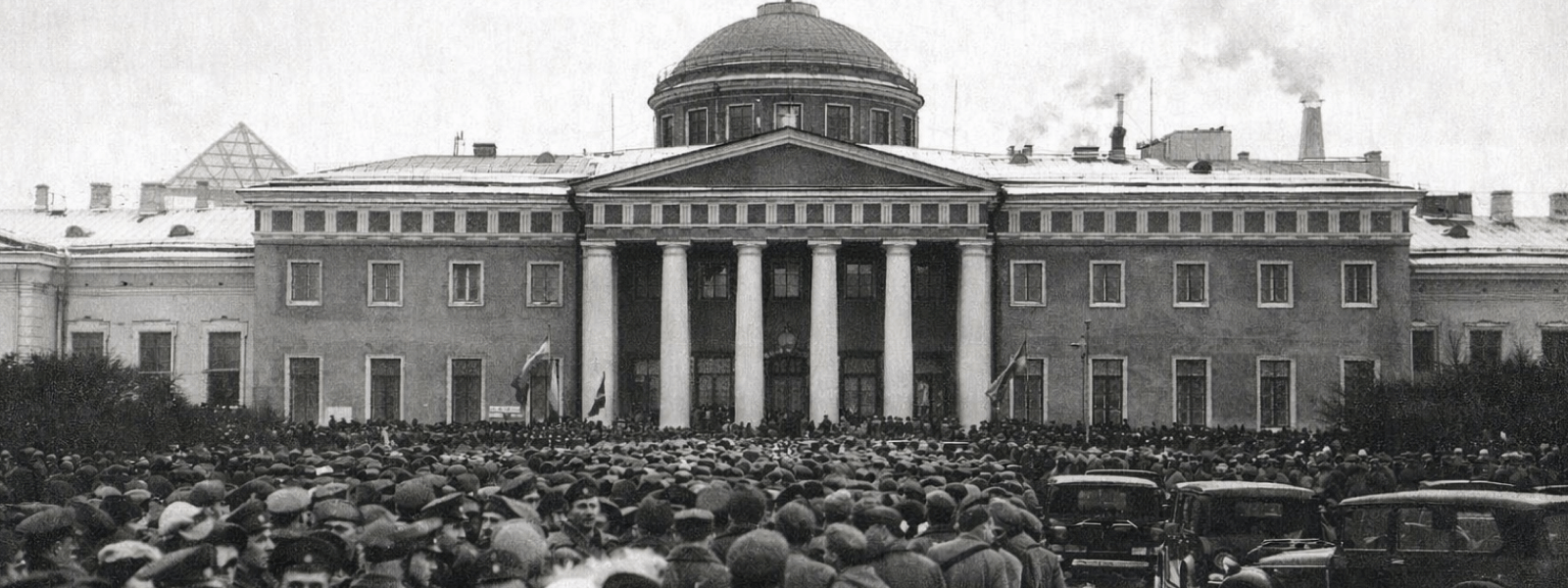
Imagine: in one wing laws are being written, in the other rebellious workers, soldiers and women are making noise. It was here on February 23 (March 8 in the new style) that the events began to unfold, starting with organized unrest that later grew into a full-scale coup. Crowds of workers and soldiers literally flooded the halls, turning the residence into the headquarters of the uprising.
Architecture of the Tauride Palace
Starov decided to make the palace modest and laconic on the outside – classicism in its purest form. However, this was only a wrapper. Inside, guests were greeted by incredible luxury that contrasted with the simple facade. Interesting fact: canals from the Neva used to lead right up to the entrance of the palace. Small vessels could sail right up to the front doors – true St. Petersburg Venetian chic!
Interiors of the Tauride Palace
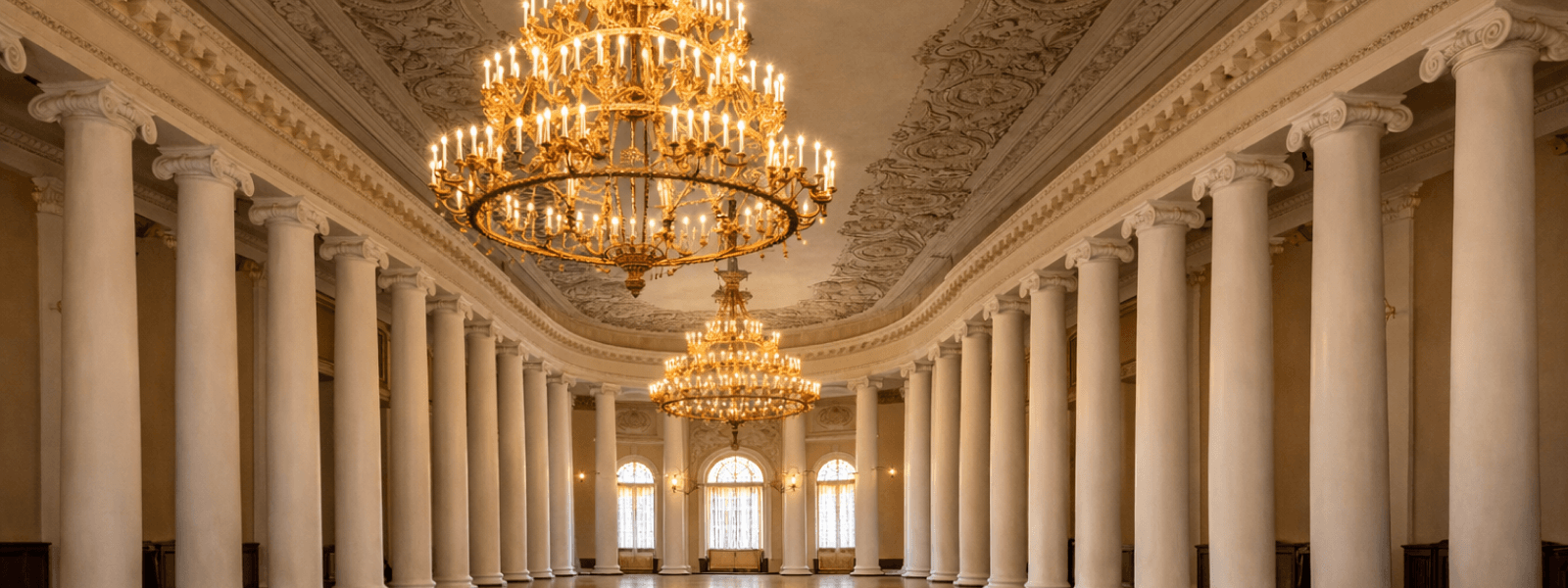
Catherine Hall
It is considered the main pride of the palace. It was the most spacious room in the capital of those times and even in Europe – almost 75 meters long. Its colonnades separated a winter garden, where marble statues hid among tropical plants.
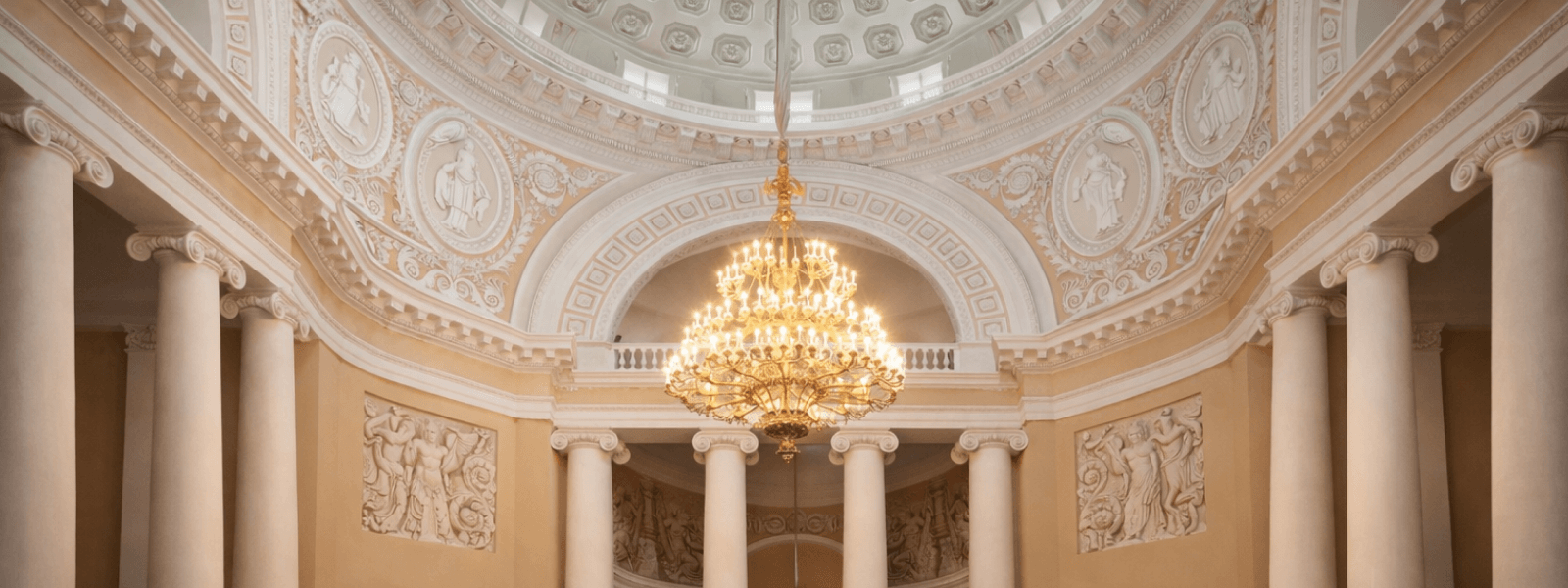
Domed Hall
An octagonal room with grisaille paintings that imitate three-dimensional stucco. On the walls are scenes from Homer's "Iliad" – and not by chance. Part of the action of this work took place in Taurida, conquered by Prince Grigory Potemkin during the Russo-Turkish War. The dome itself is also mesmerizing, through which sunlight enters the hall.
Interesting facts about the Tauride Palace: Masons and wish fulfillment
Freemasons in power. People used to whisper that in 1917 the fate of Russia was decided right here by "brothers" from Masonic lodges. Almost the entire leadership of the Petrograd Soviet and the Provisional Committee (Kerensky, Nekrasov, Chkheidze) belonged to Freemasonry. There was even a secret "Military Lodge" that included high-ranking generals.
The legend of a wish. They say that at his last luxurious ball in 1791, Potemkin knelt before Catherine II right in the center of the Catherine Hall, under the main chandelier. It is believed that if you stand in that very spot and make a cherished wish, it will definitely come true within a year. Already know what you want to wish for?
The wrath of Paul I. Catherine's son hated all of his mother's favorites so much, including Potemkin, that he turned the palace into stables and a riding hall for the Horse Regiment, wishing to erase the memory of the empress's beloved. The luxurious halls were ransacked, and horses were kept in the winter garden.
The Tauride Palace today
Now the Tauride Palace houses the headquarters of the CIS Interparliamentary Assembly. Don't think it's closed to visitors! "Potemkin Evenings" are regularly held here – concerts of early music. The palace is located at 47 Shpalernaya Street. It is important to note that you need to book in advance, at least 2 days ahead, to get inside. Visitors are received from 10:00 to 16:00, Monday through Thursday.








